MLB
Emerson's Triple-A Demotion Reshuffles Seattle's Infield, Opens Path for Rodden
The Mariners sent their $95 million prospect down after a brutal strikeout-laden debut, signaling a roster recalibration that could shift offensive production lines in Seattle.
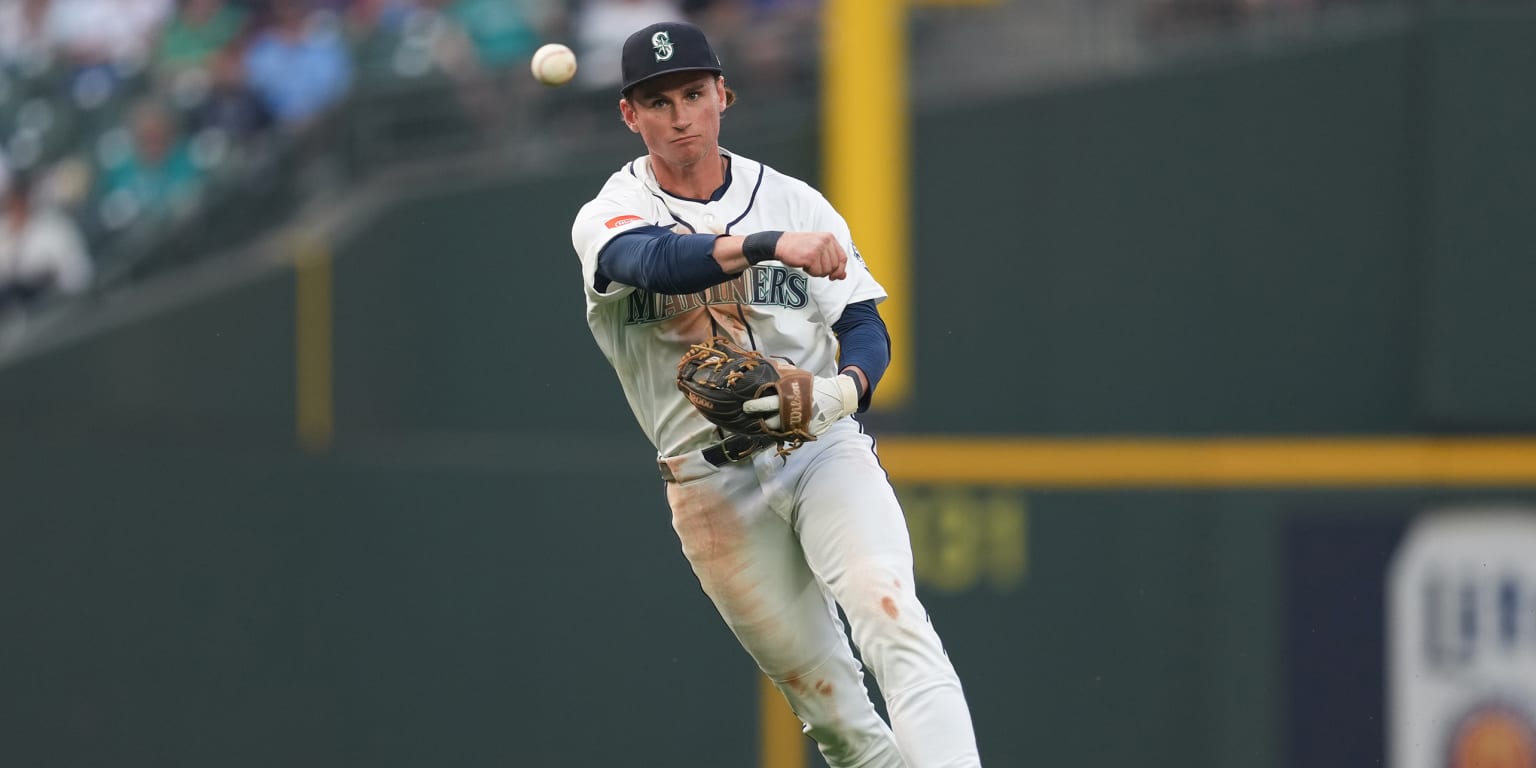
The Mariners are optioning Colt Emerson to Triple-A Tacoma after less than three months in the majors, a move that solves an immediate roster crunch while acknowledging the depth of his offensive struggles at the plate. Emerson, signed to an eight-year, $95 million extension in March before ever reaching the majors, appeared in 69 games as a third baseman and shortstop, posting a .190 average with eight home runs, 23 RBIs, and a staggering 34.4% strikeout rate. The timing hinges on Brendan Donovan's return from a three-month left groin strain; his availability restored Seattle's depth at shortstop and third base, making Emerson's continued presence redundant and his performance untenable.
The 21-year-old's strikeout rate is the most damning element here. For context, a 34.4% K-rate places Emerson in the 98th percentile of badness league-wide; the median MLB hitter sits around 22%. His pedigree as a prospect was built on hit-tool potential, and that profile has completely inverted at the Major League level. Fifty-two strikeouts across 232 plate appearances suggests this isn't variance—it's a mechanical or pitch-recognition problem that won't resolve on a MLB bench. The demotion isn't just roster housekeeping; it's a reset on a player whose ceiling hinges on reconstructing his approach.
In the corresponding roster move, Seattle is promoting Brock Rodden, 26, the club's No. 19 prospect, from Triple-A Tacoma. Rodden has hit .262 with 19 home runs and 65 RBIs in 92 Triple-A games this season—a more orthodox offensive profile that suggests he can at least hold a line without crater-level strikeout rates. For betting purposes, Rodden's insertion into the lineup creates modest clarity: he will see regular at-bats in place of spot duty, likely filling utility or bench roles that Emerson was theoretically groomed to fill. The Mariners' overall offensive output may stabilize incrementally if Rodden reaches base more consistently than Emerson's .238 on-base percentage.
The broader takeaway for Seattle's team-level props is that the club is now replacing a high-volatility offensive asset (Emerson, with massive downside and minimal contact rate) with a steadier, lower-ceiling alternative (Rodden). This does not materially shift the Mariners' expected runs or team total scoring trajectory, but it does remove a significant tail risk—the 0-for-8 stretches that Emerson was producing at distressing frequency. If the Mariners have been juiced as offensive units on the strength of their regular lineup (Julio Rodríguez, Kyle Seager, and others), removing Emerson's dead weight from the bench rotation slightly reduces the variance premium baked into their team totals, particularly in late-game leverage scenarios where Emerson might have been forced into an at-bat. Over the next two weeks, Seattle's team totals should trade tighter to their underlying run-creation rate without Emerson's -0.15 offensive floor pulling on the aggregate.
Rodden's skill set does not invite aggressive totals plays, but it does permit a modest repricing of downside risk. If Mariners team totals have widened slightly to accommodate Emerson's potential for implosion, sharp money may find small edges on overs in the near term as market participants slowly calibrate to Rodden's more predictable offensive floor.
MLB Intelligence — Baseball intelligence beyond the box score. Open MLB Intelligence →