Mariners' Shortstop Crisis Deepens as Crawford and Emerson Both Out
By PropBetEdge Editorial Team ·
Seattle's lineup loses its leadoff anchor and its promising rookie fill-in within hours, forcing a 22-year-old utility man into his first career start at short.
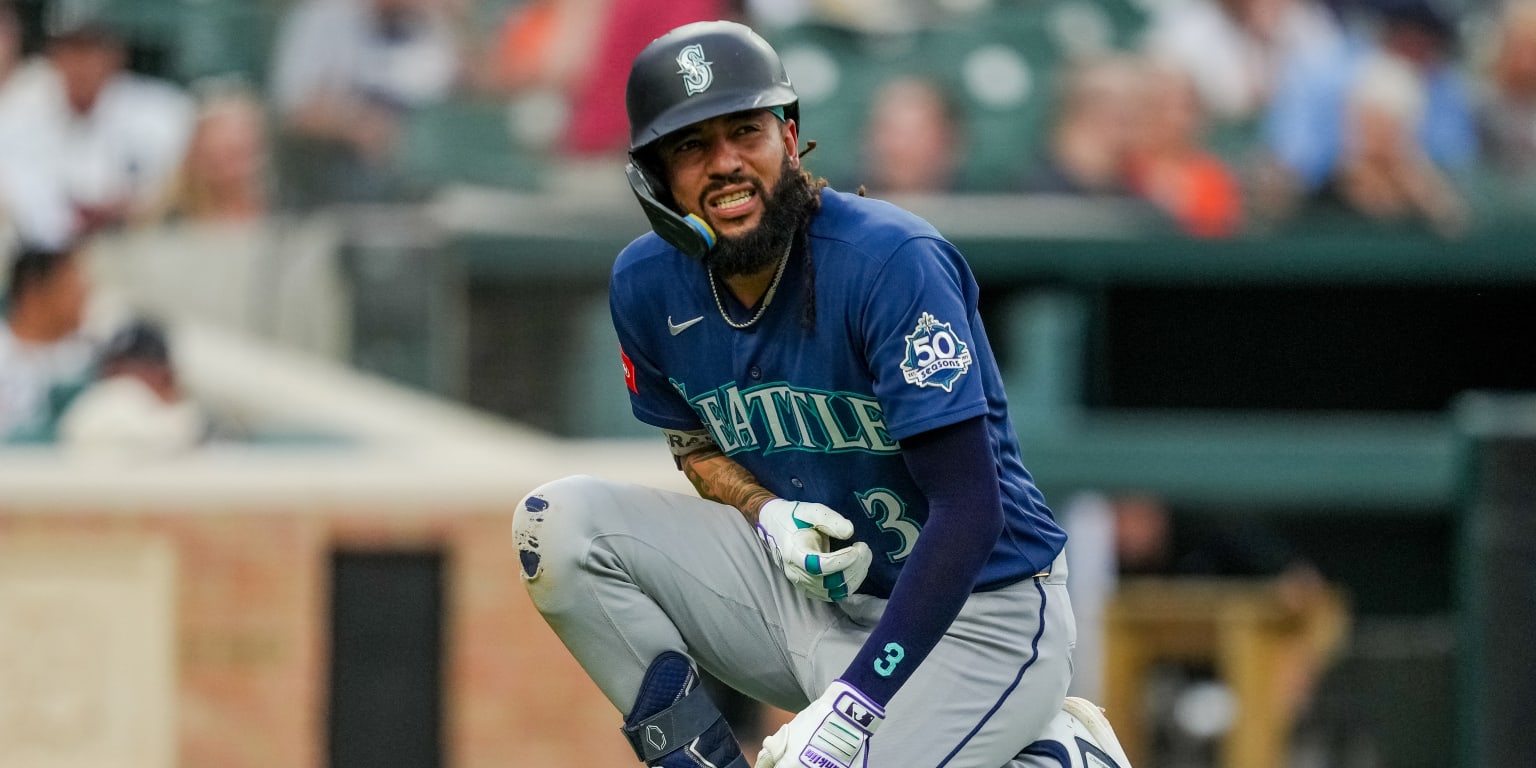
The Mariners' injury rotation accelerated on Monday. J.P. Crawford, their primary shortstop and leadoff hitter, was placed on the 10-day IL with a right-hand contusion sustained Friday when a 95.6 mph fastball from Framber Valdez caught him. The move was retroactive to Saturday, making Crawford eligible to return as early as next Tuesday (June 17) when Seattle opens its homestand. But that timeline assumes the pain subsides on schedule—and manager Dan Wilson signaled uncertainty, calling the healing pace slower than anticipated.
Then, one hour before first pitch Monday against Baltimore, rookie Colt Emerson—Crawford's fill-in after shifting from third base—was scratched with back tightness. Emerson's absence forces Cole Young, a 22-year-old utility player with just two innings of shortstop experience in his 143-game career, into his first career start at the position. Young has logged more innings at short in the minor leagues (241 games), but his footprint in the majors is primarily elsewhere. The corresponding roster move brought Ryan Bliss up from Triple-A Tacoma to man second base.
Emerson's injury is the sharper sting. In his first three weeks at the plate, the 20-year-old has posted a .867 OPS with 10 extra-base hits (four homers, five doubles, one triple) in 69 plate appearances—solid enough power metrics to suggest the Mariners view him as more than a depth fill-in. His 30.4% strikeout rate is elevated, but the 7.2% walk rate and aggressive approach have translated to production when contact matters. The back tightness is vague; the team was still evaluating his timeline as of Monday.
Crawford's absence alone represents a credible lineup hit. He's slashing .228/.356/.409 (126 wRC+, six points above league average) with a .396 on-base percentage from the leadoff spot—the engine of a middling offense. Young, who's on a 10-game hitting streak and has played every inning of Seattle's first 67 games, moves into the leadoff role for only the second time, adding fatigue risk to a man already logging full defensive workload. The Mariners are also missing catcher Cal Raleigh (their top run producer) and infielder Brendan Donovan (their best contact hitter), though Raleigh began a minor-league rehab assignment Sunday and could return by the homestand. The compounding effect—loss of leadoff OBP, a legitimate offensive prospect in reserve, and the forced late-inning substitution of an undersized shortstop—narrows Seattle's offensive margin for error in a season where they've already been thin.
From a prop lens, this creates two distinct edges. First, Seattle's team total and run line now face genuine headwind. Crawford generates roughly 0.38 runs per game (extrapolated from his run total over Mariners games played) and his .396 OBP from leadoff has cascading consequences for RBI props and scoring order efficiency. Young's move to leadoff truncates his offensive ceiling slightly—he's a capable hitter but not a traditional leadoff producer—while also reducing his ability to be rested. Second, Emerson's absence removes a high-leverage rookie bat with proven extra-base-hit frequency, compressing the bench's offensive ceiling. Unders on Seattle's team total (currently in the 3.5–4.0 range depending on opponent) carry elevated probability for the next 7–10 days, contingent on Crawford's return timeline. If Crawford doesn't return by June 17, that edge extends further. Conversely, if Emerson's back issue proves minor and he returns by midweek, the offensive capacity snaps back. Monitor the Mariners' daily injury updates closely; single-game unders early in this road trip (through June 15) are more durable than season-long exposure.