Raleigh's Slow Ramp Signals Extended Seattle Catcher Absence
By Justin Erickson ·
The Mariners' AL MVP runner-up is weeks away from game action, and his absence will weigh on Seattle's offensive ceiling through June.
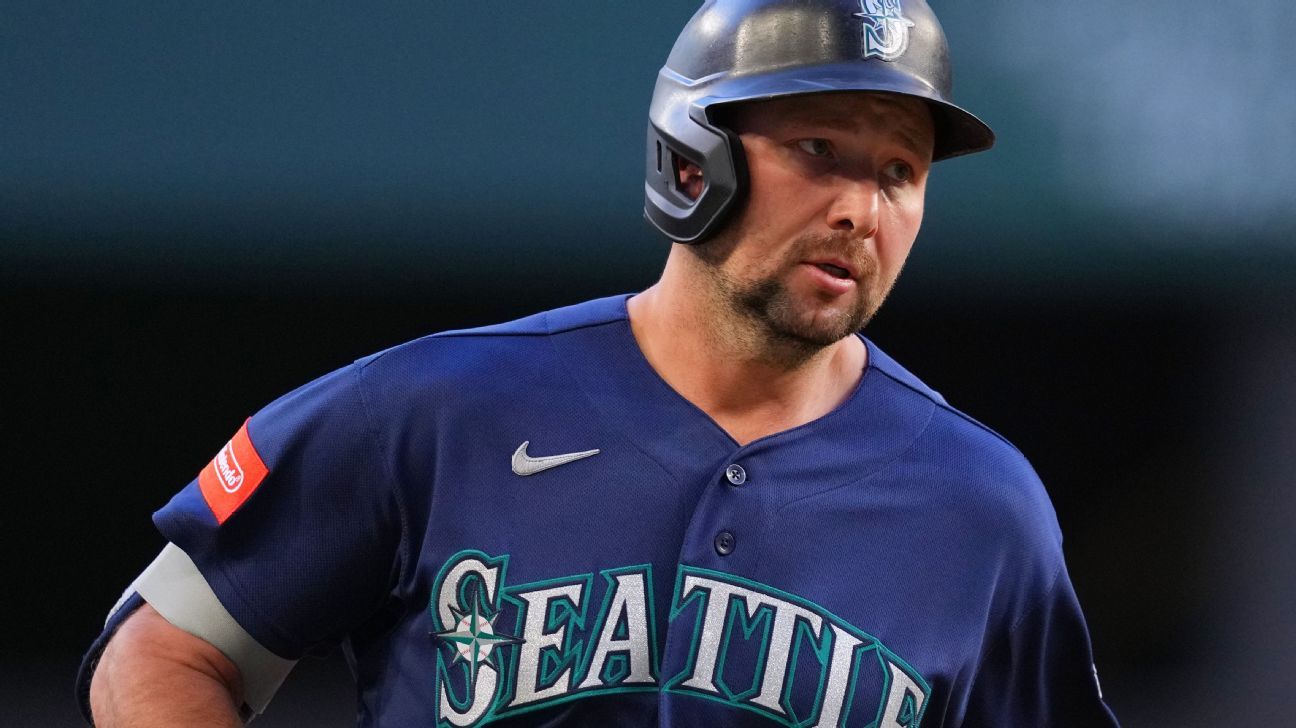
Cal Raleigh took 30 swings off a tee Friday at Seattle's Arizona complex—a procedural milestone that reveals more about his timeline than it clarifies. The Mariners catcher, on the injured list since May 14 with a right oblique strain, worked at moderate intensity: 15 swings from each side, throwing out to 130 feet. General manager Justin Hollander's framing—"build responsibly"—is the operative phrase. There is no return date. Raleigh is traveling to Seattle for further evaluation, but his path forward includes a minor-league rehab assignment, a buffer that typically adds 7-10 days minimum to any recovery window.
Raleigh's absence compounds an already bleak offensive reality in Seattle. Before the injury, he was hitting .161 with a 0-for-38 drought from late April through early May—the longest hitless streak in the majors this season. He snapped it with two singles against Houston, then immediately aggravated the oblique. In 41 games, he's produced seven home runs and 18 RBI on 59 hits. Those aren't numbers from a player in rhythm; they're numbers from a player battling through structural pain. Hollander acknowledged Raleigh "played through some pain" before the IL stint, suggesting the injury's onset was gradual, not acute. That pattern—slow build, then aggravation—often takes longer to resolve than a clean, isolated strain.
The Mariners are treating this with deliberate caution, which is prudent but also signals internal doubt about a quick resolution. Manager Dan Wilson emphasized the "recovery is going as expected," code for "don't expect him in June." Donovan, the utility piece also sidelined (left groin strain, May 17), is only now progressing to a weightless treadmill. If a groin injury is still in treadmill purgatory with less than two weeks until June ends, oblique rehab—which requires explosive rotational power in a sport that demands it at every plate appearance—is nowhere near game-speed.
For prop bettors, Raleigh's absence carries two specific consequences. First, his backup (likely a platoon of Connor Wylie and a second catcher) will occupy the DH spot or lower in the batting order, removing 400+ PA from Seattle's most reliable power production. The Mariners' team totals—already compressed by a 34-32 record and bottom-third run differential—will face downward pressure through late June. Unders on Seattle team totals (3.5-4.5 runs expected) become more reliable because their offensive ceiling is mechanically lower without Raleigh's pop. Second, Raleigh's individual prop line (home runs, RBI, hits) will be unavailable or severely limited even upon return; expect his first week back to be pitch-counting and at-bat rationing, not full DH duties. Any prop market that opens on Raleigh assumes full PT and full health. That's a sucker's bet for the next 10 days minimum.