MLB · callup
Lombard's Postseason Arrival: Youth, Poise, and the Case for Aggressive Positioning
The 21-year-old shortstop went 3-for-4 in his Wild Card debut, setting multiple age records—and raising a critical question about how sportsbooks are pricing Yankees offensive depth.
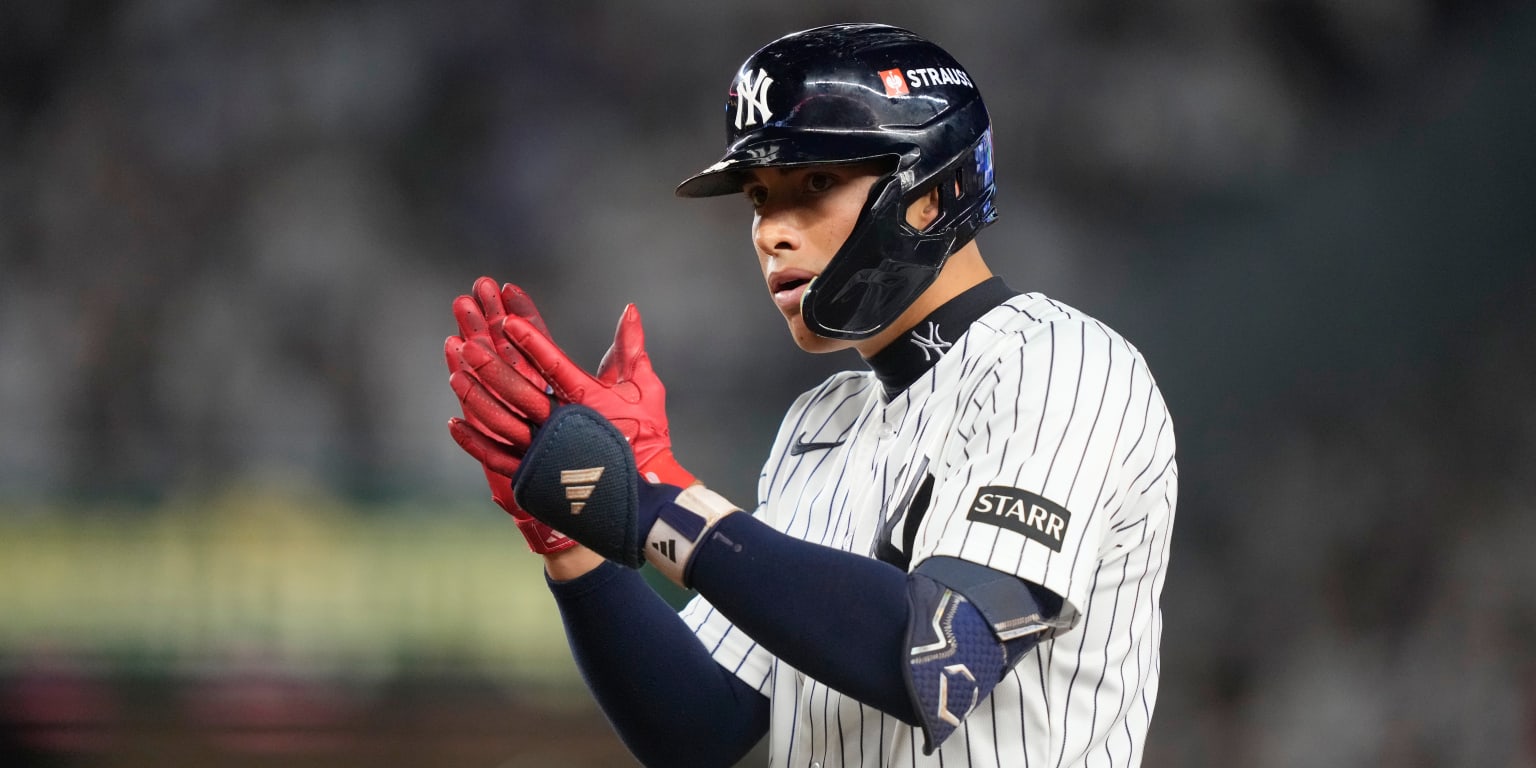
George Lombard Jr. arrived at Yankee Stadium on Tuesday night and announced himself to the postseason with the kind of restraint that belies his age. Three hits. Two runs. Four at-bats. Exit velocities of 100.2 and 108.6 mph on his first and third knocks. At 21 years and 119 days old, Lombard became the youngest player in Yankees postseason history to record a hit in his debut, then the second-youngest in all of postseason history to notch three hits in that same game—behind only Gregg Jefferies, who was 21 years and 64 days when he did it in 1988. The Yankees' 9-0 rout of Boston in Game 1 of the Wild Card Series was built on dominant pitching, but Lombard's offensive efficiency and the presence of a disciplined, contact-oriented approach in the two-hole suggested the club's lineup has genuine depth beyond its marquee names.
Lombard's summer has not been a straight line. He debuted on August 4th—nearly two months ago—with a 100.2 mph homer that made him the third-youngest Yankee ever to go deep in his first big-league game. But the regular season exposed typical rookie friction: six consecutive games with an error in late August, a .219 batting average in September despite an OPS bump in that same month. The market had every reason to view him as a high-variance talent—explosive tools, thin major-league resume, live learning curve. What Tuesday night demonstrated, however, was his ability to compartmentalize. "Once the game started, I was just kind of locked in and having fun," Lombard said, and the box score bears that out: routine defense, three separate quality contact events, zero wasted at-bats.
The postseason context matters. The sample is one game—a blowout no less, which typically inflates offensive stats for non-stars. A single 3-for-4 night does not overturn a .219 September or prove that rookie variance has evaporated. But Lombard's poise in high-leverage situations and his mechanical consistency (both hits in play topped 100 mph exit velo) suggest the Yankees are banking on him as a genuine third-order offensive contributor, not a replacement-level figurehead. The team moved him from prospect limbo to starting shortstop in the postseason, which is an organizational confidence signal that carries weight.
For betting purposes, the angle is threefold. First, Yankees team totals in future games should account for a deeper offensive lineup than preseason projections assumed. Lombard's debut removes the "mystery box" discount from New York's run-scoring line. Second, his presence in the two-hole compresses plate discipline; the batting order now features quality contact at positions two and three (alongside Aaron Judge and Giancarlo Stanton), which elevates team-wide RISP efficiency. Third, and most subtly, Lombard's postseason success so early in his career may shift the books' treatment of his individual props in Game 2 or beyond. A 3-for-4 night with two runs is exactly the kind of single-game spike that triggers aggressive line movement—usually an overcorrection. If his hits line or run-scoring prop moves sharply higher, there is legitimate fade value; the sample is one game, and September's .219 average is the truer baseline. But the Yankees as a unit are now operating with confirmed offensive depth, and that edge persists across the series.
The immediate prop takeaway: if Yankees team totals move significantly higher (4.5+ runs) on Lombard's performance alone, that's an overcorrection. The team's pitching dominance in Game 1 was the primary run-suppression driver; Lombard is an additive offensive edge, not the entire reason New York scored nine. Lean toward overs on Yankees team total only if the line hasn't yet absorbed the baseline of "competent depth," which most consensus numbers already had. Fade aggressive moves in Lombard's individual line props (hits, runs, RBI) for Game 2; single-game spikes fade fast, and the books will adjust sharply within 24 hours.
MLB Intelligence — Baseball intelligence beyond the box score. Open MLB Intelligence →