Rangers Offensive Surge Breaks Boston Curse; Eovaldi Delivers Shutdown Frame
By Justin Erickson ·
After two consecutive low-output losses, Texas bats ignited early against Red Sox pitching and held firm, signaling a return to aggressive early-inning execution ahead of Monday's Twins series.
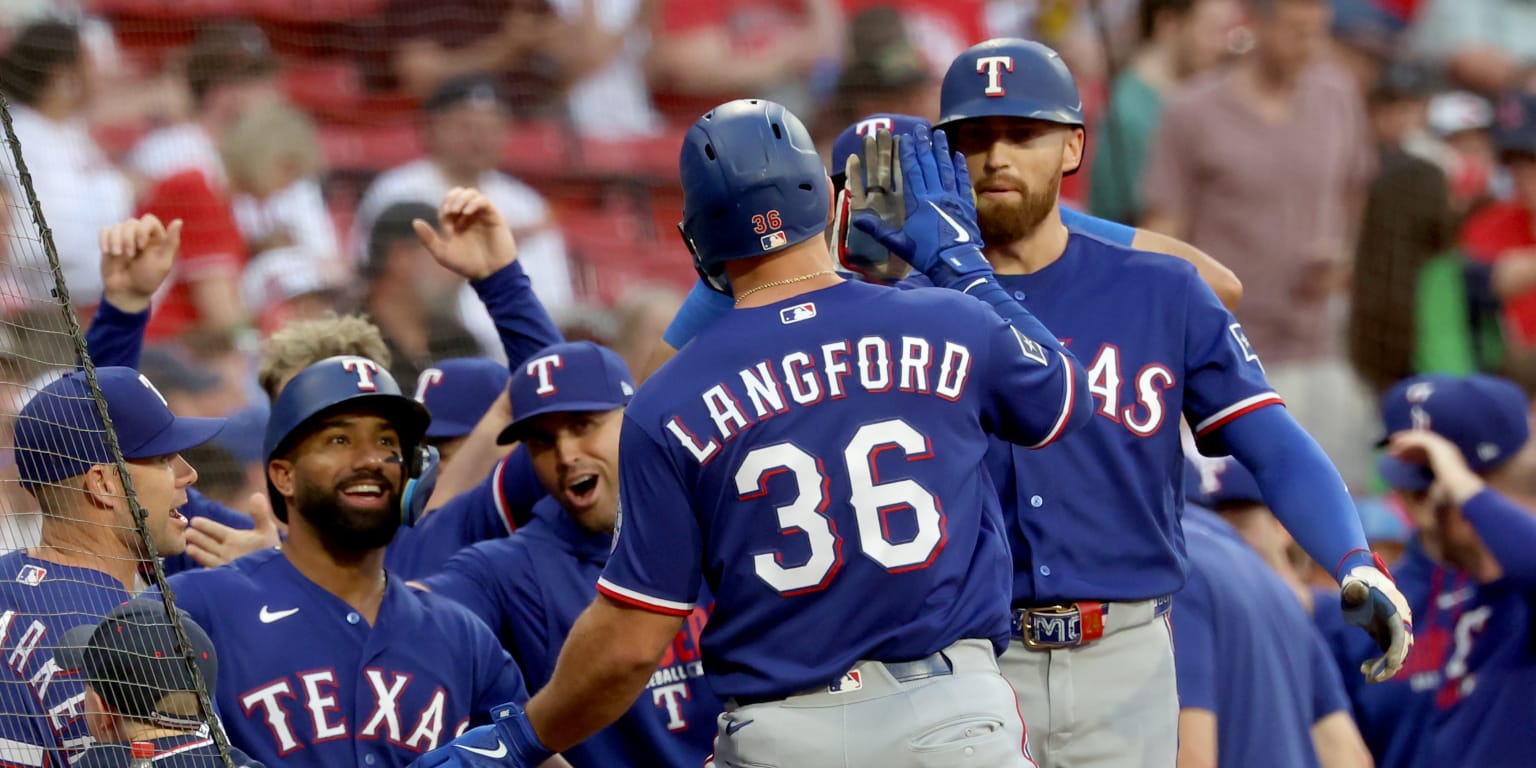
The Rangers walked into Fenway down two games with a combined four runs across both losses—a drought that evaporates with one swing. Wyatt Langford smoked the first pitch of Sunday's game 418 feet into the Green Monster bleachers, the kind of opening statement that resets momentum. Kyle Higashioka followed in the second with a 381-foot three-run blast off the Green Monster, establishing a 4-0 cushion before the game was two innings old. Brandon Nimmo added a two-run double two innings later. That's three extra-base hits in the first five innings—not noise, not variance. That's the Rangers attack resuming its intended frequency.
The aggregate was bruising: 13 hits total, at least two hits in each of the first five innings, productive at-bats across the lineup. Higashioka noted the discipline underneath the aggression—swinging hard at pitches they could drive while avoiding the trap of zone expansion. That distinction matters because it separates sustainable performance from random hot nights. The Rangers weren't chasing; they were hunting specific targets and executing. Texas also benefited from electric crowd noise (Scottish World Cup fans), which Eovaldi specifically credited with sharpening his focus—a valid environmental factor that bleeds into pitcher performance.
Nathan Eovaldi, the veteran anchor, delivered the quieting act: seven innings, six hits, six strikeouts, two double plays induced. His ability to work out of early jams—a grounder-turned-double-play to end the third that he praised—kept Boston's counterattack manageable. He's now 6-7 on the season after pitching deep into games, a workload manager's asset in a compressed schedule with minimal off-days. The Rangers sit one game under .500 heading into Monday's opener against Minnesota.
From a betting angle, the Rangers just demonstrated the exact offensive pattern that had evaded them: early-inning aggression with concrete results, not just count-padding. Langford (418 feet) and Higashioka (381 feet) both generated barreled contact in the first two innings. That's a measurable mechanical advantage—barreled ball rate among early-count fastballs—that projects forward if Boston's pitchers failed to adjust their approach. Against the Twins, who deploy a more traditional fastball-heavy arsenal, the Rangers should see similar early-inning opportunities. Langford's home run came on the first pitch; that kind of early-count damage tends to repeat when batters maintain their approach discipline. Lean into Rangers first-five-innings run total against Minnesota if the number sits below 2.5 runs, which it likely will given public perception lag on one-game reversals. The mechanical edge—barreled contact rate in counts 0-1 and 1-0—is durable across opponents.
Eovaldi's seven-inning floor is also noteworthy for strikeout props. He fanned six in a high-leverage, emotionally charged environment; against a Twins lineup that hasn't seen his arsenal in weeks, that strikeout rate should hold or climb if Minnesota sits in familiar fastball-hunting posture. Skip Schumaker's comment about needing starters to pitch deep in a congested schedule is a usage signal: Eovaldi will get run in early innings if healthy, which elevates his strikeout opportunity set.