Sean Keys' First-Game Homer Signals Blue Jays' Missing Ingredient
By Justin Erickson ·
Toronto's rookie power prospect just delivered what the lineup has desperately lacked all season—and the market may underestimate his staying power in the cleanup role.
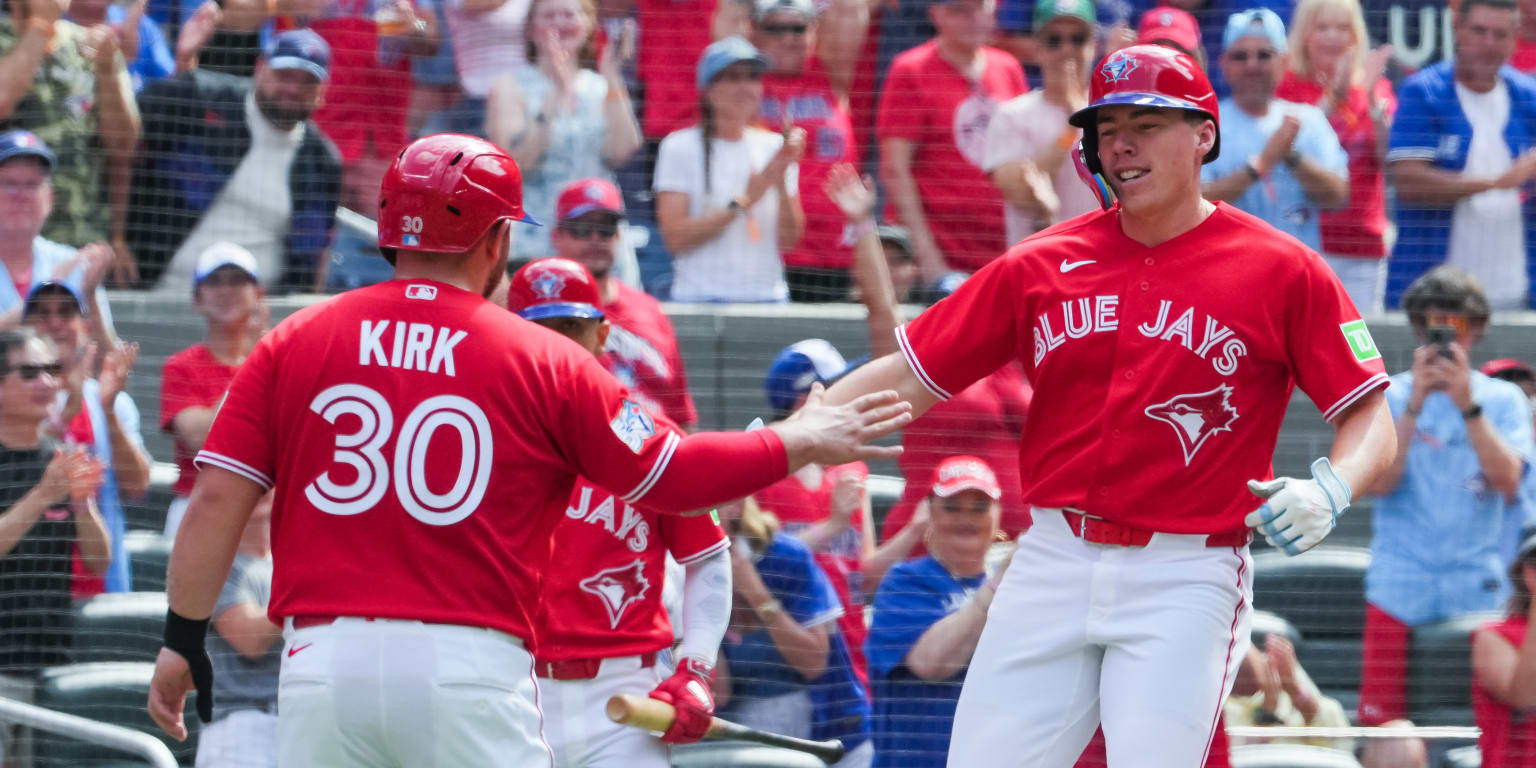
Sean Keys launched his first major league home run on Canada Day at Rogers Centre, a three-run blast off Mets pitcher Freddy Peralta that swung the game from 2-0 to 5-0 in the Blue Jays' favor. The 23-year-old, called up last week, connected on a 96 mph fastball on the outer half, using natural bat speed rather than trying to pull the pitch. The moment felt oversized because it was: Toronto's lineup has been anemic in power production all season, grinding through tight games and narrow margins when it needs the kind of cushion one swing can create.
Keys was promoted for a specific reason. The club's No. 14 prospect per MLB Pipeline crushed 21 home runs across Double-A and Triple-A in 2026, leading the organization by a margin that made his absence from the major league roster untenable. The Blue Jays built their core around contact hitters—Guerrero Jr. and Okamoto occupy the corner infield—but that approach requires occasional thunder to backfill stretches when the singles and doubles aren't landing for hits. Keys arrived to provide exactly that. Manager John Schneider framed it plainly: power fixes swing-and-miss, erases deficits fast, and forces pitchers to pitch differently. When a team's identity is spray and gap-to-gap contact, one high-exit-velocity threat in the middle of the order becomes the difference between treading water and building real leverage.
Keys' exit velocity metrics showed up immediately in the minors and haven't disappeared in transition. His first game visibility matters less than the underlying development track—a strong finish in High-A Vancouver last season, then sustained production through Double-A New Hampshire and into Triple-A Buffalo. That's not a flash; that's a pipeline player who figured something out. The Blue Jays were bullish internally, and Wednesday's three-run bomb was confirmation, not revelation.
For betting purposes, this changes the Blue Jays' implied run-production profile in two ways. First, Keys' insertion into the lineup at DH or corner infield reps shifts the team total upward—not dramatically, but durably. A 21-home-run pace over a full minor league season projects to roughly 25-30 in the majors accounting for league adjustment; even at half that rate, he's adding 12-15 runs per 162 games to the offense. Second, and more subtle: Keys' presence signals the Blue Jays have accepted that contact alone wasn't cutting it. That philosophical shift may push Schneider toward more aggressive home run hunting in the middle of the order, which could push overall slugging rates higher across the next month as the club calibrates its approach. The team total over 4.5 in Toronto home games carries value if the market hasn't yet baked in both Keys' staying power and the lineup's likely adjustment toward more power-friendly pitch selection. Early numbers at open may still reflect the pre-Keys composition. Watch for line movement after Wednesday's game; if the total hasn't budged, lean overs on Blue Jays home team totals through the first week of Keys' tenure.