Blaze Jordan's Debut Power Show Signals Cardinals Offensive Depth—But One Game Doesn't Move the Needle
By Justin Erickson ·
The Cardinals prospect went 2-for-4 with a three-run homer in his first two games, but single-performance spikes in rookie power output rarely sustain.
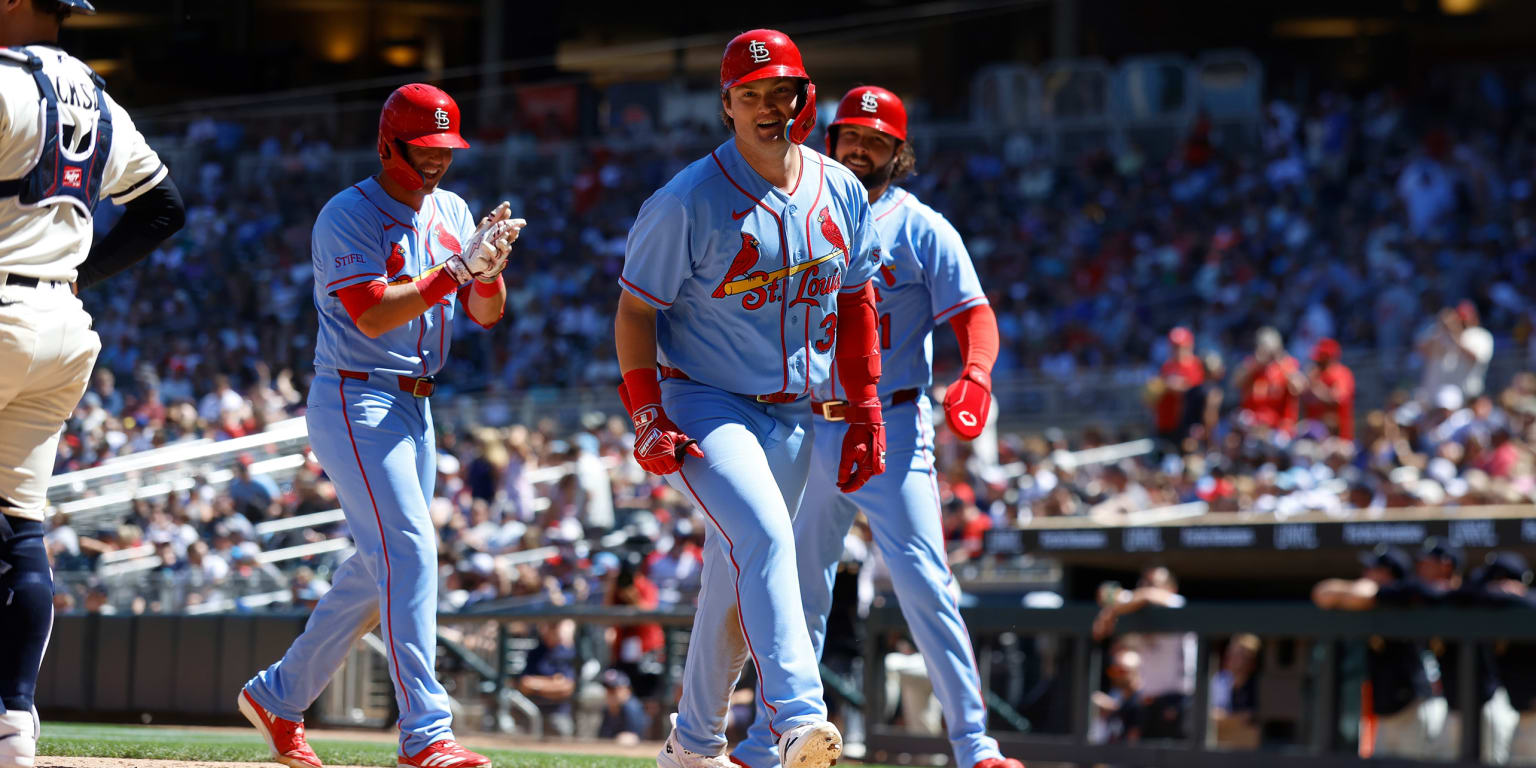
Blaze Jordan made his Major League debut Friday and delivered an immediate signature moment Saturday: a three-run home run off Twins right-hander Travis Adams in a 9-6 Cardinals victory at Target Field. The 23-year-old infielder, ranked St. Louis' No. 25 prospect by MLB Pipeline, went 2-for-4 in each of his first two games, recording an RBI single in his debut at-bat and following with a triple and a 3-1 fastball he drove into left-center field. It was the kind of splash entry that gets noticed by both the fanbase and the betting market.
Cardinals manager Oliver Marmol emphasized that Jordan's composure at the plate mirrors what the organization observed in video prep and minor-league tape. "He is in a big league batter's box and doesn't think much of it," Marmol said. "It's the same approach, same swing. There is a calmness to it that is impressive." That discipline—a prospect who translates his minor-league discipline without panic—matters for the Cardinals' long-term offensive outlook. Jordan is slated to play third base on an everyday basis, positioning the team to cycle in one of its higher-ceiling young bats while the roster navigates mid-season flux.
The Saturday seventh-inning outburst itself was a symptom of something larger: St. Louis has genuine pop through the lineup. Iván Herrera and Jordan Walker both went deep off Lawrence before Jordan's three-run blast; three homers in one inning against a non-bullpen pitcher is always an organizational signal of present offensive capability. Teammate Lars Nootbaar, who first tracked Jordan's tape at age 13 and later met him at USC, noted the psychological advantage of clearing the at-bat pressure in game one. "It gets the monkey off your back a little bit, being able to play loose," Nootbaar said.
For prop betting, the critical variable is persistence. A rookie's first two games—one hit on his debut, one with a home run—carry zero predictive weight for sustained output. Jordan's minor-league track record matters; his first-week MLB sample does not. The Cardinals' team total and offensive projections were built on existing roster composition; a two-game audition from a call-up doesn't mechanically reset those lines. Books already priced in the possibility that a prospect debut generates an outlier performance. What won't move markets: Jordan's true-talent level won't be identifiable until 50-100 plate appearances. The smart money waits. Until then, treat this as what it is—a clean debut with confidence markers—rather than a predictive signal for his next six weeks.
The longer play is organizational: if Jordan sustains even 85% of his minor-league slugging metrics over 30-40 games, the Cardinals' offense gains a structural asset that wasn't factored into early-season projections. That's when team total overs and power props start to have real edges. Right now, the market has already baked in the rookie surge narrative.