MLB
Jobe's Dominant Return Reshapes Tigers Rotation Depth—and Bullpen Leverage
A 24-year-old right-hander who hasn't pitched in over a year threw five scoreless innings with 100 mph heat, immediately altering Detroit's pitching calculus for the final stretch.
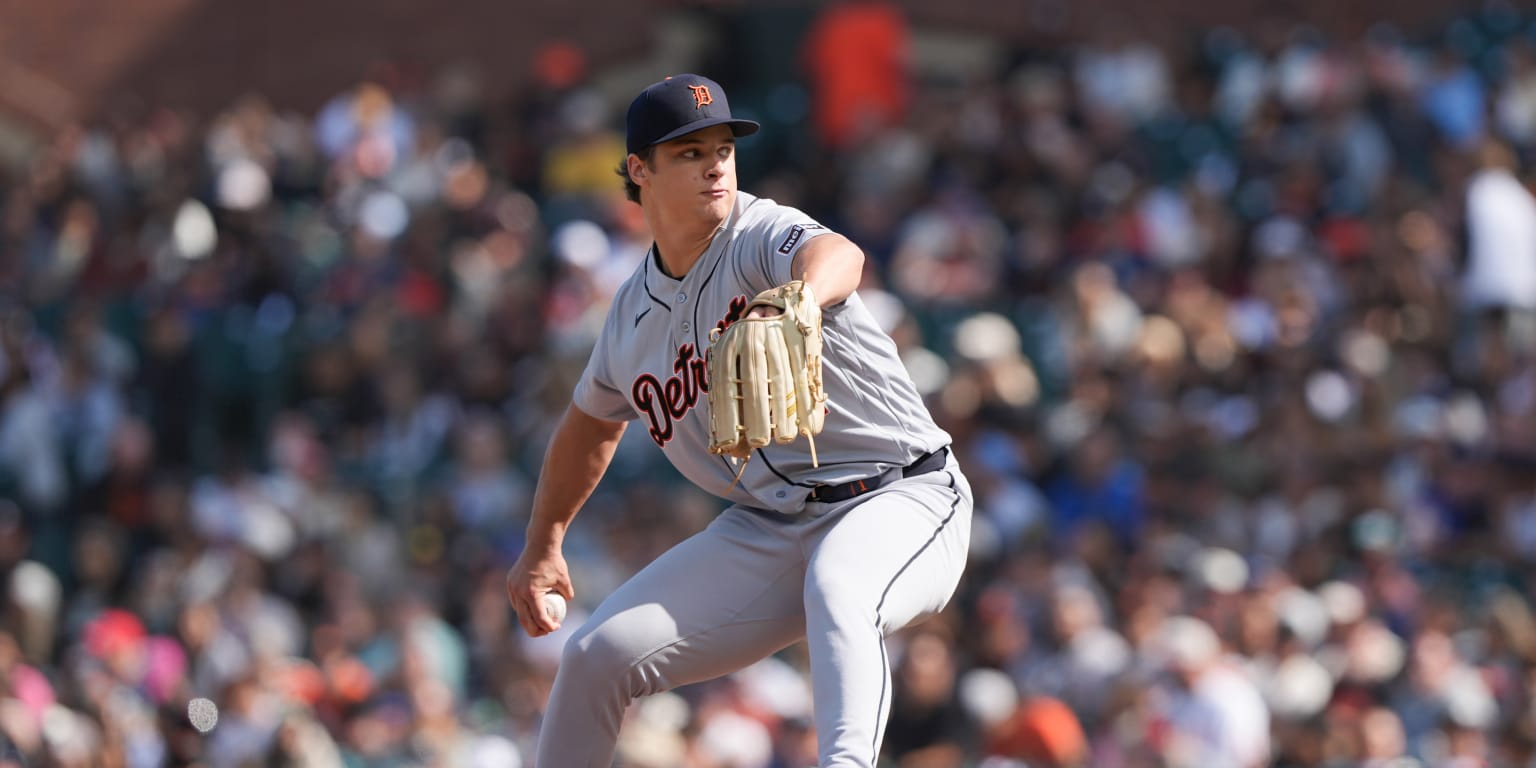
Jackson Jobe took the mound at Oracle Park on Saturday for the first time since May 28, 2025—over 14 months after Tommy John surgery—and announced his return with authority: 5.0 scoreless innings, 71 pitches, a pair of triple-digit fastballs, and command sharp enough to retire the Giants on contact or strikeout in nearly every inning. The Tigers' 24-year-old right-hander opened his comeback with a 97.3 mph fastball, escalated to 100.1 mph for a strikeout, and sustained velocity throughout, mostly sitting 97–99 mph while mixing in slider, changeup, and curveball looks that each registered a strikeout. Manager A.J. Hinch pulled him right on schedule at his predetermined workload ceiling, leaving no doubt about the quality of the stuff or the quality of the recovery.
The timing of Jobe's reentry is no accident of happenstance. The Tigers traded away frontline arms Tarik Skubal and Casey Mize at the deadline, creating an immediate void in rotation depth heading into the final two months. Hinch had been weighing whether to give Jobe another minor league rehab assignment, but the sudden personnel loss made the call straightforward: bring him up now. That need-driven acceleration is exactly the kind of organizational decision that tends to pay off when the player in question is throwing 100 mph and hitting his spots as precisely as Jobe did on Saturday. Detroit's rotation suddenly has a credible third or fourth starter option available for playoff positioning—a material addition when rotation health is a constant wild card in a pennant chase.
What makes Jobe's debut particularly interesting to the proposition market is the rebuild window. A pitcher returning from reconstruction surgery typically operates on a strict innings escalation curve; Hinch's willingness to use 71 pitches Saturday suggests confidence in the arm's durability and readiness to expand workload quickly. By early September, Jobe could be operating at or near full starter capacity—potentially 90–100 pitches, five to six innings, deployed in higher-leverage spots. That efficiency in his season debut (five innings, zero walks, three strikeouts, one hit, zero runs) signals a pitcher who didn't lose command during the layoff, which is the real risk in Tommy John comebacks. The strikeout stuff looks intact; the fastball velocity is there. What remains is consistency across multiple starts and the absence of mechanical regression under fatigue.
For bettors, the prop angle centers on Tigers team totals and run-line exposure over the next 4–6 weeks. If Jobe's availability allows Detroit to preserve bullpen innings by pitching deeper into games—particularly in spots where the rotation would otherwise have required early pull—the team's run prevention should tighten. Over his first three starts, Jobe's strikeout rate (3K in 5 IP against a Giants lineup that includes recently acquired reinforcements) suggests he's tracking toward an elevated K-per-nine rate that could suppress opponent scoring. The Giants are not a slugging lineup, so Saturday's performance shouldn't be overweighted, but the velocity and command execution say Jobe isn't operating as a feel-it-out replacement; he's performing as a starter who knows exactly how he wants to pitch. Watch his next two outings against tougher lineups to validate whether the elite stuff translates beyond the initial showcase. If it does, lean toward Tigers unders in the 4–4.5 range and avoid backing the Giants, Guardians, or any opponent throwing a struggling rotation at Detroit in September.
MLB Intelligence — Baseball intelligence beyond the box score. Open MLB Intelligence →