Mariners' Outfield Derailed by Back-to-Back HBP; Seattle's Lineup Depth Gets Tested
By Justin Erickson ·
Two unscheduled exits in three innings against the Angels leave the Mariners scrambling for answers on positioning and roster availability heading into a compressed Fourth of July holiday window.
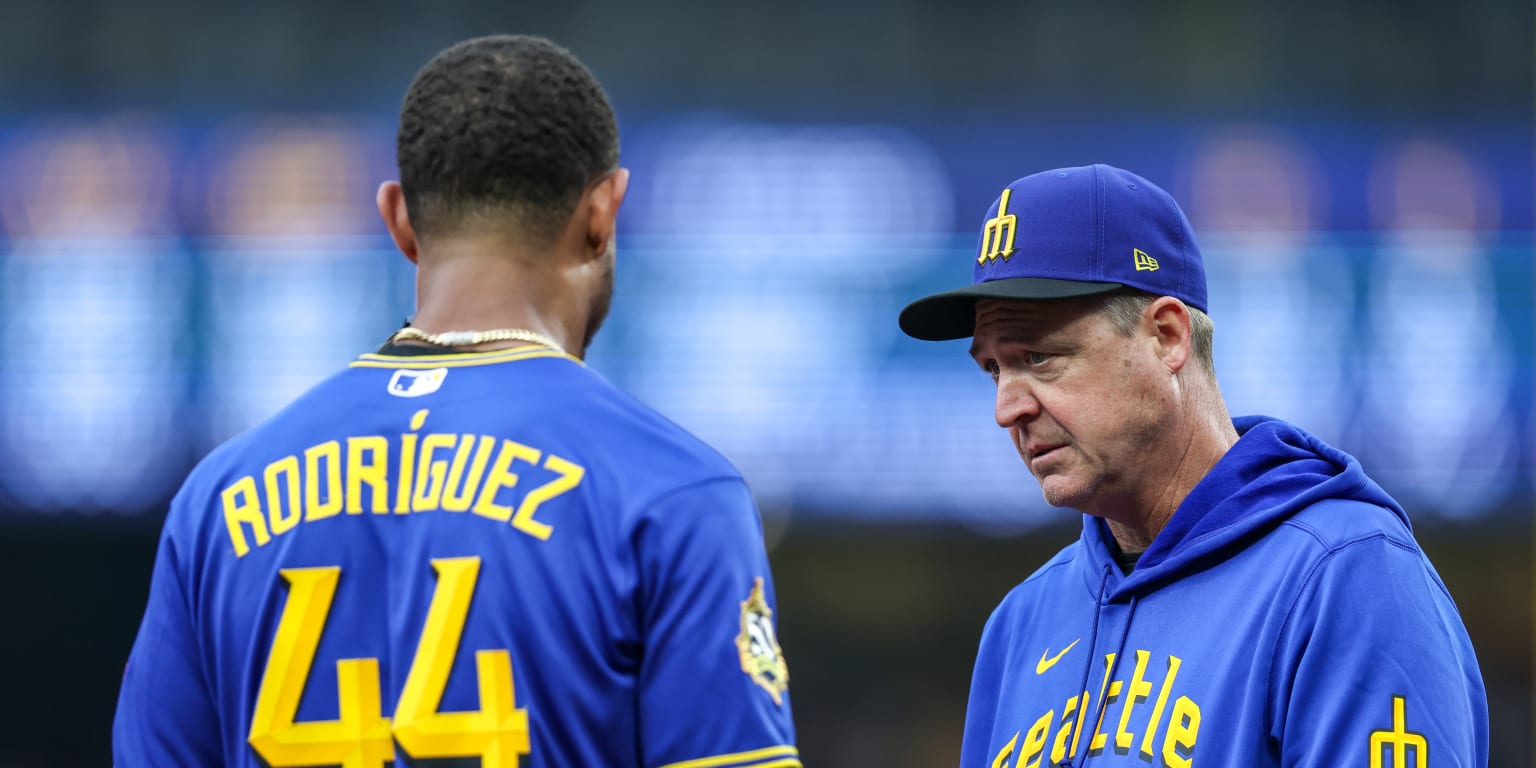
The Mariners' Thursday night matchup against the Angels turned into a lineup stability crisis when Julio Rodríguez took a 78.2 mph relay throw off the back of his helmet in the first inning while attempting to advance on a double play. He stayed in the game through the top of the second, then retreated to the dugout for evaluation and did not return. Two innings later, his replacement Victor Robles exited after absorbing a 97.9 mph fastball to his right wrist/forearm from Angels starter Walbert Ureña, leaving Seattle without two outfielders in quick succession.
What began as routine—Rodríguez racing to third on a grounder, his hands clapping with energy—escalated into a head-injury evaluation that ultimately sidelined him for the remainder of the contest. The Mariners sent Luke Raley from right field to center and brought Weston Wilson off the bench to fill the vacancy, a cascade of repositioning that spoke to Seattle's inventory at the position. Robles' removal only deepened the churn, forcing the organization to lean on bench depth it may not have fully auditioned in this exact scenario. Ureña's command issues compounded the problem; he had already plunked Randy Arozarena with a 98.3 mph fastball in the first inning, suggesting either mechanical inconsistency or a pattern worth monitoring for future matchups.
The stacking of injuries in a single inning sequence—especially to a team's most dynamic offensive asset and his emergency replacement—introduces uncertainty into Seattle's availability window heading into the holiday schedule. HBP incidents involving head contact and wrist contact carry different recovery timelines; while Rodríguez's evaluation is likely the more acute concern given concussion protocols, Robles' forearm placement could sideline him for several days depending on swelling and range-of-motion testing. The Mariners declined to provide immediate status updates, a standard safety precaution that typically precedes 24-48 hour medical reviews.
From a wagering angle, this creates a direct depressant on Seattle's team total and run-line expectancy for the next 2-3 games until roster clarity emerges. Rodríguez has carried a .320 ISO at home this season and logs nearly 40% of the team's power-generated runs in T-Mobile Park; his absence floors the ceiling on offensive output. Simultaneously, Raley's move to center field is a defensive downgrade that may invite more aggressive baserunning from opponents, creating secondary pressure on a bullpen that has posted a 4.12 ERA over the last 14 days. The unders on Mariners team totals in the 3.5-4.5 run band gain mechanical traction here—not because Seattle suddenly plays worse baseball, but because two lineup disruptions compound the variance around their offensive projection.
Monitor the 48-hour injury reports carefully. If both players clear concussion/HBP protocol by Friday, the under thesis weakens immediately. If either remains unavailable through the weekend, the Mariners become a lean-under operation until reinforcements arrive or the original roster returns to action.