Tatis' Walk-Off Unmasking the Padres' Real Problem
By Justin Erickson ·
A 238-plate-appearance homer drought doesn't erase elite contact skills—it exposes a bottom-five offense built on empty at-bats.
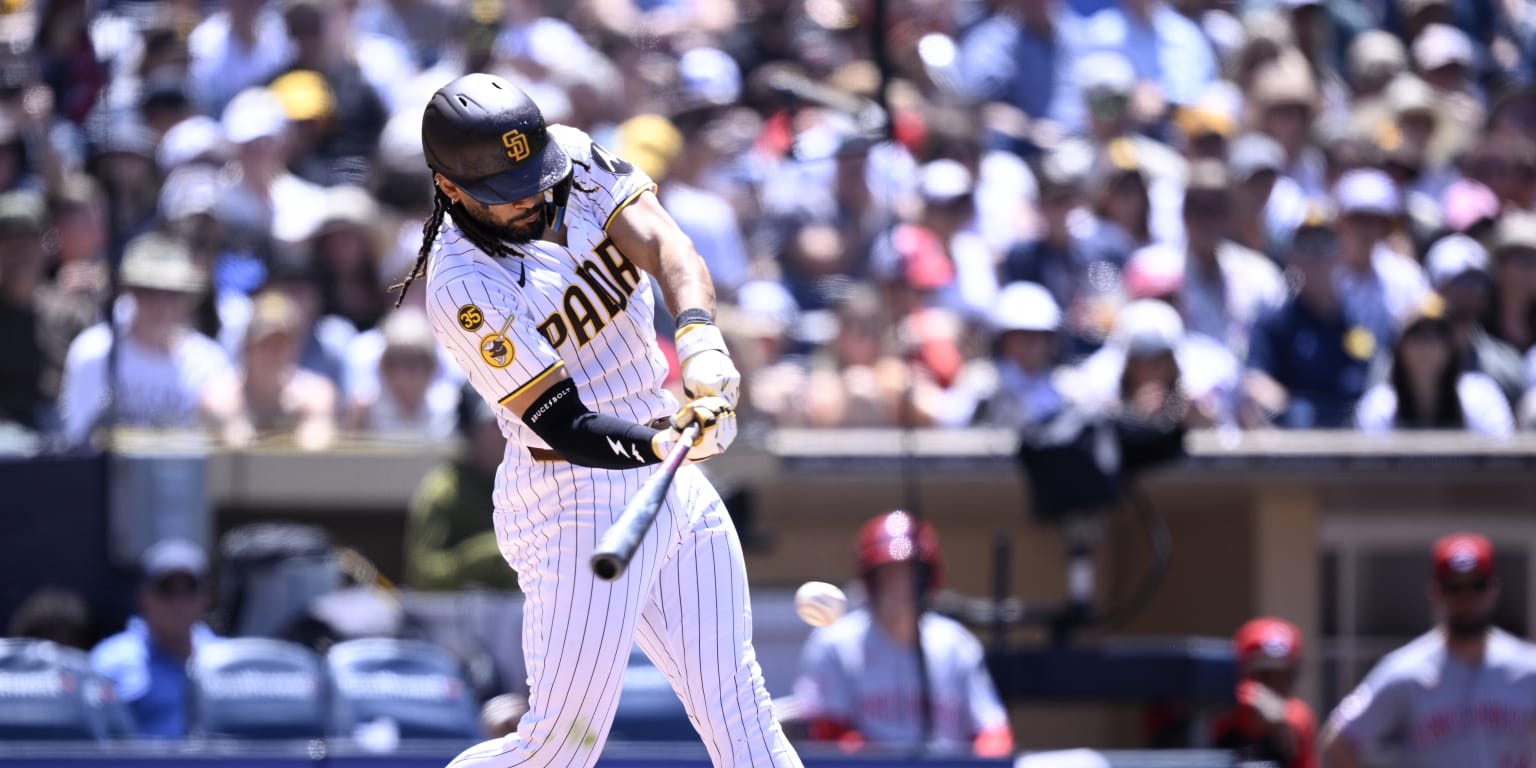
Fernando Tatis Jr. launched his second home run of 2026 on Wednesday at Petco Park, a walk-off that sent the Padres past Cincinnati 5-4 and delivered San Diego's first series victory in five tries. The moment carried theatrical weight—shirtless celebration, ninth-inning dramatics, 106.3 mph exit velo off a Chase Petty slider. It also crystallized the season's core tension: Tatis isn't the problem with the Padres' offense. He's the symptom they've finally treated.
The math is ugly. The Padres rank last in the Majors in runs scored, batting average, and weighted runs created plus (wRC+). That's not a slump; that's an organizational collapse at the plate. Tatis opened the season in a 238-plate-appearance vacuum without a home run—a sprawl so brutal it dominated every narrative about his season. But the walk-off obscures the more telling trend: over his last 20 games before Wednesday, Tatis hit .383 with a .438 on-base percentage. The power drought was real. The contact regression was not. Manager Craig Stammen said it plainly: "I don't think he ever left." Stammen wasn't being generous. He was reading the data.
What shifted wasn't Tatis' approach; it was his patience through failure. He worked with hitting coaches on mechanics, absorbed early-season futility without breaking, and stayed embedded atop the lineup even when the home-run narrative suggested benching. Wednesday's walk-off came on an 18-degree launch angle—barely optimized for elevation, yet 106.3 mph of raw bat control. That's the Tatis edge: elite contact quality regardless of power output. Over the last three weeks, he's proven contact-heavy hitters can carry a team's offense when discipline stabilizes. The Padres are +3 runs in his last 20 games; the full roster is -15. He is the offset.
For betting purposes, this bifurcation matters acutely. The market has treated the Padres' offensive collapse as deep structural—bottom-five moneyline odds, depressed team totals, underleveled run-line favorites. Some of that is justified; the roster's depth is thin. But Tatis' recent profile (elite contact rate, consistent line-drive percentage, aggressive late-count pitches) rebuilds baseline offensive expectancy. If he sustains a .380+ batting average into July, the Padres' team totals—currently priced for a bottom-third offense—face upside pressure. The walk-off is a single-game statement, but the 20-game contact surge is the real edge: the market underweighted how much a high-contact, high-walk-rate bat can stabilize a broken offense when deployed at the top of the order.
The power will come or it won't. That's variance. But contact quality and lineup construction are knowable. The Padres just spent eleven weeks discovering Tatis can carry a dead offense on pure at-bat discipline. Books haven't repriced that discovery yet.