Guerrero's Power Drought Exposes Blue Jays' Structural Collapse
By Justin Erickson ·
Twelve months after signing a half-billion-dollar contract and winning the World Series, Vladimir Guerrero Jr. is hitting like a replacement-level slugger while Toronto implodes—and the market hasn't fully priced the depth of this team's tailspin.
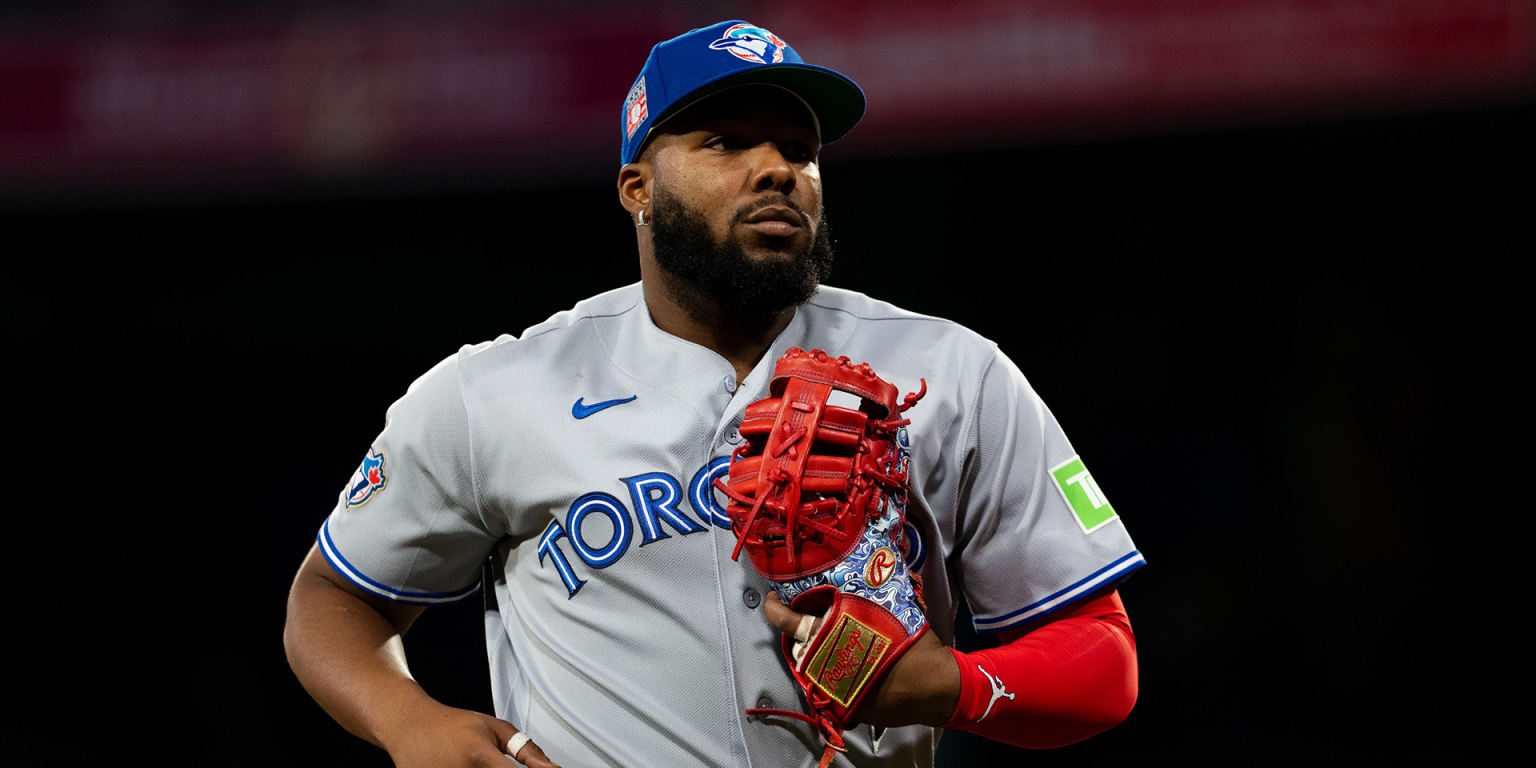
Vladimir Guerrero Jr. returned to Fenway Park on Saturday carrying an uncomfortable symmetry. A year prior, he'd walked these same hallways fresh off a $500 million contract signing, primed for a World Series run that would materialize within months. This time, he descended into Fenway as a shell of that version—part of a 47-57 Blue Jays team hurtling toward the trade deadline as a seller, his own performance a microcosm of Toronto's unraveling.
Six home runs through 104 games ties Guerrero for 223rd in baseball. His .354 slugging percentage ranks 132nd among 147 qualified hitters—worse than Chandler Simpson, a Rays speedster who has never homered in the majors. These aren't fluky numbers or small-sample noise. They're a sustained collapse that reframes how to evaluate both Guerrero's value going forward and the Blue Jays' offensive identity. Toronto ranks dead last in runs scored. No defense, no matter how polished, compensates for that kind of production vacuum. Manager John Schneider framed Guerrero's struggles as a mechanical issue—swinging at pitches outside the zone, failing to put the ball in the air with authority—but the aggregate damage runs deeper. This team has lost whatever cultural identity made them the sport's darling just 11 months ago.
Guerrero himself acknowledged the pressure cooker he now inhabits. "There's still 58 games left. I know I'm better than that," he said. That's both accurate and incomplete. Yes, Guerrero possesses elite ceiling skills. Yes, 58 games remain. But the market for his services at the deadline—whether as a trade chip or a team's long-term franchise centerpiece—has already been damaged by this season's evidence. A $500 million deal carries an unspoken social contract: the slugger has to produce like one, especially when the roster crumbles around him. Schneider's public faith in Guerrero ("When it's right, he's one of the best") reads as institutional steadiness masking private accountability conversations. That's the manager's job. But it doesn't change what the stats show: Guerrero isn't making hard contact at elite rates, and the Blue Jays' ability to compete depends on him snapping out of this before the deadline window closes.
For prop bettors, this creates a bifurcated window. Guerrero's HR prop line has likely compressed downward already—the market has processed the 223rd-ranking reality. But his contact quality metrics (average exit velo, barrel rate, hard-hit percentage) will tell you whether a reversion is mechanical tweaking or structural collapse. If those metrics have cratered alongside his power output, his slugging props remain fade material through the deadline window and into the second half. If exit velo and barrel rates remain elite while production lags, the over on his back-half power totals becomes live—a short-window angle before buyers at the deadline make personnel decisions. Right now, 58 games is simultaneously enough time for redemption and enough time for the market to price him out of contention. The prop edge belongs to whichever team accurately reads the causal mechanism first.