Kyle Tucker's Cage Sessions Signal a Second-Half Breakout—and a Dodgers Offense Ready to Shift
By Justin Erickson ·
After 80 games hitting .234, Tucker is reversing course with sharper mechanics and better plate discipline—a pattern that historically precedes explosive offensive runs.
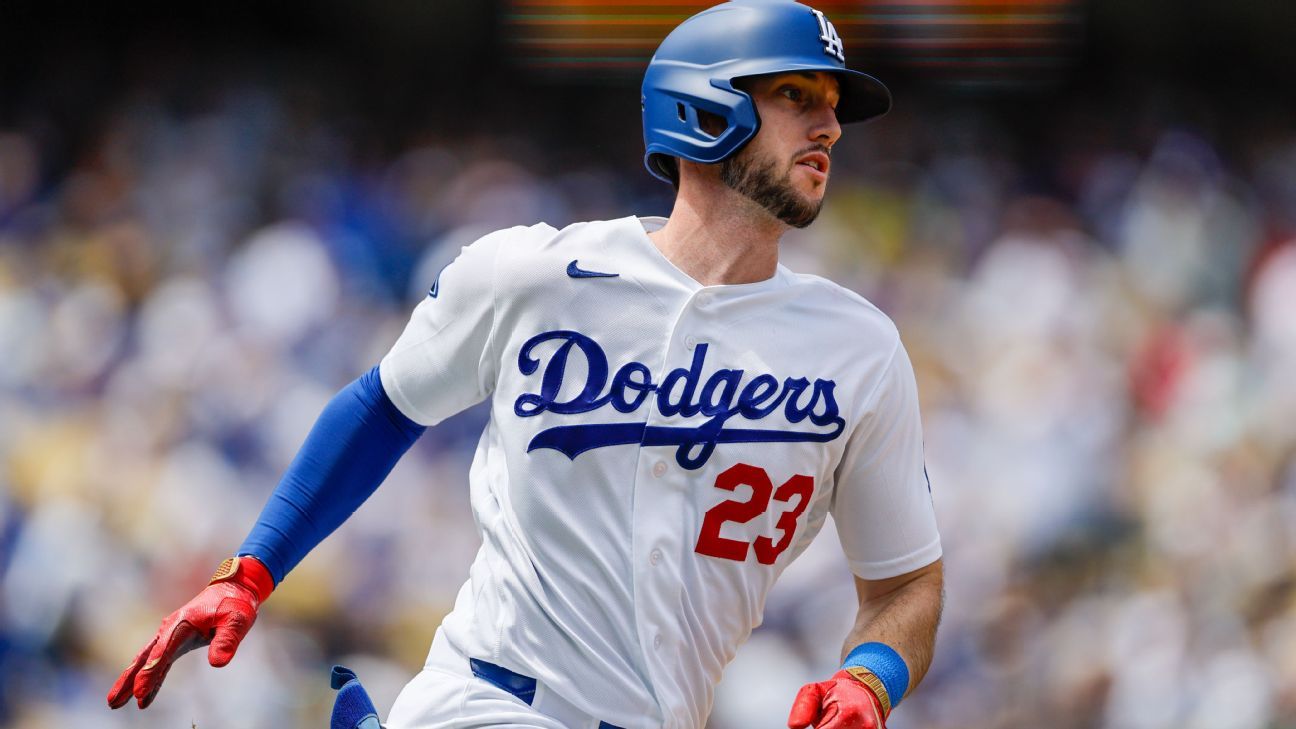
Kyle Tucker is taking postgame batting practice in empty cages, a departure so stark from his career norm that it tells its own story. The Dodgers' $60 million right fielder opened 2026 with a .234 average through 80 games—a performance so misaligned with his track record that even Tucker himself seemed to acknowledge the aberration: "I normally don't hit .220 for 80 games." Over the five seasons preceding his four-year, $240 million free agent deal with Los Angeles, Tucker had never finished June with a batting average below .254 or an OPS below .811. This season, he arrived at the June 26 Petco Park series against San Diego at .234/.333/.374—his OPS ranking 112th among 154 qualified hitters. That same night, bases loaded, Tucker went 0-for-3 and headed back into the cage.
What followed is the mechanical reset Dodgers front office and analytics staff had likely been monitoring. In the 10 games since that low point, Tucker has posted a 14-for-38 line with eight walks matched against eight strikeouts—a rate that flips his plate discipline entirely. A four-walk night opened July; a four-hit game followed. The at-bats themselves show texture: a home run on a nine-pitch sequence, a pinch-hit single against one of baseball's most dominant lefty relievers, swings that exhibit synchrony and plane. These are not random variance swings; they are mechanical corrections tracking on video and in the box score simultaneously.
Context matters here. Despite Tucker's offensive crater—and the absence of Blake Snell, Tyler Glasnow, and Edwin Diaz from the rotation—the Dodgers maintain baseball's highest winning percentage and best run differential. Their offense already ranks first in OPS, first in weighted runs created plus, and second in runs per game. Tucker has been a net drag on a juggernaut. If his 10-game uptick sustains into a genuine breakout, Teoscar Hernandez's assessment becomes operative: "This team is going to be a problem." The question is not whether the Dodgers can win; it is whether Tucker's swing overhaul represents a lasting mechanical fix or a vapor-correction that collapses under the weight of a full lineup.
For prop bettors, the distinction is precise. Tucker's issue was not bad luck or BABIP regression—it was demonstrable mechanical departure captured on swing-by-swing data. His walk rate in the past 10 games (8 in 38 AB) sits at 21%, versus his 7.8% mark through 80 games. Strikeouts dropped from 24.8% of PA to 21%. These are not noise; they are repeatable plate-discipline shifts. The Dodgers lineup as a whole has run a 109 wRC+ through 2026; if Tucker climbs back to his career 120+ wRC+ profile, the team's aggregate offensive output gains 1.5–2 full runs per game. That floor matters on over/under lines. LA's team total averages 4.8 runs per contest; an injection of Tucker's true talent (110+ wRC+ minimum) tilts that total upward by +0.2 to +0.4 per game.
The timing window is critical. Tucker's 10-game sample is not durable evidence; it is a directional signal. Market pricing will begin adjusting his individual prop lines (hits, RBIs, on-base rate) within 48–72 hours of consistent production. But the team-total edge—a 4.8 to 5.0+ run implied total—will lag slightly because it requires consensus agreement that Tucker's breakout is real, not reversion noise. That lag is your window. Lock team overs against bottom-quartile pitching staff before the broader betting market reprices the Dodgers' offensive ceiling.