MLB
Hunter Greene's Elbow Surgery Ends Reds' Season and Opens 2027 Uncertainty
Cincinnati's ace is done for 2026, but the real cost to bettors won't be clear until spring training reveals his surgical recovery.
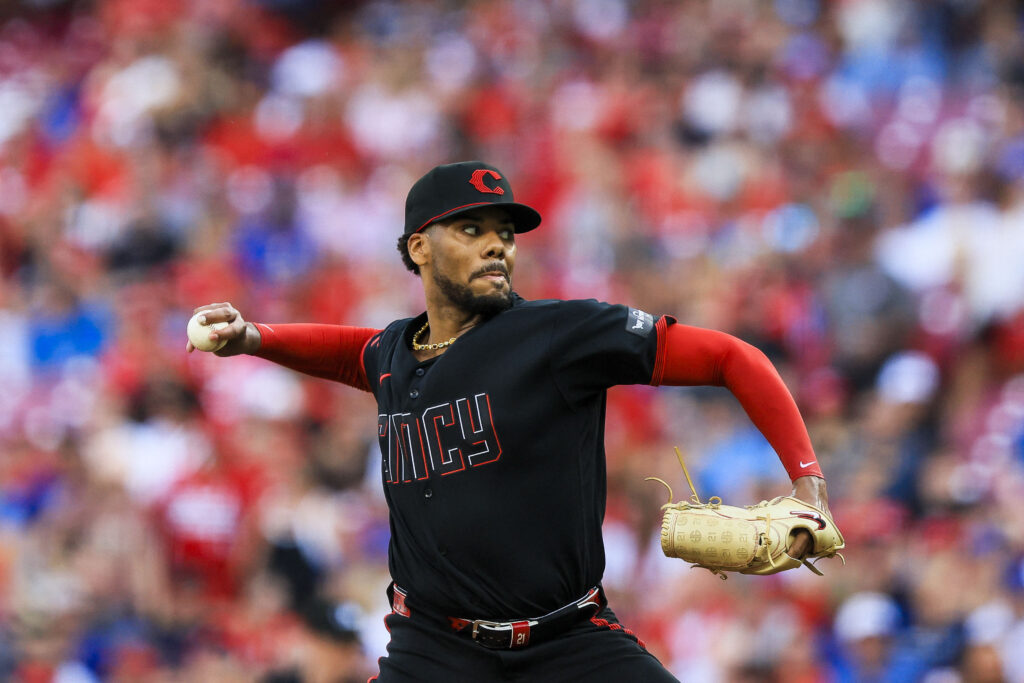
Hunter Greene is headed to the operating table. The Reds announced Friday that their right-hander will undergo elbow surgery, effectively closing the book on Cincinnati's 2026 season and raising a far more consequential question: how much velocity and stuff does Greene have left in 2027?
Elbow surgery for a starting pitcher is rarely a quick recovery. The specifics of Greene's procedure—whether it's a clean-up arthroscopy or something more invasive—will determine everything from his spring training availability to his opening-day readiness. If it's Tommy John, he's looking at a 12-to-18-month rehabilitation. If it's a minor scope, he could be back in late spring or early May. Right now, the Reds and the market are operating in a fog of incomplete information, which creates a data vacuum that professional bettors will exploit the moment Greene throws his first pitch in competitive play next spring.
For Cincinnati, the timing couldn't be worse. Greene has been their ace-in-waiting for years, the cornerstone around which playoff hopes theoretically revolve. His strikeout rate and raw stuff remain elite—he's been one of baseball's hardest throwers—but elbow problems are a velocity killer. Pitchers who undergo elbow surgery often return with measurably reduced fastball velocity and a narrower band of control, particularly in the first half of their comeback season. The market will price Greene's strikeout props aggressively low next spring based on this known risk profile, but there's a hidden edge for bettors who pay close attention to his actual bullpen sessions and spring training performance. Early reporting on velocity loss (or lack thereof) will be the tell.
From a betting standpoint, the immediate impact is Cincinnati's pitching depth and team total expectations for late August and September. The Reds lose a No. 1 starter for the remainder of 2026, which means their rotation thins considerably and their starter ERA will spike. Any team total unders for Cincinnati in the final two months should account for a weaker run environment—fewer quality innings pitched by their own arms means more games where bullpen usage spikes and leverage situations favor the opposition. If you were considering Reds overs down the stretch, the calculus just inverted.
The longer-term prop angle is patience. Greene's strikeout line in spring 2027 will almost certainly be soft relative to his pre-surgery baselines because the market will bake in worst-case recovery. Professional books are programmed to price elbow-surgery comebacks conservatively. The edge goes to bettors who monitor his actual velocity data and control metrics during spring games, then strike on K props only once video and radar gun data confirm he's retained arm health. That's a multi-week play, not an immediate one—but it's where the real edge materializes.
MLB Intelligence — Baseball intelligence beyond the box score. Open MLB Intelligence →