Arenado's Swing Reset Tracks a Veteran Hitter Through Real Adaptation—Not Luck
By Justin Erickson ·
After a brutal April start in Arizona, Nolan Arenado borrowed Albert Pujols' late-career playbook and has rebuilt his timing through high-velocity machine work; the mechanics matter as much as the streak.
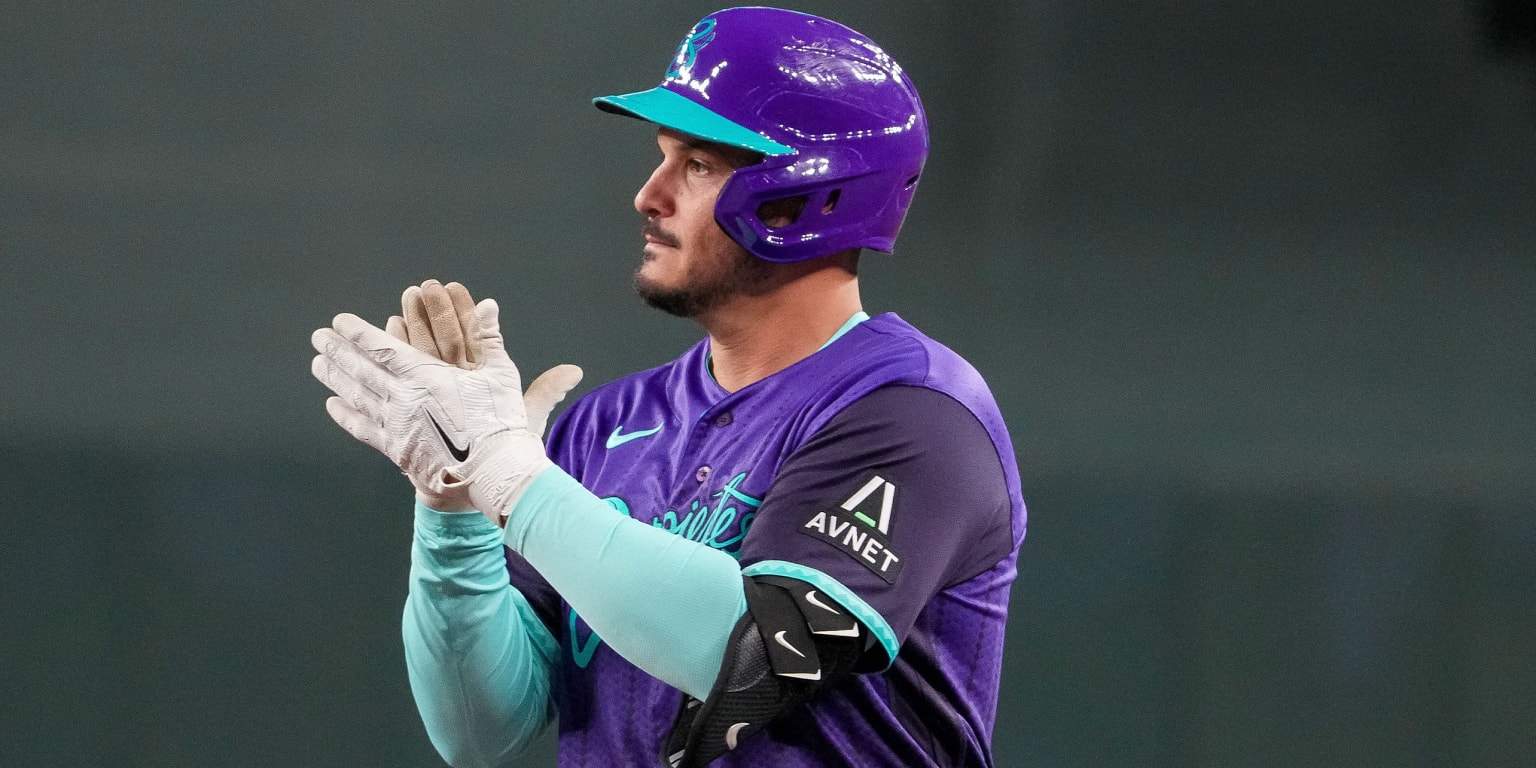
Nolan Arenado arrived in Arizona with legitimate concerns. A .666 OPS in 2025 followed by a .188 slugging percentage through April 11 of this season wasn't a fluke—it was a signal that his pregame preparation wasn't meeting the demands of his swing anymore. At 35, after 13 years of relative consistency, Arenado faced a choice: assume decline or diagnose the mechanical break. He chose the latter, and what emerged was a direct line to Albert Pujols' experience during his own late-career reset.
The specifics matter here. Pujols didn't just change his routine; he intensified it. He moved from the comfort of tee work and standard pitching machines to high-velocity reps thrown from angles far sharper than anything Arenado would see in live competition. The principle: overload the nervous system in practice so that game-speed fastballs register as manageable. Arenado had seen Pujols employ this method during their 2022 season together but hadn't committed to it until desperation forced his hand in Philadelphia. The shift wasn't psychological—it was biomechanical. His swing plane needed recalibration against fastball velocity and movement he wasn't preparing for adequately.
From April 12 forward, Arenado slashed .329/.402/.592, a stark departure from the early-season crater. Manager Torey Lovullo credited consistency in swing plane and pitch recognition as the foundation. Neither of those improvements happens by accident; they require the specific stimulus Arenado was now providing in pregame work. This wasn't a hot streak driven by luck or small-sample batting average variance. The underlying metrics—approach refinement and contact quality—shifted in tandem with routine change. Arenado stopped searching and started executing.
For prop bettors, the distinction between noise and process is where edges live. Arenado's April meltdown was real and concerning, but it wasn't predictive of permanent decline because the root cause—insufficient preparation intensity—was fixable. Now that he's implemented a higher-difficulty pregame protocol similar to what extended Pujols' career, his hit rate and exit velocities should stabilize at or near his career baseline. His plate discipline (reflected in his .402 OBP post-correction) has returned to form. Over the next 30 games, expect his batting average to settle in the .285–.305 range with consistent power; the volatility has structural support now, not just randomness. Teams that have already adjusted their Arenado prop lines downward based on early April will find those numbers represent value going forward, particularly on hits and total bases, where the swing plane consistency Lovullo described translates directly to contact quality and exit angle.
The narrative of veteran decline is compelling because it's common. But Arenado's case illustrates a harder truth: sometimes a slump is a diagnostic opportunity, not a destination. His willingness to abandon a decade-old routine because a Hall of Famer showed him the blueprint speaks to self-awareness and coachability. The Diamondbacks got what they traded for—not immediately, but once the actual work began.