MLB
Webb's Mid-Season Pitch Arsenal Reset Powers Cubs Late-Game Leverage
A willingness to scrap three seasons of muscle memory has turned Jacob Webb into a high-leverage closer option—and the strikeout profile suggests the improvement is real, not surface noise.
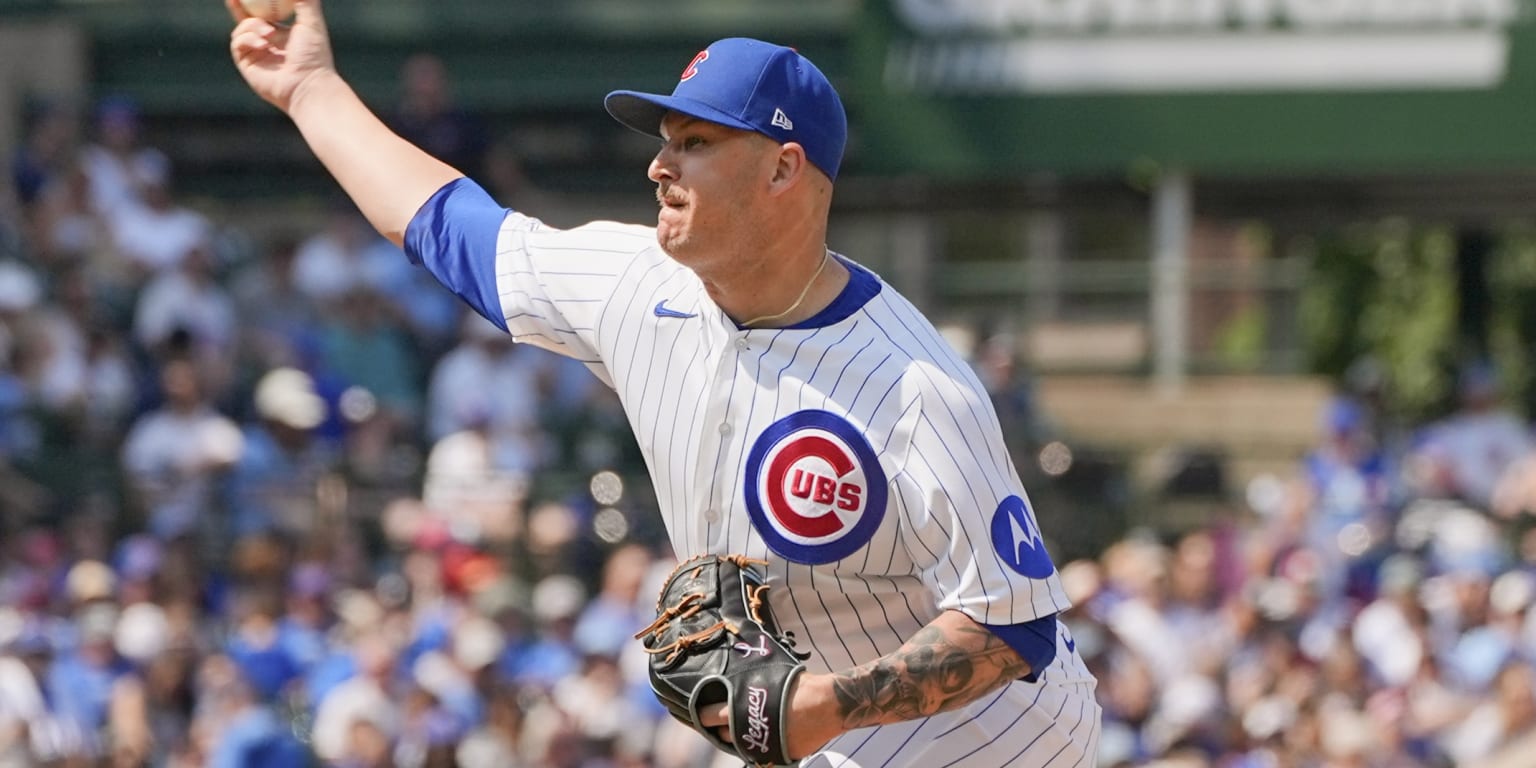
Jacob Webb spent the first month of the 2026 season proving that pitch repetition without results is just stubbornness with a fastball. After three years leaning on a sweeper as his primary breaking ball—a pitch he developed with the Angels and carried into his Cubs tenure—Webb watched hitters, especially right-handed batters, punish him at a .429 slugging clip through April. His ERA sat at 5.06 heading into May. Rather than ride out the decline or tinker at the margins, Webb made the rarer decision: admit the approach wasn't working and blow it up.
The Cubs' pitching development staff didn't have to be asked twice. They dusted off a curveball Webb had shelved for three years—a pitch with a movement profile too similar to the sweeper to coexist in his arsenal—and paired it with work on a bullet slider. By early May, the sweeper was gone. The transition, Webb noted, happened "real quick." That speed of institutional buy-in matters: it signals the organization prioritized mid-season adaptation over ego, a green flag for any relief pitcher trying to add a dimension to his game.
The results have been impossible to ignore. Since May 1, Webb has held right-handed hitters to a .175/.250/.281 slash line with a 1.70 ERA across that span. His four-seam fastball velocity climbed to 94.2 mph on average (up from 93.4 in 2025), and his changeup whiff rate spiked to 43.8%—a full 8.4 points above last season's 35.4%. That's not surface-level hot streak territory; it's measurable improvements across two of his three primary offerings, which suggests the curveball is doing its job: creating enough pitch separation that hitters can no longer sit on either the fastball or off-speed. Webb has carved into a high-leverage role with manager Craig Counsell, recently logging a four-out save against Washington that included strikes through the top of the order.
For betting purposes, the strikeout prop is where Webb's remix matters most. Relievers with newly functional breaking balls tend to see fastball usage decline and whiff rates climb—Webb's changeup spike is evidence the mixing strategy is already working. Over the final six weeks of a season where the Cubs' playoff odds are tightening, Webb's role is likely to expand, putting him in higher-velocity situations (runners on, higher counts) where the curveball's effectiveness becomes critical. A reliever throwing four legitimate pitches to major-league hitters, after spending a decade leaning on two, doesn't regress to April-level stuff; he sustains the May-through-August version because the hitter's decision tree just got wider. Track Webb's strikeout rate in save situations and high-leverage frames—the book likely priced him as a league-average reliever based on 2025 tape, not the mid-season recalibration.
The Cubs' postseason appearance is no longer theoretical, and Webb's transformation from fringe arm to trusted closer is tied directly to a willingness to throw away institutional memory. That flexibility is precisely what separates relievers who find another gear from those who don't.
MLB Intelligence — Baseball intelligence beyond the box score. Open MLB Intelligence →