Ben Brown's Two-Seam Grip Flip Turns Cubs Rotation Crisis Into Competitive Advantage
By Justin Erickson ·
A winter collaboration with Clay Holmes unlocked a fastball design that transformed Brown from replacement-level swingman into the Cubs' most valuable pitcher.
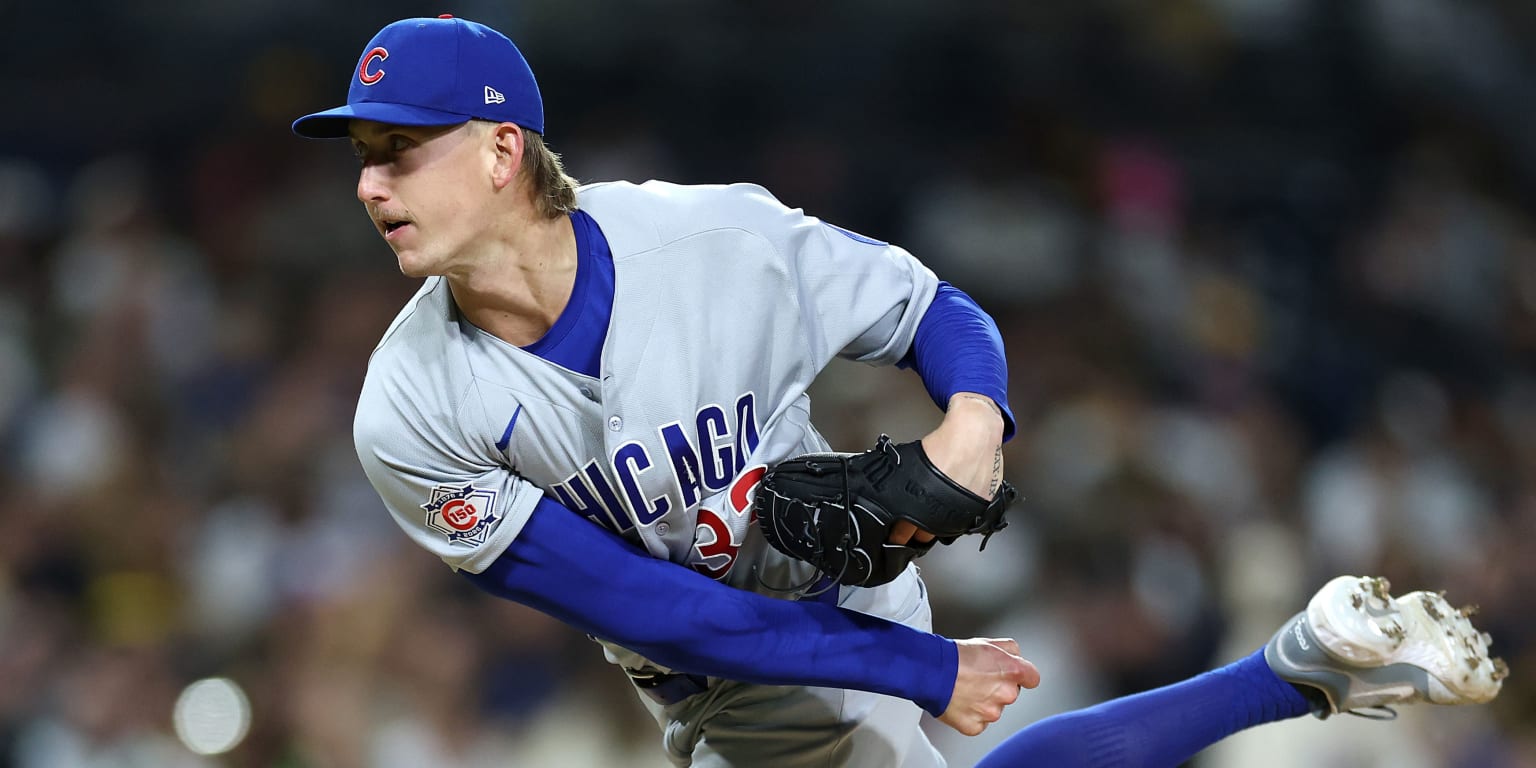
Ben Brown's 2025 season reads like a before-and-after clinic in pitch development. Last year, the lanky right-hander threw his four-seam fastball and knuckle curveball 96% of the time, posted a 5.92 ERA across 25 games, and ranked in the sixth percentile for hard-hit rate. This season—armed with a new two-seam fastball designed over the offseason alongside Mets closer Clay Holmes—Brown has compiled a 1.92 ERA in 17 appearances and leads the Cubs by fWAR (1.6), a gap so wide it barely resembles the same pitcher.
The mechanical shift came from simplicity. Brown had struggled to add a third pitch throughout his minor-league career; he needed a grip that looked identical to his four-seamer out of his hand but moved differently at the plate. Holmes, who overhauled his own arsenal by adding three pitches in the same offseason window, connected Brown with Provero Performance near Nashville. The result: a riding two-seamer that drops 3.3 inches less than a typical two-seamer at the same velocity, yet carries 14.8 inches of arm-side movement. Both fastballs tunnel from the same release window, creating a deceptive timing problem for hitters that neither pitch alone could solve.
The numbers validate the design. Brown's ground-ball rate has spiked to 51.5%—86th percentile—while his barrel rate and hard-hit rate have swung from catastrophic to baseline. In his most recent start at St. Louis, he threw seven innings of one-run ball in a Cubs victory. This is not marginal improvement; this is a reframing of his entire contact profile.
For bettors tracking Cubs pitching, Brown's profile shift carries immediate implications. His strikeout rate and walk rate remain relevant, but the real edge lies in game-script and run-expectancy props. A pitcher who generates ground balls in the 86th percentile and plays on an injury-ravaged staff will face elevated leverage situations. Brown's next three starts warrant attention on line positioning: if the market prices his recent two-start sample as noise (common reaction to relief-to-starter conversions), early-week overs on Cubs team totals may be undervalued. Conversely, if Brown anchors the rotation for a month-plus, his strikeout prop will track upward as he commands more innings. The two-seam grip itself—now stable and deployable—removes the single biggest variable that destroyed his 2024 value. This is durable improvement, not a hot streak.
Cubs management values this development enough to place Brown back in the rotation permanently, a resource allocation that signals internal confidence beyond the stat line. For prop bettors, that's your second confirmation that the edge is real.