Clay Holmes' Fractured Fibula Dismantles Mets Rotation Stability
By Justin Erickson ·
The Mets lose their most reliable starter to a comebacker injury, forcing an untested prospect into a hole they can't afford to dig deeper.
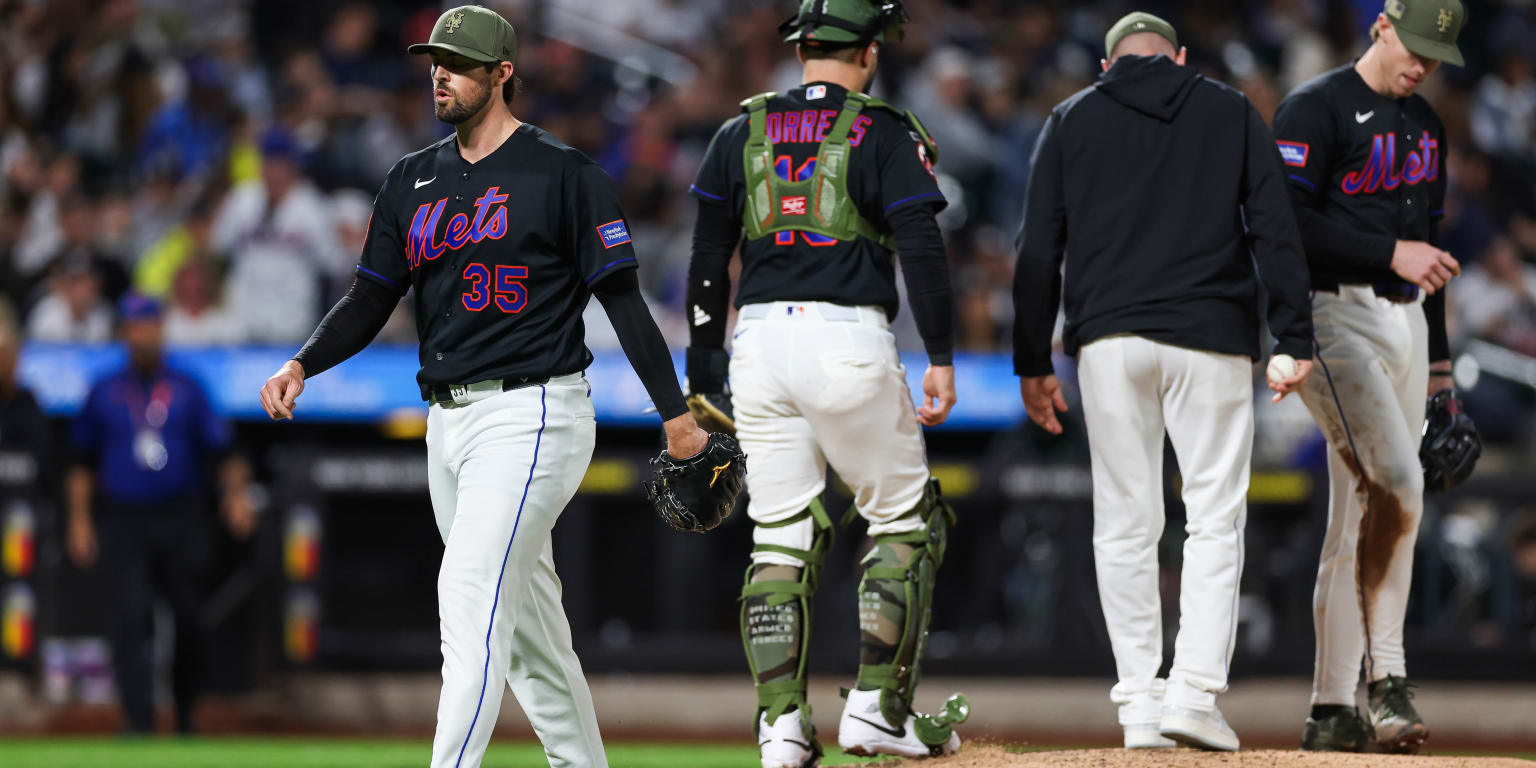
Clay Holmes fractured his right fibula on a 111.1 mph comebacker from Spencer Jones in the fourth inning Friday night, and the Mets' rotation just went from functional to fragile. Holmes, 33, is expected to miss at least six weeks—possibly longer, given that the break occurred in his push-off leg, the architecture of his delivery. Manager Carlos Mendoza didn't mince words: "a huge blow." The timing is devastating. Holmes had been the Mets' best pitcher through the first seven weeks, posting a 2.39 ERA over nine starts while being one of only two starters in the rotation to pitch into the seventh inning more than once. He was durable. He was working. He was irreplaceable.
What makes this worse is that Holmes pitched through the injury without immediate awareness. He stayed on his feet after the impact, jogged after the ball, and convinced Mendoza he could continue. Only after he exited in the fifth inning did X-rays reveal the fracture. The damage compounded because Holmes pitched another inning and a third on a broken bone, throwing an additional 40-plus pitches that likely aggravated the break. His mechanics would have deteriorated sharply, placing stress on adjacent structures. Yankees manager Aaron Boone, who oversaw Holmes from 2021–24, noticed the degradation in real time: "you could tell it got him good." Holmes lasted long enough to allow a fourth run (three came before the fracture), inflating his final line beyond what his actual health status would have produced.
The Mets now face a rotation crisis with no clean substitute. Jack Wenninger, the fifth-ranked prospect, carries a 1.08 ERA at Triple-A but has walked 18 in 33.1 innings—control issues that signal he needs seasoning. Tobias Myers is unbacked after weeks in the bullpen. Jonah Tong, the No. 2 prospect, blew up in his last start for 7 runs. The team will cycle Peterson, Peralta, Scott, and McLean short-term, but one of these prospects will eventually start. That pitcher will carry inherited volatility.
For betting purposes, Mets team totals face immediate structural compression. Holmes' absence removes a floor—a pitcher who consistently ate innings and limited damage. His replacement will have lower leverage and higher variance. Over the next 4–6 weeks, Mets team totals should trend lower not because the offense changed, but because the pitching margin of safety vanished. Games Holmes was likely to hold to 3–4 runs will now feature a prospect with walk rates above 5.4 per 9 innings, turning competitive matchups into toss-ups. The Yankees game was a 5–2 loss; expect more of those frequency if the replacement pitcher can't command the zone.
Monitor Mets unders at any line above the 4.0–4.2 range over the next month. The roster composition doesn't support sustained offensive outbursts, and the pitching staff just lost its stability anchor. This isn't a fade of the Mets' hitting—it's a recognition that inferior pitching creates scoring drag by virtue of extended at-bats, elevated walk rates, and inherited baserunners.