Holmes Exits Bullpen Role to Anchor Atlanta's Rotation Depth Crisis
By Justin Erickson ·
Grant Holmes delivered six scoreless innings on a night the Braves' playoff hopes hinge on internal options, not deadline acquisitions.
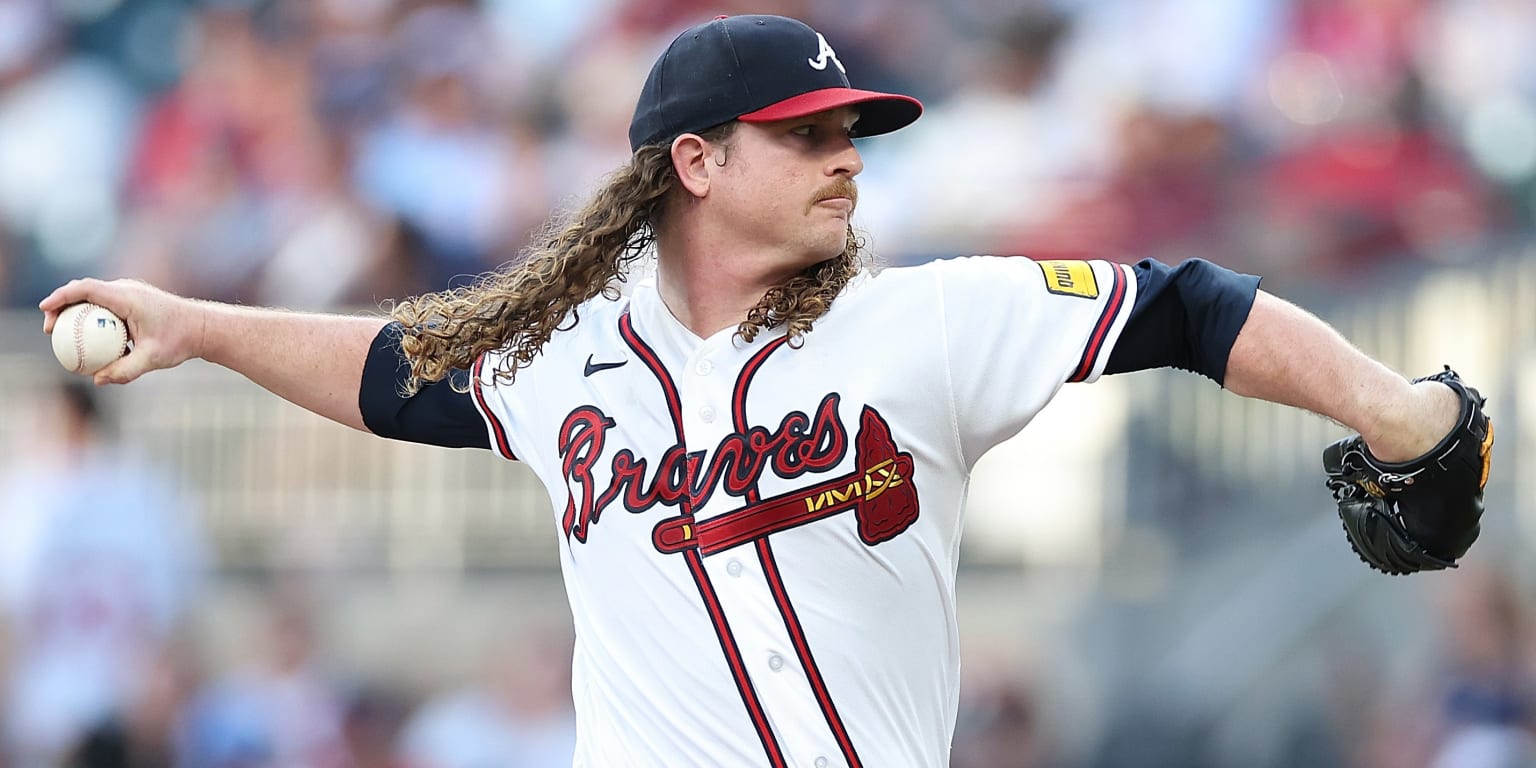
Grant Holmes pitched six scoreless innings and Austin Riley hit a two-run homer to lift Atlanta past Miami 4-2 on Tuesday, extending the Braves' winning streak to six games and their AL East lead to 7.5 games at 68-45. The victory matters less for what it is than what it signals: the Braves' rotation depth, questioned sharply after the team declined to acquire a frontline starter before Monday's Trade Deadline, may not be the organizational liability management feared.
Holmes entered this outing with legitimate friction in his recent workload. He's exceeded five innings in just three of his previous eight starts, including a short Thursday appearance where he threw 69 pitches over 4⅔ innings before manager Walt Weiss yanked him mid-inning. The pattern suggested a pitcher either losing effectiveness or losing trust—or both. Weiss had been pulling him early when he faced the order a second time, a clear vote of no-confidence in his ability to navigate deep into games. Atlanta had just watched Trade Deadline activity reward other contenders (Houston, Kansas City, etc.) while the Braves passed on names like Tarik Skubal and Jacob deGrom, a choice that invited public skepticism about front office ambition.
Tuesday's performance reframed that narrative. Holmes limited the Marlins to five hits while staying efficient enough to pitch into the seventh inning. This was the sixth time in 2026 he's reached at least six innings—meaningful because it establishes a floor for consistency rather than a ceiling. The scoreless line carries additional weight: it marked the fourth time in his career, third time this season, that he's held an opponent off the board across six-plus innings. That's not a fluke variance spike; it's pattern evidence. If Holmes can sustain this approach, Atlanta's rotation has internal solutions to the injury-thinned depth chart.
Riley's two-run homer in the seventh was his first home run since July 19 against Texas, a gap that underscores a broader ceiling problem. He's hit 13 homers this season after producing three straight 30-homer campaigns from 2021-23, a significant regression from his established baseline. But the July 19 date marks the start of a mild uptick—two homers off Nathan Eovaldi and now this. For bettors tracking Riley's prop trajectory, the mechanical question is whether he's bouncing off a season-long floor or temporarily surfacing before another drought. His strikeout rate and hard-contact frequency matter more than this single two-run blast, but the timeline of his touches in high-leverage spots (seventh inning, runners in scoring position) suggests he hasn't lost leverage.
For Atlanta's rotational picture, the angle is clearer. Holmes' recent history shows he's been underutilized by game state and inning count—pulled too early, doubted too loudly after light workloads. If Weiss extends his rope in future starts, permitting him to work deeper into games without the hair-trigger hook, his strikeout props and innings-pitched floors rise materially. The Braves are 13-5 since the All-Star break; a rotation that stays healthy and functions without a premium deadline addition changes the playoff math substantially. Holmes' six-inning outing establishes that's a plausible path, not wishful thinking.