Peralta's Rays Debut Misfires, But Hicks' Historic Grand Slam and Bullpen Heroics Carry Tampa Bay Past Rockies
By Justin Erickson ·
A deadline acquisition's poor first outing was overshadowed by a catcher's franchise-first power display and six relievers combining for 7 1/3 scoreless innings in an 11-inning survival.
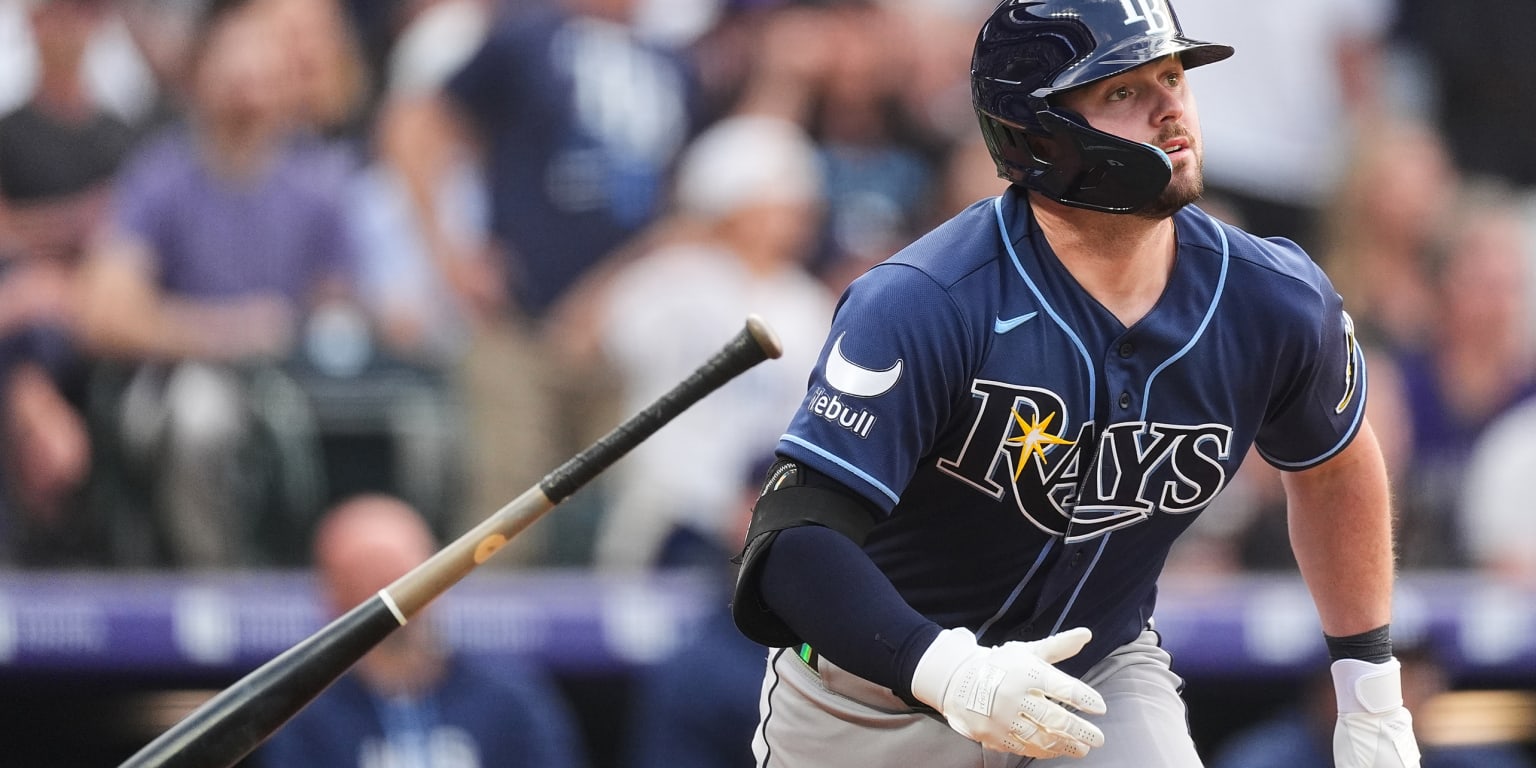
Freddy Peralta's Rays debut at Coors Field on Tuesday night was a cautionary reminder that post-deadline velocity doesn't guarantee chemistry. The right-hander surrendered seven runs over 3 2/3 innings—the kind of opening act that would typically sink a team in a thin-air park. But Tampa Bay's pitching architecture absorbed the damage and then some. Six relievers combined to work 7 1/3 consecutive scoreless innings, a display of depth and bullpen management that won Tampa Bay the game 9-7 in 11 innings and exposed what appeared to be a sloppy acquisition actually functioning as a roster hedge.
Liam Hicks, the other deadline battery piece, provided the emotional and statistical centerpiece. In his second at-bat as a Ray, Hicks launched a grand slam into right field in the third inning—the first of his career and the first by any player in a Rays debut since the franchise's existence. That three-swing introduction matters beyond the novelty. It signaled that while Peralta's arm wasn't ready for Coors' variables, the Rays' new catcher could at least punish misfires. Hicks' early power stroke—a 450-foot+ statement in a ballpark where such displays compound quickly—set a baseline expectation: this acquisition has gap-to-gap and over-the-wall upside.
What followed was structural baseball. The Rockies and Rays traded zeros from the fourth through the eighth, a surprising denouement in Denver that suggested the game had resettled into a true pitching duel. Jonathan Aranda's ninth-inning single tied it 7-7, pushing the contest to extra innings where the automated runner rule gave Tampa Bay a runway it used well. Taylor Walls' sacrifice bunt advanced Ben Williamson to third; a wild pitch scored him. Yandy Díaz and Junior Caminero added back-to-back hits to construct breathing room, and All-Star closer Bryan Baker—now riding 32 saves, a league-leading total—dispatched the Rockies in order.
The prop implication revolves around Peralta's debut performance and what it means for Tampa Bay's rotation reliability over the stretch. A 7-run, 3 2/3-inning outing—especially in a park that inflates offensive numbers—signals that the Rays may have acquired an arm that required a ramp-up window longer than the post-deadline rush provided. For the next week to two weeks, Peralta's ERA-flavored props (specifically earned run total and innings pitched) are vulnerable to overestimation by oddsmakers pricing in his reputation rather than his immediate form. The market opened him as a proven starter; he showed up as someone needing to rebuild. Conversely, Hicks' debut grand slam is a single-event spike unlikely to repeat at that rate, and any props on his next five games should be faded if the book inflates his slugging or power projections off one moonshot at altitude. The true edge is in Peralta IP and ER unders over his next two starts before the sample size normalizes.
Bryan Baker's 32nd save underscores another angle: the closer usage story. If the Rays' pitching staff continues to lean on Baker in close finishes, his save total is tracking toward a career-high. That's not a prop play yet, but it's directional context worth tracking as the final stretch approaches.