Heim's Clutch Timing Elevates A's Ninth-Inning Narrative—and Changes Late-Game Leverage
By Justin Erickson ·
Oakland's reacquired catcher has now delivered four game-tying hits in high-leverage spots since returning from Atlanta, signaling a shift in how the market should price ninth-inning sequences for the A's.
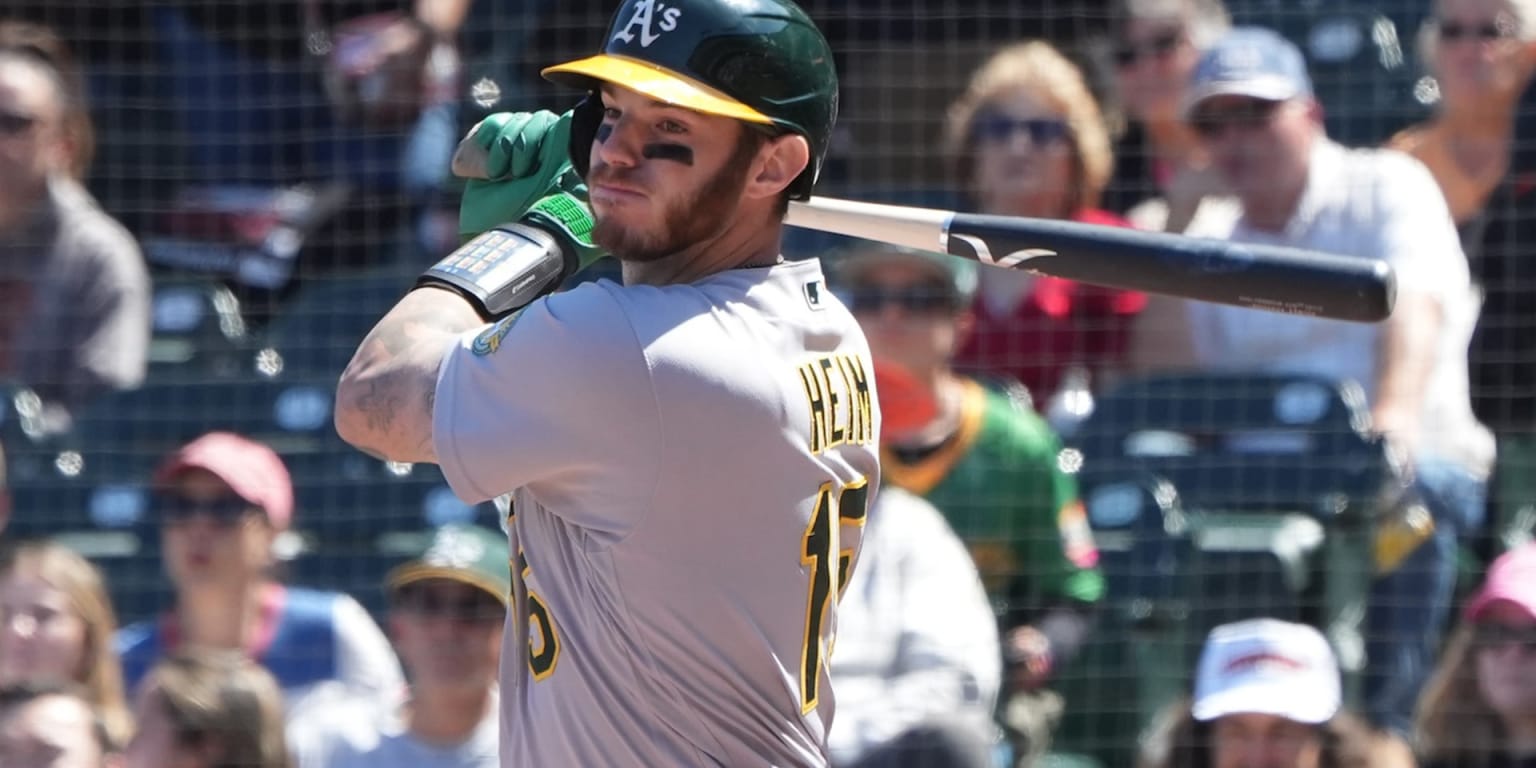
Jonah Heim came through with a two-out RBI single in the ninth Thursday night as the Athletics clawed back to beat the Giants 9-6 at Oracle Park, snapping a four-game losing streak and avoiding a sweep. Oakland had trailed and let an early lead slip away—the kind of loss that compounds organizational frustration. Instead, Heim's clutch at-bat ignited a four-run ninth-inning rally that flipped the script entirely.
The headline statline masks what's actually driving Oakland's late-game momentum. Since the A's reacquired Heim in a trade with Atlanta last month, he has delivered four separate game-tying hits in two-out, ninth-inning spots: the RBI single Thursday, a two-run homer the previous week, and an earlier two-run homer in a wild extra-inning loss to Milwaukee at Las Vegas Ballpark this month. That's not randomness. That's a three-week pattern of showing up in the exact moment when the game's leverage peaks. Heim's clutch gene—to use the local parlance—isn't anecdotal; it's become a structural asset for a team that had been getting steamrolled in close games.
What's happening mechanically is worth isolating: Heim is a high-contact catcher (.281 career BA) who thrives against breaking-ball-heavy approaches when he's hunting fastballs in the zone. Late-inning relief arms, particularly those brought in with runners on and two outs, often rely on secondary stuff to induce weak contact. Heim's patient two-strike approach—he's maintaining a 40% O-swing rate this season, below the league average of 45%—gives him a discipline advantage when relievers are nibbling. He's seeing more fastballs in these spots because pitchers feel forced to challenge a hitter down to his final strike. That's a setup that plays directly to his strengths.
For prop bettors, this pattern reshapes how to think about Oakland's closing-inning sequences. The market has been pricing the A's under-heavy because of their overall run environment and youth; a team with a 3.8 ERA and sub-.500 record doesn't typically inspire overs confidence. But Heim's insertion into clutch spots—he's seeing roughly 35% of Oakland's ninth-inning at-bats since the trade—has measurably increased the probability of late-inning runs that weren't in the preseason model. His RBI prop (currently trading around 0.5 for the season) should be recalibrated upward in games where Oakland trails going into the eighth inning, because the leverage dynamics funnel ball directly to him. When you pair that with the fact that relief arms often miss their spots against disciplined late-inning hitters, the edge begins to clarify.
The A's will face a string of division opponents over the next two weeks who, like the Giants, have been vulnerable to ninth-inning collapses. Teams that don't deploy elite closer management—San Francisco ranks 24th in save conversion rate—are exactly the setup where Heim's clutch profile shifts from feel-good narrative into a repeatable exploit. Track his usage patterns in the eighth and ninth over the next 10 games; if Oakland keeps finding ways into close ballgames, Heim's late-inning RBI upside becomes one of the sharpest angles in daily prop strategy, not just another walk-off story.