Espino's MLB Debut Arrives After Three-Year Injury Hiatus—But Control Questions Cloud the Upside
By Justin Erickson ·
Cleveland is calling up a prospect who hasn't pitched in the majors since 2023, and the market hasn't had time to calibrate for the uncertainty baked into his first outings.
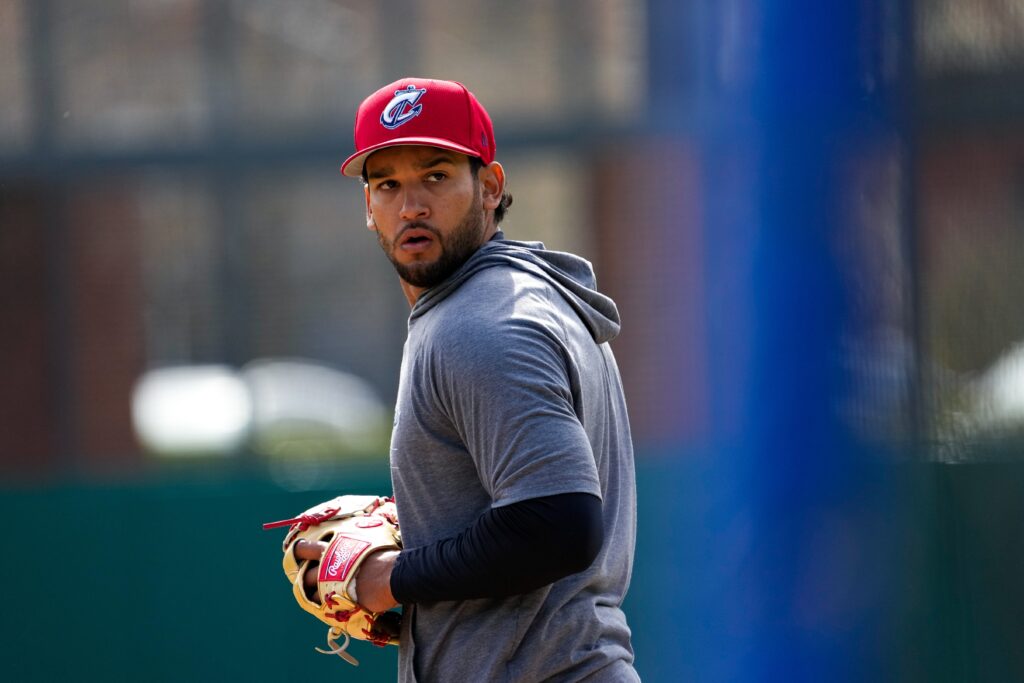
Daniel Espino is getting his shot. The Cleveland Guardians are recalling the 25-year-old right-hander for his MLB debut, per reports, marking the end of a three-year stretch that saw him miss nearly all competitive action due to injury. Espino was already on the 40-man roster, so the move requires only a standard 26-man roster slot.
This is a long-awaited moment for a pitcher who once carried legitimate top-prospect pedigree. At 25, Espino should theoretically be in his prime development window—instead, he's entering the league with a significant ramp-up period ahead. Three seasons on the sidelines means his workload tolerance, arm strength durability, and command consistency are genuine unknowns. The Guardians wouldn't call him up unless they believed he was healthy and ready to contribute; that organizational confidence carries weight. But the market has no recent data to work with, and sportsbooks will price Espino's debut line with heavy uncertainty premium built in.
Control figures to be the early focal point. Espino was never a strikeout-heavy prospect—his upside has always rested on an ability to pound the zone with multiple offerings. After three years away, the mechanics question looms large. Does he still locate his fastball? Is his sequencing intact? A pitcher returning from extended injury rarely comes back sharp; early starts tend to feature higher walk rates and more pitches needed per out. The Guardians may use him conservatively—shorter outings, favorable matchups—which itself signals operational caution.
For prop bettors, Espino's debut and immediate outings carry a volatility premium that the sportsbooks are priced into most mainstream lines. His strikeout rate, innings pitched, and ERA props will all carry wider spreads than a seasoned hurler because variance is genuinely high. Any line on Espino over his first 2-3 starts should be treated as a variance bet, not a skill bet. The edge, if one exists, lies in identifying which direction the market overweighted the uncertainty. If books set his strikeout line conservatively (assuming rust and control issues), but Espino's stuff still plays and he strikes out 7+ batters in a first outing against a weak lineup, overs gain value fast. Conversely, if expectations drift too bullish too quickly—say, by his second or third appearance—lean toward unders on strikeout props as the sample size remains microscopically small and one strong outing can distort perception.
Watch for usage patterns in his first week. If Cleveland limits him to 4 innings or fewer, or pulls him after 60-70 pitches, that's a signal they're managing carefully. Any prop tied to innings pitched or pitch count should be shaded lower. The real betting window closes after three starts; by then, enough information emerges to separate actual performance from debut jitters. Until then, Espino remains a high-variance event play.