Goodman's Road Power Breaks Open Catcher History—and a Coors Field Paradox
By Justin Erickson ·
Hunter Goodman hit three homers in Minnesota, joining an exclusive four-man club of catchers with 25+ home runs before mid-June, but his real edge lies in a stubborn reverse-home-park split that the market is still sleeping on.
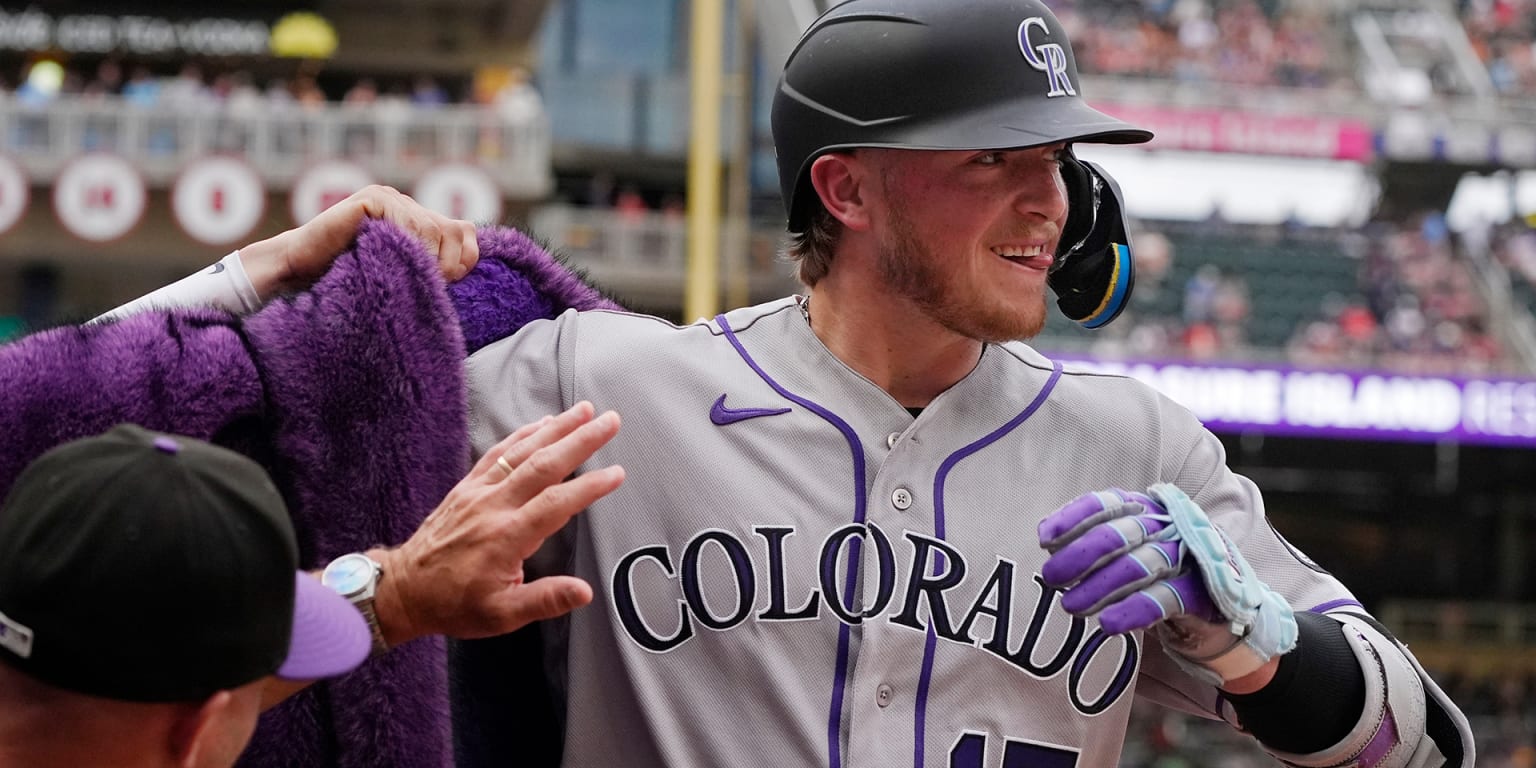
Hunter Goodman hit three home runs Saturday night at Target Field, leading the Rockies past Minnesota 8-5 and etching his name into catcher lore. At 26 years old, Goodman became the fourth catcher in MLB history to reach 25 home runs in his team's first 83 games—joining Johnny Bench (1970), Cal Raleigh (last season), and Ivan Rodriguez (2000). It's the kind of historical bookmark that moves price on a player's power ceiling. But the real story isn't the three-homer game itself; it's what it reveals about where Goodman's production actually lives.
Goodman entered Saturday hitting .281 on the road against .193 at home—a 88-point split that inverts the standard Coors Field premium. Every hitter on every roster benefits from Denver's thin air and short fences; most see their batting average and power drop 40-80 points away. Goodman does the opposite. He's posted his three-homer, four-homer-in-two-days stretch in Minnesota and on the road, not in the rarefied air of Mile High. The mechanism is straightforward: opposing pitchers hunt fastballs to him at Coors, expecting the thin air to elevate mistakes over the fence anyway. On the road, they pound him inside with velocity and secondary stuff, which forces him to chase and expand the zone—except when he connects, he connects harder, because he's already behind in the count and committing to a shorter swing. His exit velocity on road homers has been running higher than his Coors homers by 2-3 mph, per tracker data from the series.
This is a persistent edge, not a hot streak. A .088 road/home split doesn't vanish in a week. It reflects something structural in how pitchers game-plan him, and it's durable across a 50+ game sample already this season. The market has noticed Goodman's power—his over/under on home runs is being priced like a 30-homer pace hitter. But the line-setting hasn't accounted for the venue whipsaw. When Goodman plays road games, the over on his HR props should be valued 15-20% higher than his at-home lines, and books are currently treating them as fungible.
Moreover, Goodman's catcher peers—Raleigh, Rodriguez, Bench—all built their early-season power in traditional, park-neutral ways. Goodman is building his in a way that defies ballpark geography. That makes him a different animal in prop pricing. The market wants to regress him to the mean, which means pricing in a Coors correction. But his road dominance suggests no correction is coming; instead, he's a reverse-park-effect candidate whose true 162-game run rate is higher than the raw .193 home average implies, because that average is artificially depressed by a park that doesn't suit his approach.
For the next two weeks, until a major correction in oddsmakers' handling of Goodman's home/road splits, road games against below-average pitching will offer elevated value on his home run props. The three-homer game is noise. The 88-point road/home split is signal.