Glasnow's Relapse Deepens Dodgers Rotation Crisis; Snell's NanoScope Path Offers Accelerated Timeline
By Justin Erickson ·
Tyler Glasnow's throwing shutdown after a back-spasm flare-up forces Los Angeles to gamble on reclamation projects and compressed rest schedules just as Blake Snell heads for minimally invasive surgery.
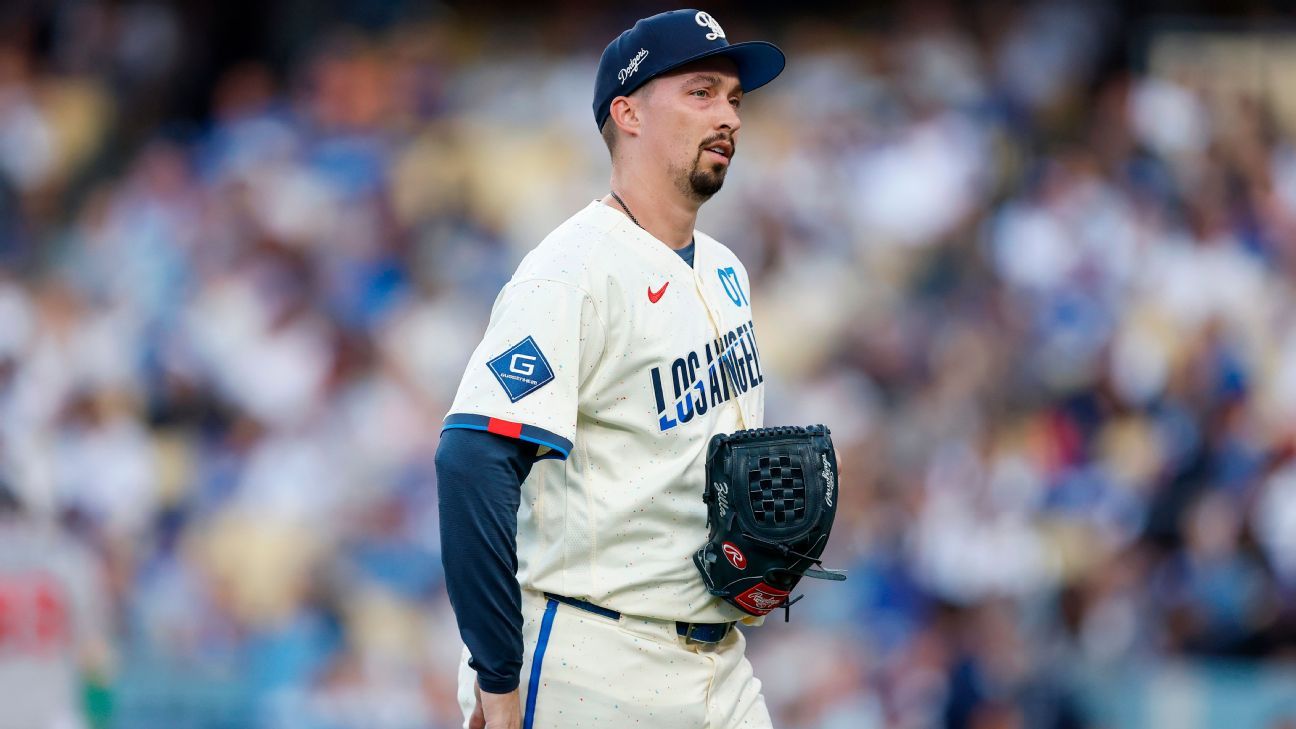
The Dodgers' pitching depth took another hit Monday when general manager Brandon Gomes confirmed that Tyler Glasnow has been shut down from his throwing program after a setback in his recovery from back spasms. Glasnow, who landed on the injured list May 8, had begun a gradual return to throwing activity before the flare-up interrupted that progression. While Gomes emphasized there's no long-term structural concern, the timing compounds an already fractured rotation: Blake Snell is heading to surgery for loose-body removal, River Ryan and Gavin Stone remain sidelined, and the team's margin for error has evaporated.
Snell's situation carries a silver lining that underscores the gap between conventional and innovative orthopedic approaches. The Dodgers elected to use the NanoScope procedure—a thinner arthroscopic tool developed by Dr. Neal ElAttrache—rather than a standard arthroscopy. The advantage is material: a typical loose-body removal requires two to four months of recovery, but the NanoScope's minimally invasive architecture can halve that timeline. Tarik Skubal, who underwent the same procedure May 6 with the Tigers, was throwing catch within a week and is expected back in June. Snell's loose bodies were small and clustered, making him an ideal candidate for the less traumatic approach. Both Skubal and Snell share the same agent, Scott Boras, which may have facilitated rapid adoption of the newer technique.
Glasnow's relapse, however, creates cascading lineup decisions. The Dodgers will lean on Eric Lauer, 30, a recent waiver-wire acquisition from Toronto who posted a 6.69 ERA in 36.1 innings this season before being designated for assignment. Lauer was obtained for cash consideration and plugged directly into the rotation to anchor a six-man schedule designed to keep Yoshinobu Yamamoto, Roki Sasaki, and Shohei Ohtani on familiar rest patterns. The bet here is that Lauer regains velocity in a new environment—a reasonable hope given his role in Toronto's pennant-winning 2025 campaign, but no guarantee given his 2026 performance profile.
For prop markets, Glasnow's shutdown has immediate implications for Dodgers starting-pitcher workload and strikeout lines. Assuming Glasnow misses at least two to three weeks beyond the current shutdown—a conservative estimate given the nature of recurrent back issues—the Dodgers will deploy a rotation heavy on below-league-average velocity and strikeout rates. Lauer, in particular, carries risk on strikeout props; his season K/9 sits well below his career average, and pitching out of the bullpen's desperation context rarely unlocks higher velocity. Fade strikeout totals for the next Dodgers starter who isn't Yamamoto, Sasaki, or Ohtani until Glasnow or Snell return. Conversely, if the market has repriced Dodgers team totals downward on pitching injury news, there's modest value in lean-unders for games where Lauer takes the ball, given the increased offensive pressure opponents will apply against a compromised arm.
Snell's NanoScope advantage is less prop-friendly in the short term—his six-week recovery floor keeps him out through early July, beyond most regular-season prop calendars. But Skubal's rapid return is the floor, not the ceiling, for optimistic Dodgers fans. A two-month timeline for Snell remains plausible and would bring him back for a final month of regular-season work, which is why Gomes's public confidence in a 2026 return matters. For Glasnow, uncertainty is the only certainty; the timing of his return will dictate whether the Dodgers can salvage their rotation depth or face a September scramble with replacement-level starters.