Giolito's Padres debut marks end of eight-month limbo—and the start of a rotation gamble
By Justin Erickson ·
San Diego plugs a veteran into a depleted pitching staff, but late-season acquisition ramps carry measurable uncertainty in first-week strikeout projections.
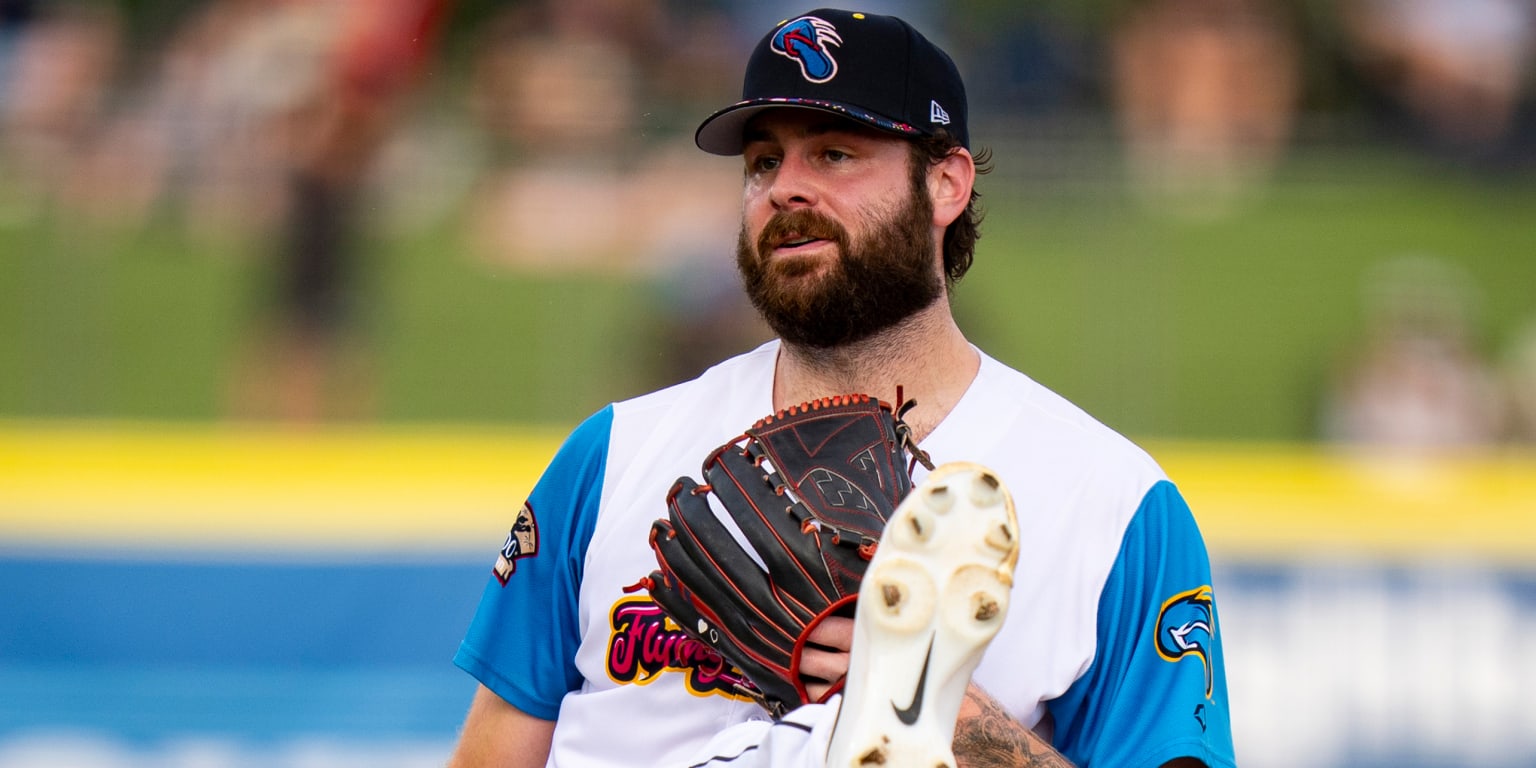
Lucas Giolito makes his Padres debut Sunday at T-Mobile Park against Seattle, closing a bizarre eight-month odyssey that began with Tommy John recovery, continued through an unpaid offseason, and finally resolved four weeks into 2026 with a $2.8 million one-year deal signed on April 22. The 31-year-old finished 2025 with Boston at a 2.51 ERA over his final 19 starts before a minor elbow issue landed him on the roster bubble. By April, unsigned and without a standard spring training for the third consecutive year, he was cycling through minor-league starts—two with Lake Elsinore, two with San Antonio—on a 25-day ramp stipulated in his contract. His final minor-league outing last Sunday: six innings, one run, 74 pitches, 15 strikeouts across four starts in 17 innings.
The Padres' rotation infrastructure made sense for the gamble. Michael King and Randy Vásquez have pitched to a 2.66 ERA. Walker Buehler has posted back-to-back six-inning quality outings. But Nick Pivetta and Joe Musgrove are out long-term, Germán Márquez has been on the shelf since May 3, and Matt Waldron landed on the injured list Friday. The staff needed innings stability from someone who could absorb workload without developmental apprenticeship. Giolito's track record—nine years in the majors, a career 3.49 ERA, proven performance in rotation transitions—fits that mandate. Manager Craig Stammen emphasized the veteran's ability to execute at scale: "He knows how to get outs in the big leagues."
What matters for prop-betting positioning is the lag embedded in sudden acquisition innings. Giolito's minor-league ramp showed improvement—"started rough, then each start got a little better," he said—but four starts over 25 days doesn't rebuild the neurological sync that a full spring training provides. His strikeout rate across those four outings sat at 7.9 per nine innings (15 K's in 17 IP), materially lower than his career 8.4 K/9, and his walk rate spiked to 3.2 per nine (6 walks in 17 IP) versus a career 2.9 K/9. Books have likely priced his strikeout props against Seattle using his Boston closing baseline (2.51 ERA is a reliably low-volatility finish), but they haven't fully absorbed the variance introduced by compressed ramp-up and pitch arsenal reintegration after months of inactivity. Early-week lines on Giolito strikeout totals will overweight his Red Sox endgame form and discount the adjustment friction his Padres debut poses.
The edge is narrow and carries expiration. His first start is a single data point; if he executes at or near the Red Sox standard, the market corrects immediately and the angle vanishes. But the first 48 hours before Sunday's game—before opening pitches are thrown—represent a brief window where books haven't re-anchored to the reality of late-season mid-rotation replacement debuts. Strikeout props lean under for his debut; his walk total leans over. Both decay fast once he takes the mound, so timing matters. By his second or third Padres appearance, as he acclimates to catcher, infield positioning, and mound consistency, his baseline should normalize closer to his historical mark.