Cubs-Giants Matinee Hinges on Cabrera's Return Window and Ray's Mechanical Collapse
By Justin Erickson ·
Edward Cabrera returns from a blister injury in a day game where volatility favors the Cubs' superior offensive depth against a deteriorating Robbie Ray.
The Cubs host the Giants in Friday's sole MLB matinee at Wrigley Field, with San Francisco visiting the North Side for the first time this season. Chicago snapped a three-game losing streak with a 7-6 win over Oakland on Thursday, while the Giants upset Milwaukee 12-9 before making the short drive north. The matchup sets up as a clash between a Cubs team banking on offensive firepower and a Giants rotation in free fall, with both starting pitchers carrying injury or mechanical baggage into a windy afternoon that may suppress offensive output.
Edward Cabrera, Chicago's offseason trade acquisition from Miami, activates off the injured list after dealing with a blister—a recurring nuisance throughout his career. The 28-year-old has always been a feast-or-famine starter: dominant in one outing, ineffective the next. His home ERA sits at 3.55 and his day-game ERA at 3.42, both better than his full-season mark of 4.00. Before the blister sidelined him, Cabrera posted a 6.39 ERA across three straight starts, a sharp deterioration from his earlier 3.27 mark over nine appearances. Against the Giants specifically, he owns a 1.91 ERA and 3-0 record in five career starts—a statistical cushion that provides structural confidence. However, the blister layoff and uneven recent form mean this is a controlled-variance start for the Cubs rather than a dominant one.
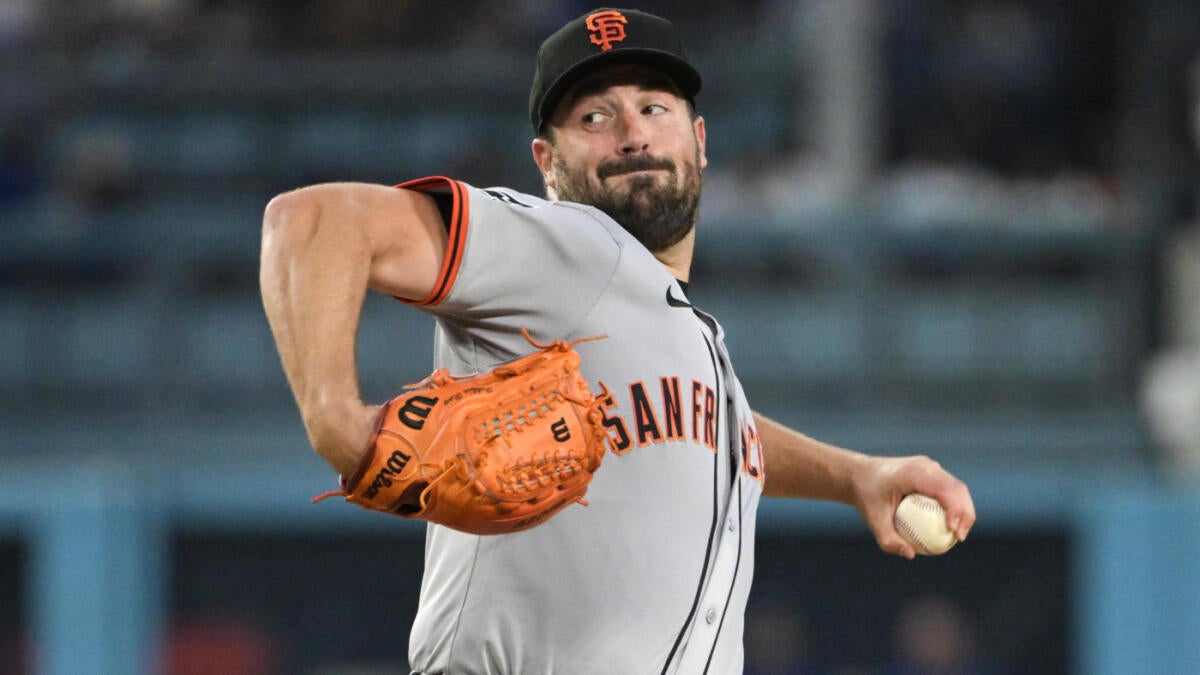
Robbie Ray's decline presents a starker problem for San Francisco. The 2021 AL Cy Young winner has lost four consecutive decisions and failed to complete five innings in any of them. His May collapse stands out in sharp relief: a 6.44 ERA across five starts with 17 walks in 29.1 innings, compared to a 2.76 ERA in his first 45.2 innings of the season. Ray attributes the downturn to mechanics rather than health, and Giants manager Tony Vitello has publicly backed that assessment. The underlying mechanics issue—elevated pitch counts, deeper counts from walk exposure—compounds in a matinee setting where Cabrera's day-game efficiency and control have both been historically stronger. There is trade-deadline speculation circulating; Ray would need to rebuild value quickly to command real return compensation.
Wind conditions at 15 mph out to left field complicate both pitchers' ability to dictate, likely suppressing home-run volume and potentially favoring pitchers who keep the ball on the ground. Chicago ranks seventh in runs scored league-wide while the Giants rank 24th—a gap that widens when Ray cannot navigate five innings and forces the San Francisco bullpen into early work against a deeper Cubs lineup. Cabrera's recent volatility carries risk, but that risk is asymmetric: the Cubs' offensive depth means Chicago can exploit a struggling Ray even if Cabrera exits early. The first-inning under holds appeal given Ray's mechanical compression and the wind environment, though Cabrera's walk rate (model projection: 1.5) deserves monitoring if he loses the zone early.
The structural advantage tilts Cubs, but the edge is durable only if you frame it correctly: this is not a play on Cabrera's overall talent but on the mismatch between Ray's mechanical crisis and Chicago's offensive ranking relative to San Francisco's bottom-quartile road performance (13-22). That 13-22 record away from home is a multi-week pattern, not a single-game variance spike, and it compounds against a Cubs team that has fixed its rotation problems through Ben Brown and Cabrera's insertion into the mix.