Ramos Returns to Giants Lineup; Defensive Shuffle Could Reshape Outfield Usage
By Justin Erickson ·
San Francisco activates its power-hitting outfielder after a stint on the injured list, signaling a rotation shift that tilts offensive opportunity toward the lineup's deeper corners.
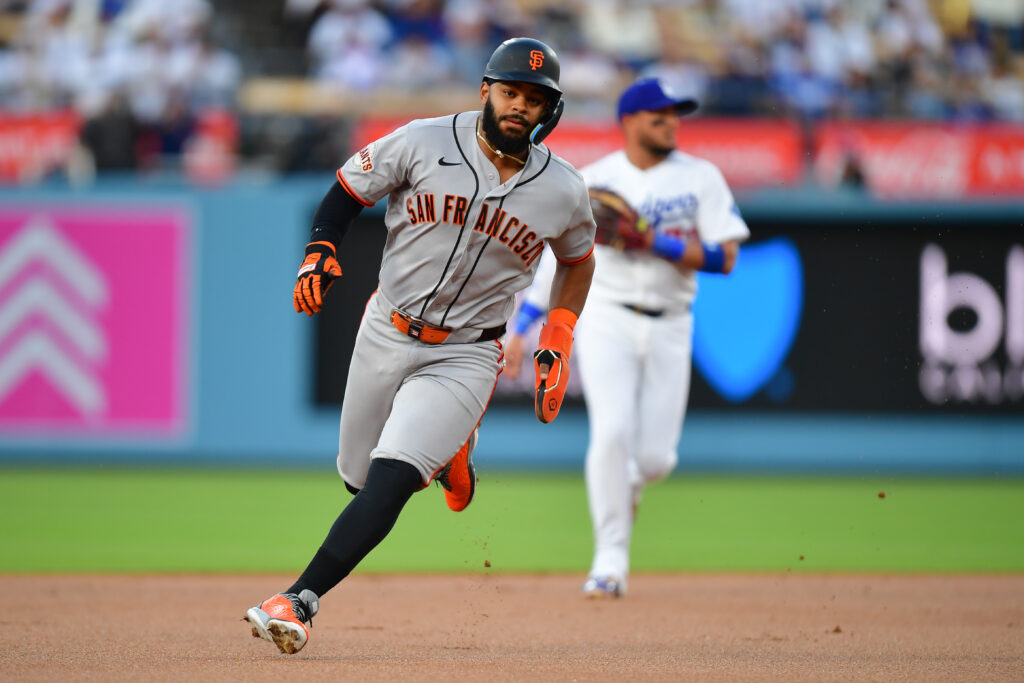
The Giants activated outfielder Heliot Ramos from the injured list on Sunday, per Shayna Rubin of the San Francisco Chronicle, clearing roster space by designating infielder Buddy Kennedy for assignment. The move restores one of the team's more productive bats to a lineup that has been maneuvering without him—a straightforward transaction with subtle but measurable implications for how San Francisco distributes at-bats and offensive load.
Ramos carries a career .246 batting average but has shown legitimate power stroke, posting a .480 slugging percentage across his 2024-2025 campaigns. His return immediately changes the Giants' defensive configuration in the outfield and, more importantly for prop markets, reintroduces a high-variance hitter back into regular playing time. Teams don't activate from the IL and immediately bench a player they spent resources acquiring; the activation itself is a usage signal. Kennedy's designation removes a utility bench presence, suggesting the Giants believe they need Ramos's upside more than the flexibility Kennedy provided.
The betting calculus hinges on where Ramos slots into the order and how his presence affects teammates' plate opportunities. If the Giants use him in a corner outfield spot previously shared between bench depth and part-time starters, his activation compresses at-bats for secondary hitters but likely doesn't change the team's overall run environment materially—unless Ramos' power translates into a measurable uplift in hard-hit balls and extra-base chances. His career ISO sits at .234, which is league-average to slightly above; in a Giants lineup built more on contact and speed than power aggregation, his insertion won't dramatically reshape team-total run expectancy.
Where the edge emerges is in Ramos' own prop pricing. If sportsbooks price his home run and RBI lines as though he's been out for a standard IL stint (typically 2-3 weeks of rust and adjustment time), they're underweighting the fact that he was already cleared for activation once the Giants decided his rehab was complete. A player activated off the IL on Sunday was deemed ready to play; the market often overrates the recovery period following IL stints, especially when the player had already gone through a medical clearance. Ramos' first two games back typically carry elevated volatility—he'll see fastballs early in counts as pitchers test his timing—but his baseline home run rate over any 10-game window should not be substantially suppressed versus his season-average pace.
The team-total angle is muted. Giants team totals won't shift meaningfully on Ramos' activation alone unless he's replacing a consistently productive starter with a significantly worse plate approach. Kennedy was primarily a utility infielder with limited impact on offensive run generation; his removal is neutral to slightly negative for team-total sizing, but the offsetting return of Ramos creates equilibrium. Monitor Ramos' first-week prop markets for overpricing of the rust narrative, particularly on home run unders in games where he's facing right-handed starters. That's the persistent edge—the market's tendency to overcorrect for IL returns when the activation itself signals readiness.