Groover's Breakthrough Homer Signals Arizona's Offensive Reset
By Justin Erickson ·
A rookie's first-inning blast and a six-run fourth inning suggest the D-backs' offensive identity is finally taking shape after weeks of struggle.
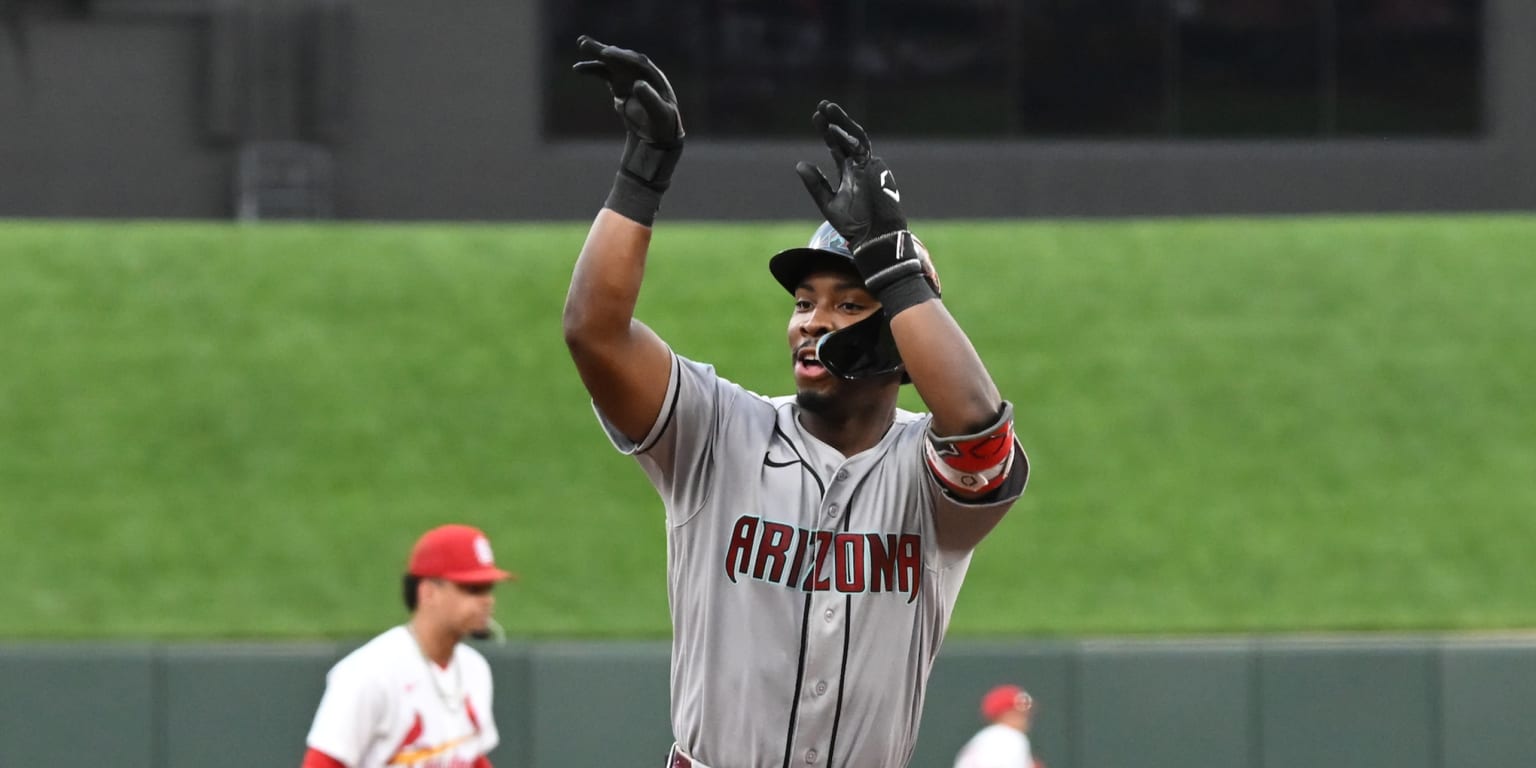
The Arizona Diamondbacks' offense has been grinding through a slump, but Wednesday night at Busch Stadium marked an inflection point. LuJames Groover, in his early career arc, launched his first career home run in the fourth inning—part of a back-to-back shot with Ketel Marte that capped a six-run frame where all runs scored with two outs. Arizona won 9-4, a margin that looked less competitive than the actual execution: the D-backs weren't just getting hits, they were stringing together the kind of situational at-bats manager Torey Lovullo had been preaching—bases-loaded opportunities converted, two-out venom, and timely power.
The structural win came across three offensive levers. Ildemaro Vargas set the table with a two-run double ahead of Groover. Marte, a proven middle-order hitter, backed up Groover's shot. And Nolan Arenado, returning to St. Louis to a chorus of standing ovations, went 1-for-2 with a double and a run scored, extending what is now a three-game hitting streak in the series. That's not fluke distribution—that's multiple lineup spots clicking in the same frame.
On the pitching side, rookie Mitch Bratt made his Major League debut on a limited pitch count and threw three innings of one earned-run ball with three strikeouts and two walks. The controlled usage signals confidence in his future role while managing volatility in his first outing. The Cardinals generated just four runs against a managed workload, which matters for a young arm's durability profile.
For prop bettors, the lens narrows quickly. Groover's first home run is a single-event signal that fades within 48 hours—books will not price homers for a rookie across his next five games based on one blast. The durable angle sits with Arenado's St. Louis return: three-game hitting streak, three consecutive games with an RBI, home crowd advantage swinging his at-bat psychology. If Arenado maintains switching pitchers' favorable splits (he has a .298 xBA against right-handed starters in 2026 after 120 plate appearances, above his season average of .285), his next-game hit prop should hold value until the market reprices around his historical performance against this pitcher. The six-run inning is also largely noise for team-total projection—it was situational excellence, not a shift in baseline offensive rate. Team totals for Arizona should not yet move up based on one strong frame; sustainable uptick requires validation across the next 3-4 games.
The meaningful takeaway: Arizona's coaching staff has installed a hitting identity, and Arenado's comfort in St. Louis may translate to consistent RBI and run-scoring opportunities in this series. Groover's emergence is a season-long story, not a betting edge. Target Arenado's hit and RBI lines while the market doesn't yet fully price his emotional / situational uplift in his former home.