Garrett's Command Collapse in MLB Return Signals Caution on Marlins Rotation Depth
By Justin Erickson ·
After 23 months away, the Marlins left-hander returned to the mound with flashes of strikeout stuff but alarming control issues that could constrain Miami's pitching availability down the stretch.
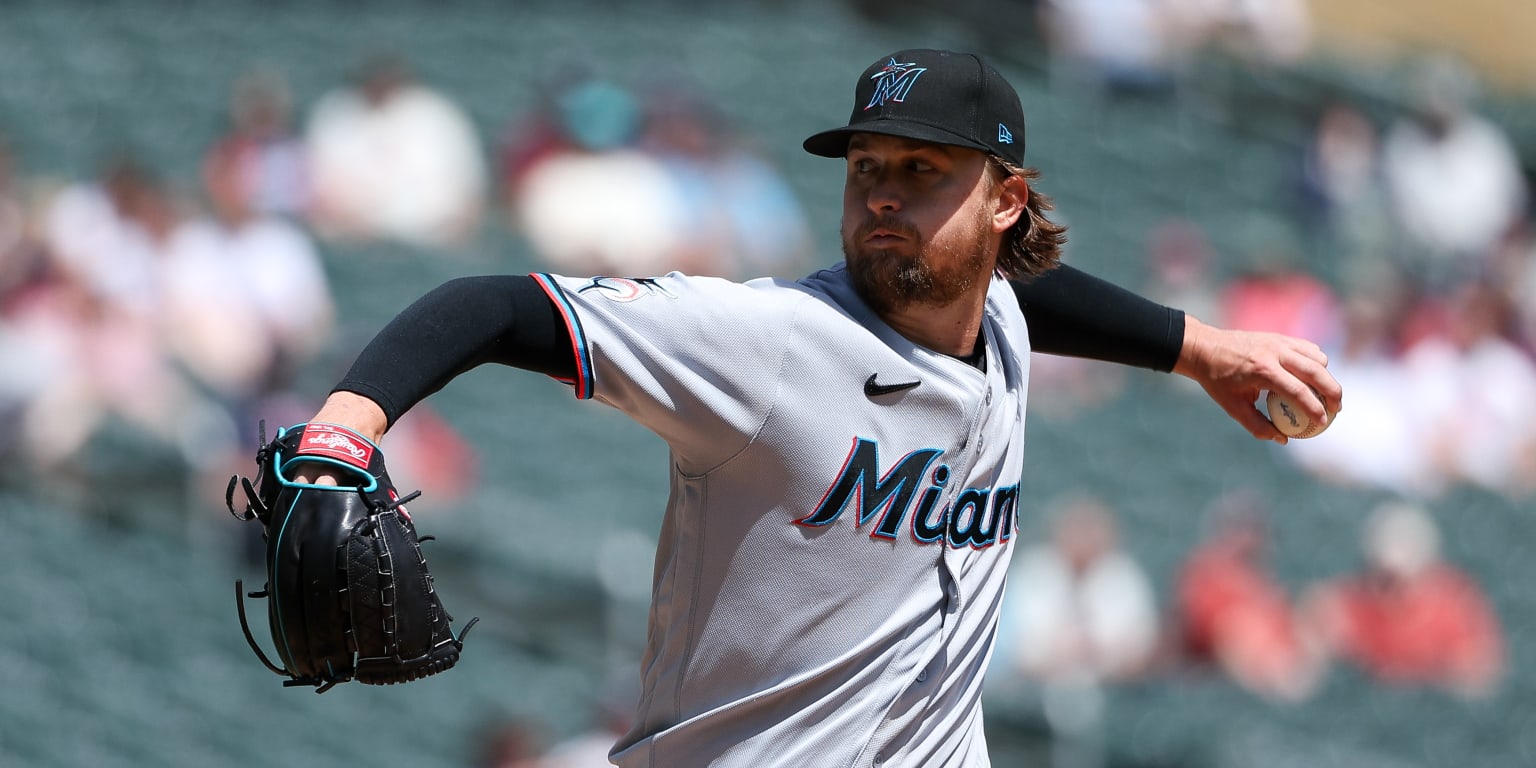
Braxton Garrett made his first Major League appearance since June 17, 2024, on Thursday in Minnesota, and while he escaped a bases-loaded jam in the first inning with three consecutive strikeouts, the outing descended quickly into dysfunction. The 28-year-old lefty threw 64 pitches to record four outs, walked five of 13 batters, and lasted just 1.1 innings in a 9-1 Marlins loss to the Twins. The early strikeout sequence—a diving four-seamer past Josh Bell, a nasty sinker on Victor Caratini, and a check-swing strike three on Luke Keaschall—revealed the pedigree that made him an organizational prospect. But that promise evaporated by the second inning, when renewed command lapses and a Josh Bell two-run double ended his day.
Garrett's own diagnosis centered on mechanical feel rather than raw stuff. "There's just something going on in my delivery where I just don't have a ton of feel," he said after the game. Marlins manager Clayton McCullough echoed the assessment, noting Garrett "just wasn't filling up the strike zone" and lacked the ability to locate consistently. The walk rate—5 in 13 batters faced—translates to a 38.5% BB% pace, a catastrophic number for someone tasked with eating innings in the rotation. The strikeout moments proved he still possessed the stuff to miss bats when mechanics aligned, but the inconsistency signals a lengthy ramp-up.
From a roster construction standpoint, Miami faces a real constraint. With no scheduled days off until May 28, the Marlins need five starters for at least two more turns through the rotation, and Garrett's return was explicitly intended to solve that depth problem. Manager McCullough confirmed Garrett will make his next start, likely Tuesday against Atlanta, framing it as a learning opportunity rather than a vote of confidence. But a repeat of Thursday's command issues—walks in the 30%+ range, pitches climbing to 60+ in two innings—would force the Marlins to cycle to other arms faster than planned, accelerating bullpen usage or cycling through less-proven options.
For prop bettors, the angle manifests in Marlins pitching totals and team total unders. Garrett's next start comes against Atlanta, a team that has shown patience at the plate and can punish elevated strikes. If Garrett again struggles to find the zone, his pitcher workload will spike (pitches 80-90+ in three-to-four innings), triggering earlier bullpen deployment and compounding fatigue. The Marlins' short-rest schedule and their reliance on a clearly unprepared starter creates friction on the offense side as well: Miami's hitters will face longer relief appearances and fresher arms, which historically suppresses run production. The Marlins' team total should trade lower on Garrett starts until he demonstrates command stability over at least two consecutive outings.
McCullough's willingness to pull Garrett after 1.1 innings without hesitation also signals internal skepticism about his readiness. The Marlins are not protecting Garrett's confidence—they are managing a rotation emergency. That pragmatism suggests the team expects more rough starts before any uptick in performance. Bettors should lean unders on Miami's team total when Garrett is confirmed for the mound, with an extra emphasis on avoiding overs in games where the Marlins lack top-tier run support to begin with.