Guardians Bullpen Maps Matchup Strategy in Early-Leverage Win Over Angels
By Justin Erickson ·
Cleveland's relief corps executed a calculated deployment plan against Los Angeles, with setup men anchoring the top of the order and depth arms handling the middle—a blueprint that reshapes how bullpen usage props should be valued.
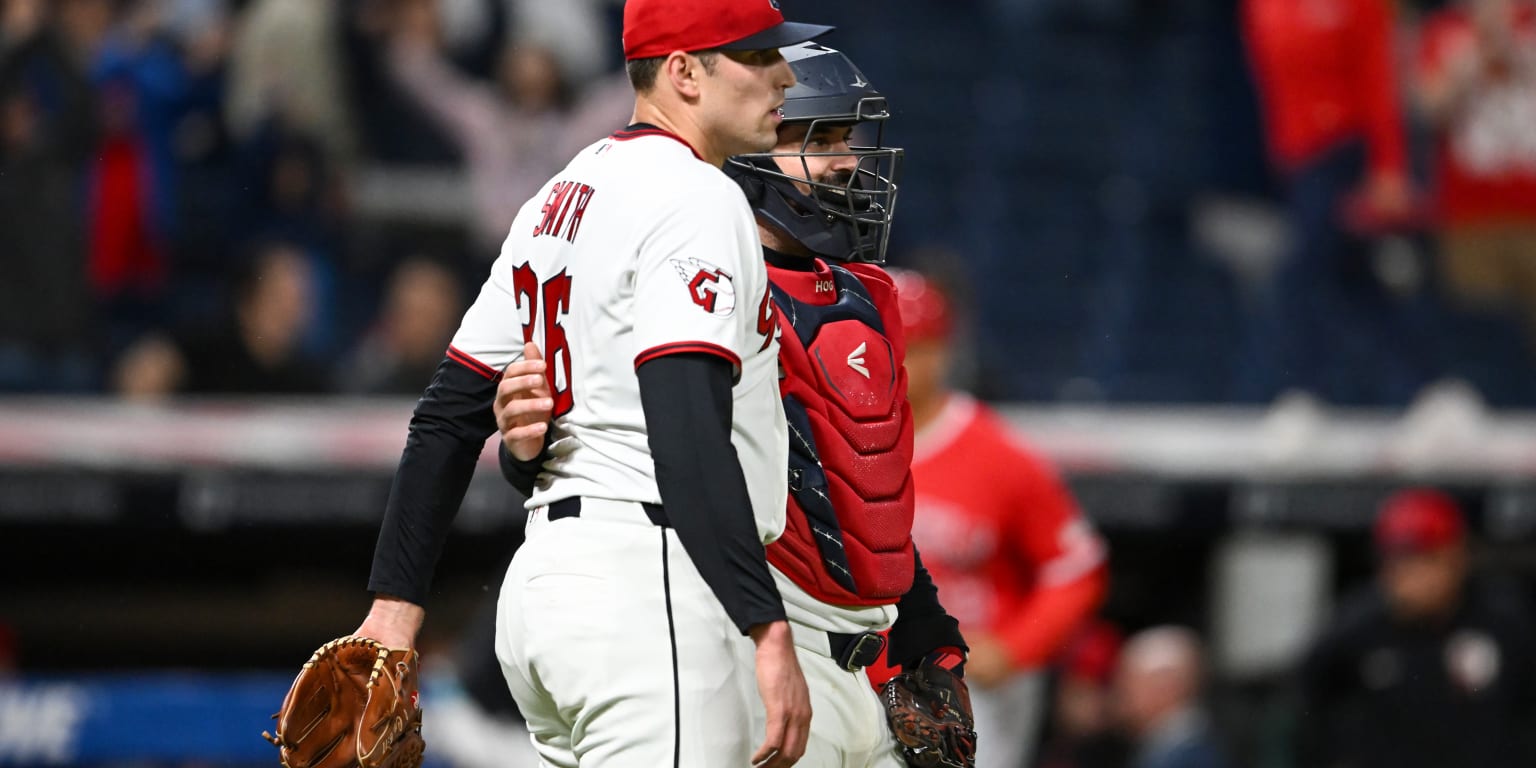
The Guardians' 3-2 win over the Angels on Tuesday arrived via an unconventional path: starter Slade Cecconi exited after four innings on 89 pitches, ceding five innings to the bullpen. That alone shouldn't stand out—teams push starters light regularly. But the architecture of Cleveland's relief deployment reveals something sharper: manager Stephen Vogt didn't reach for the highest-leverage arm first. Instead, he engineered matchups. Hunter Gaddis and Erik Sabrowski faced the Angels' top hitters—Mike Trout, Zach Neto, Vaughn Grissom—regardless of inning. Tim Herrin and rookie Franco Aleman mopped up the middle and bottom of the order. Smith finished with a four-out save, his third career such appearance.
This wasn't improvisation born from emergency. The Guardians were 13 games into a stretch without an off-day, meaning the bullpen entered Tuesday depleted. Vogt explicitly acknowledged it: "We had to go to the bullpen a little earlier than we wanted to, but those guys got in the spots we wanted them." The clarity matters. When a team is forced into early relief usage but still constructs its own leverage hierarchy—setup men against star hitters, fastball-to-contact guys against weak contact—that's a signal about internal confidence in role definition. Gaddis carried a bloated 7.88 ERA through his first 11 appearances yet maintained his setup role because Cleveland's front office trusts his two-year track record as one of baseball's better setup men. He delivered Tuesday: a scoreless fifth around a Trout double, then a leadoff groundout in the sixth.
Sabrowski's appearance carries additional weight. He owns a 1.96 ERA across 21 outings this season with 32 strikeouts in 18 1/3 innings—elite numbers for a mid-rotation-depth arm. Vogt threw him in the seventh specifically to face the top of the Angels' order again, a choice that suggests Sabrowski has graduated from back-of-the-bullpen status into a soft-fourth-inning reliever slot. His ability to work around two walks and strike out three validates that trust.
For prop bettors, this deployment pattern creates a market inefficiency around both team and pitcher-level totals. If the Guardians continue spacing their bullpen this deliberately—funneling top-tier arms into high-leverage matchups rather than burning them in random middle innings—their bullpen ERA will stabilize below preseason projections. That effect compounds when facing teams with top-heavy lineups. Against the Angels, a club whose run production heavily concentrates in Trout and Grissom, Vogt essentially removed their offensive ceiling by matching his best arms to their best bats. Look for Cleveland's bullpen strikeout rate to climb when facing similar structures (top-heavy offense, predictable lineup), and their team totals to drift lower in such matchups because relief depth will absorb more innings without attrition.
Cade Smith's four-out save reinforces another layer: this Guardians bullpen has the depth to absorb volume without collapsing. Smith noted the luxury of sitting down with catcher Austin Hedges before the ninth to strategize, a luxury that only emerges when the setup work is clean. Prop markets haven't yet priced in the stability that comes from a bullpen corps confident enough to defer outs and trust the depth chain. For the next 7-10 days, before the market fully recalibrates this deployment tendency, unders on Guardians team totals in games where Cleveland faces a balanced offensive attack (not top-heavy) carry edge, because their relief will run deeper without disaster—and they'll have fewer run-scoring opportunities as a result of that conservative pace.