Tucker and Trout Home Run Props Face Pitcher Mismatches—But Timing Matters
By Justin Erickson ·
Two of baseball's marquee bats align with vulnerable arms on Tuesday, yet one opportunity is far more durable than the other.
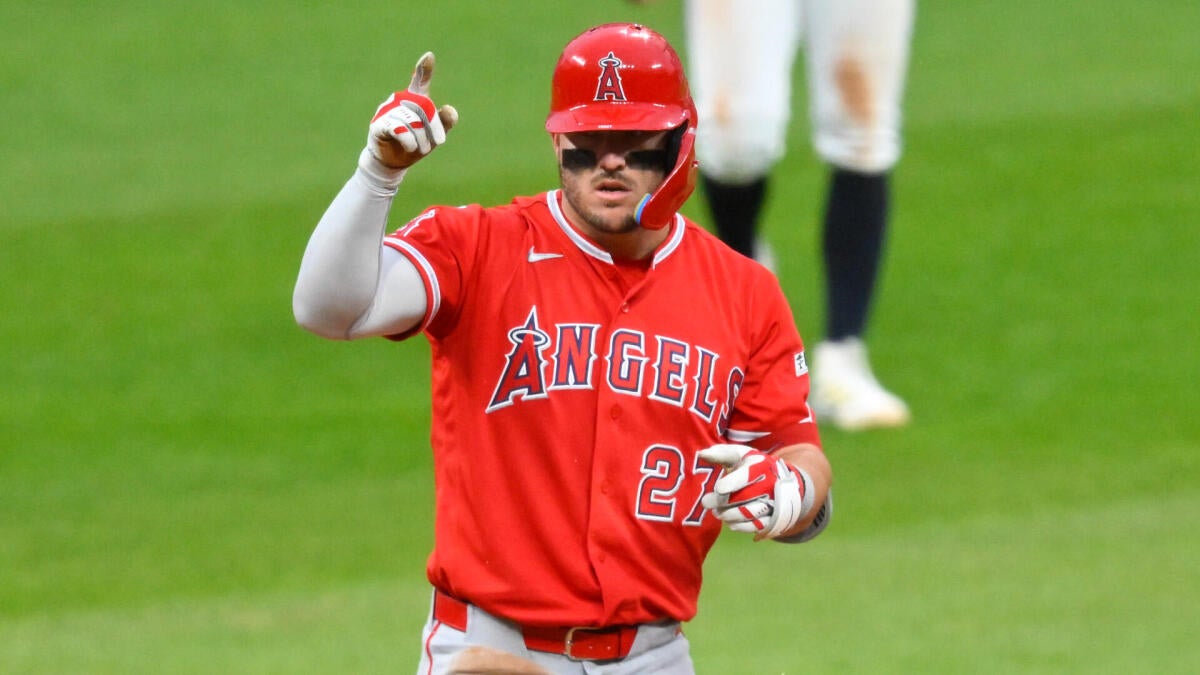
Kyle Tucker and Mike Trout both drew favorable pitching matchups on Tuesday, May 19—the kind of surface-level setups that drive sharp bettors toward home run props. Tucker, the Dodgers' offseason anchor, faces San Diego's Griffin Canning, whose ERA sits above 10 through three starts. Trout, meanwhile, gets Jacob Lopez and the Athletics, where Lopez has hemorrhaged long balls at a 10-homer clip in nine starts, including six over his last three outings. On paper, the vulnerability is real. But the edge quality differs markedly between the two plays, and that distinction should inform your ticket construction.
Tucker's resurrection narrative carries genuine mechanical weight. Through April, the left-handed slugger posted a .702 OPS with a .241 batting average—disappointing for a $300 million commitment. May has delivered a different animal: a .472 slugging percentage and .872 OPS across the month. That's not noise; it's a directional shift in barrel quality and swing decisions. He also runs a stark home-road split, slugging .855 on the road versus .663 at Angel Stadium—a 192-point gap that suggests either pitcher adjustment at home or sample-size volatility. Against Canning specifically, Tucker has hit two home runs in 18 career at-bats, a 11.1% long-ball rate that exceeds his season pace. The Dodgers' road performance and Tucker's recent uptick combine into a durable multi-week pattern, not a single outlier.
Trout's angle leans more heavily on Lopez's recent implosion. The Athletics' lefty has allowed six homers in his last three starts—a three-game sample that almost certainly represents variance stacked on top of a mediocre defense and fastball-heavy approach. Trout has hit nine of his 11 home runs this season against right-handers, not left-handers, which means he's swimming upstream against Lopez's handedness even if Lopez bleeds runs. More problematic: Trout has homered only once in May despite facing favorable arms multiple times, suggesting a seasonal rhythm adjustment or mechanical lag that no single matchup erases. His road-home split (nine road homers, two at home) reflects small-sample noise as much as genuine platoon advantage, especially this early in the calendar. Trout will eventually pile home runs at Angel Stadium and against lefties, but Tuesday's Lopez matchup doesn't inherit the causal weight of Tucker's pattern.
The prop market has priced Tucker at +570 (roughly 15% implied probability) and Trout at +325 (roughly 23.5%), which means the market already knows Canning's ERA and Lopez's recent damage. Where the edge lives is in persistence. Tucker's May momentum—tied to swing mechanics, pitch recognition, and road familiarity—is a multi-week signal that will likely hold across his next five to ten at-bats. Trout's Lopez spot is a single-game variance spike; his May funk against all arms (not just lefties) is the larger problem. If you're stacking Tuesday bets, Tucker's +570 line offers the superior risk-reward because the underlying driver (recovery in barrel quality and road OPS) won't evaporate by Wednesday's first pitch. Trout's +325 carries the risk of market overcorrection once Lopez's three-start anomaly fades back into his 4.50+ ERA reality.
For bettors seeking a Tuesday home run angle, separate the durable edge (Tucker's month-long uptick against a specific pitcher weakness) from the single-event spike (Trout's bet on Lopez's implosion). One survives line movement; the other likely won't.