Kurtz's Power Matchup and Arenado's Lauer Problem: Two HR Angles for Tuesday's Full Slate
By Justin Erickson ·
A 15-game slate delivers matchup edges where pitcher vulnerability meets proven batter discipline—but only if you're timing the volatility correctly.
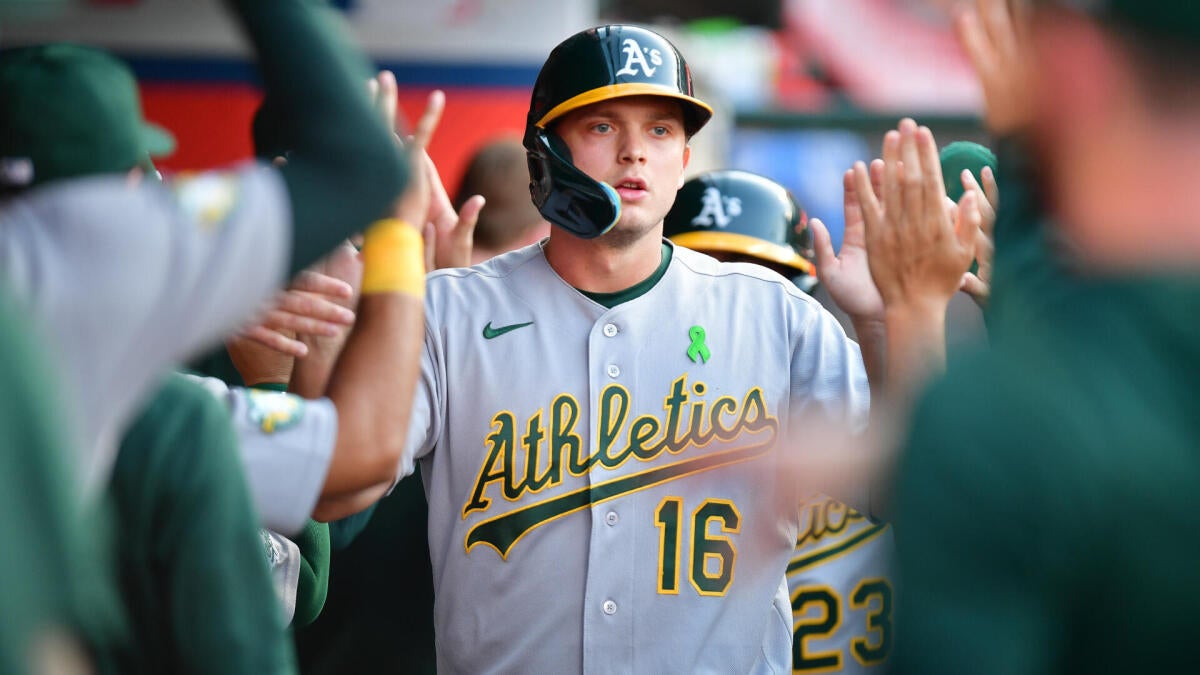
Tuesday's full 30-team schedule opens the floodgates for prop bettors, and home run props carry particular signal when the opposing pitcher has a measurable flaw. The Athletics face Cubs right-hander Jameson Taillon, who has surrendered 19 home runs—the league high through early June—a rate that compounds when his command slides. Nick Kurtz, last year's AL Rookie of the Year, carries the profile to punish that mistake rate: he leads MLB in on-base percentage, sits at .288 with a .939 OPS, and has launched seven homers off right-handed pitching specifically. The matchup tilts heavily in Kurtz's favor because Taillon's home run problem isn't variance—it's structural. He's not walking hitters into trouble or allowing infield flies; he's missing his spots in the zone where elevated fastballs get punished by power hitters with discipline. Kurtz has both.
The second angle centers on Nolan Arenado and the Dodgers-Diamondbacks NL West clash. Arenado has already homered twice in this series and enters the game with four career home runs off Dodgers lefty Eric Lauer—including one earlier this season when Lauer pitched for Toronto. That's not recency bias; that's a documented split. More critically, Lauer has allowed a home run in all but one appearance this year, 12 total in 42 1/3 innings. For a left-handed pitcher facing a right-handed batter who owns the matchup history and has hit five of his eight season homers at home, the risk-reward tilts cleanly. Arenado's offensive resurgence—.816 OPS after posting sub-.700 numbers the past two seasons in St. Louis—reflects a real change in approach, not a hot streak. He's regained plate recognition and is using the entire field.
The causal mechanism for both props operates on the same principle: specific pitcher weakness meeting specific batter strength. Taillon's elevated home run rate isn't a blip; 19 HRs allowed ranks at the extreme end of the distribution, and it concentrates in the first few innings when fastball command is typically sharpest. Kurtz's on-base discipline and power against right-handers suggests he'll see pitches to hit. Similarly, Arenado's career dominance against Lauer (four homers in fewer than 20 career at-bats) exceeds what randomness would predict. Lauer's 12 home runs allowed in 42 1/3 innings translates to a 2.55 HR/9 rate—well above league average for starters. When you layer Arenado's home-field advantage (five of eight homers at Arizona) and his recent momentum (Monday home run), the edge persists across multiple axes.
Bettors should note the distinction between these two angles: Kurtz's edge hinges on a persistent pitcher liability and a batter built to exploit it, making this a durable pattern. Arenado's angle combines the same pitcher vulnerability with a documented career split, which is rarer and more volatile. The market has priced Kurtz's prop at +327 (26.8% implied odds) and Arenado's at +525 (16.0% implied odds); neither appears over-baked given the underlying matchup quality, but Kurtz's larger implied probability suggests the market has already recognized the Taillon problem. Arenado's longer odds reflect lower baseline expectation for third baseman home runs, but his matchup-specific data (four career HRs off Lauer) is sharper than his season rate would suggest.
The risk for both plays remains inherent to home run props: variance on any single night is high, and neither pitcher is truly helpless. Taillon can locate early in the count, and Lauer can pitch around Arenado if circumstances demand it. But when identifying which bets carry genuine edge—where information advantage compounds across matchup, history, and ballpark—these two occupy the thinner end of Tuesday's slate. The full 15-game schedule offers volume, but it's the specific pitcher flaws and batter-matchup edges that create edges worth sizing.