Three HR Angles After the Break: Baldwin, Rumfield, and Burleson Target Vulnerable Righties
By Justin Erickson ·
The All-Star break reset pitching workloads—and three hitters are positioned to exploit freshly fatigued right-handers on Tuesday.
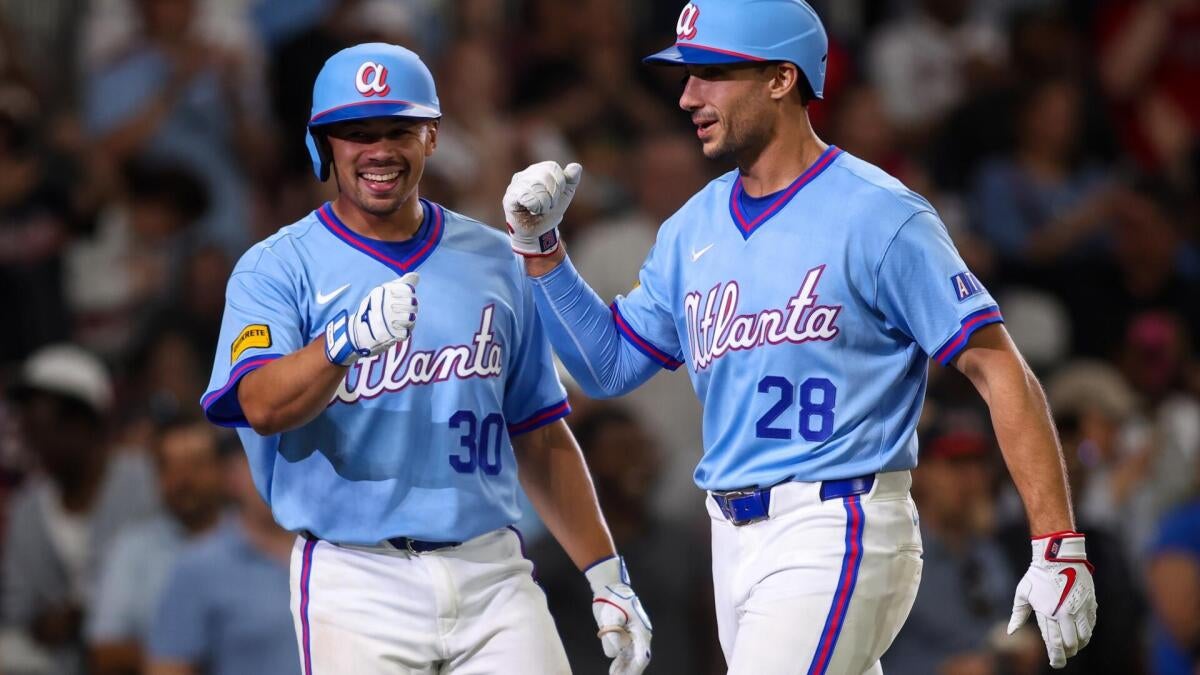
The MLB schedule resumes with a full 15-game slate on Tuesday, and the early offensive indicators are sharp. Drake Baldwin has hit three home runs in his last five games, with four total in four contests since the break ended. T.J. Rumfield has posted a .313 average over his last four home games. Alec Burleson carries a .310 average against right-handed pitching this season across 292 plate appearances. These aren't random hot streaks—they're the product of favorable matchups colliding with hitter leverage.
The mechanism here is structural: all three targets face right-handed starters with recent exposure to power. Walker Buehler, Baldwin's opponent, has surrendered six home runs over his last three starts. Miles Mikolas, Rumfield's matchup, has allowed six homers across his last five outings and three multi-homer games in that span. Walbert Urena, Burleson's pitcher, owns a 5.87 ERA over his last three starts at home with 10 earned runs allowed in 15.1 innings. None of these pitchers are worn down from overuse—the break resets that—but the underlying permission structure is there: these arms have shown susceptibility to power, and the hitters lined up against them exploit specific weaknesses.
Baldwin's case is the sharpest. He has an 11-of-18 home run split against righties this season and has hit .284 with a .866 OPS in that platoon matchup across 202 plate appearances. His recent form—.429 over his last seven games—isn't noise; it's a hitter in rhythm. Rumfield's 11-of-13 homer distribution against right-handed pitching (from 281 plate appearances) shows he's not a balanced power threat—he's specialized. Burleson similarly concentrates 13 of his 15 home runs against righties, making the left-handed Urena matchup a mismatch in the hitter's favor despite Urena's recent struggles suggesting fatigue or mechanical drift.
The betting edge here depends on odds movement. Baldwin at +494 implies a roughly 17% implied probability of a home run. Rumfield at +550 suggests 15%. Burleson at +450 sits around 18%. These are single-event bets with inherent variance—a home run is a low-frequency outcome, and three-game samples after the break are prone to regression. The angle survives only if the market hasn't yet repriced for the vulnerability these pitchers have shown over their last five starts combined. Once sharper books acknowledge the 6-6-10 homer surrender pattern and the hitter-specific splits, those odds compress. Early action on this slate is the window.
The parlay structure Fetner mentions—offering 210-to-1 returns—is the publication's way of bundling variance. One miss invalidates the entire ticket. For single-game prop bettors, the stronger play is Baldwin at +494 on DraftKings, where the combination of recent power surge, .866 OPS split against righties, and Buehler's three-start homer exposure creates the highest signal-to-noise ratio of the three.