Platoon Math and Pitcher Collapse: Three Home Run Angles for Friday's 15-Game Slate
By Justin Erickson ·
SportsLine's Jacob Fetner isolates three matchups where batter splits align perfectly with pitcher weakness—a combination that has generated 17 correct home run picks in his last 5.5 weeks.
Friday's 15-game MLB slate features Mariners-Rays, Braves-Cardinals, and Blue Jays-Padres among the headliners, but the real money on the day belongs to bettors who can thread platoon matchups with pitcher vulnerability. SportsLine's Jacob Fetner, who has banked 50 units on home run props over the past year, released three specific targets for Friday—and the logic behind each one traces through concrete splits data rather than recent hot streaks alone.
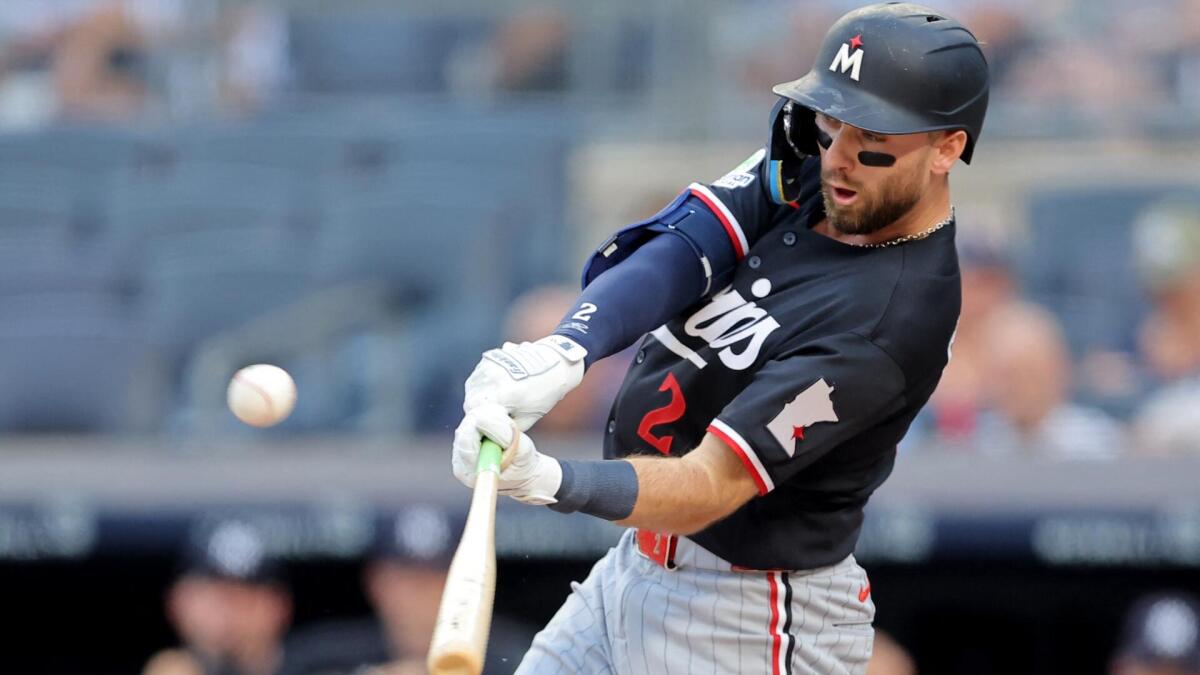
The foundation of Fetner's approach rests on a principle that the market often prices inefficiently: when a left-handed batter owns a sharp edge against a right-handed pitcher (and vice versa), and that specific pitcher has surrendered hard contact to that same handedness, the odds shift. Twins first baseman Kody Clemens embodies this. He carries a .855 OPS against right-handed pitching over 248 plate appearances this season, with 14 of his 16 home runs coming off righties. Angels right-hander Grayson Rodriguez, his Friday opponent, has posted a 9.53 ERA over his last three starts (12 earned runs in 11⅓ innings) and has been punished by left-handed batters to the tune of a 1.088 OPS in 67 plate appearances. That's not recency bias—that's a structural mismatch where Rodriguez's recent struggles compound an existing platoon vulnerability. Clemens at +350 carries value because the market appears to be pricing the bet on his recent form (three home runs in seven games) rather than the matchup architecture itself.
Giants outfielder Bryce Eldridge and Rockies right-hander Tanner Gordon follow the same pattern. Eldridge has a .826 OPS against righties, six of his eight home runs off that handedness, and he's 2-for-3 with two extra-base hits in three prior meetings with Gordon. Gordon has allowed five home runs over his last two starts and left-handed hitters have crushed him at a 1.086 OPS. Add Eldridge's four home runs over his last 14 home games (Friday is at home), and the split advantage becomes layered—pitcher-specific, seasonal platoon edge, recent venue form. Reds outfielder Spencer Steer rounds out the trio, posting a .319 average against left-handed pitching this season while facing Cubs southpaw Shota Imanaga. Steer has also homered three times in his last ten games at home, where Friday's game takes place. The mechanism here is similar: platoon advantage, home-park consistency, and a matchup where Imanaga's handedness aligns with Steer's zone of dominance.
What separates these angles from surface-level hot-bat picks is durability. Fetner's streak—17 correct home run picks over 5.5 weeks, including three-day stretches with multiple hits—suggests the platoon-matching framework survives variance. Single-game home run props carry inherent volatility (a strikeout or weak contact ends the narrative), but when you're pairing handedness edges with pitcher-specific recent collapse, you're not relying on whether a batter happens to launch one today; you're leaning into a structural mismatch the market may not fully reflect. The odds (+350, +650, +450) suggest these are not consensus plays, which is exactly where value accumulates.
One caveat: home run props are inherently short-duration wagers. Even a well-constructed angle has a modest hit rate; Fetner's 17 winners over 5.5 weeks implies roughly a 50% conversion rate at best, meaning bettors should treat these as part of a diversified slate, not as locks. The edge is real—the platoon data and pitcher splits bear that out—but the variance is also real. These three bets work best when deployed as part of a parlay strategy (the source mentions 180-1 payouts on combined selections) or when the odds remain soft enough to absorb the miss rate.