The Deadline Squeeze: Why Home Run Props Narrow as Trade Season Peaks
By Justin Erickson ·
With the MLB trade deadline 72 hours away, the home run prop slate tightens dramatically—and one National League slugger sitting in the leaderboard's top 10 could vanish from the equation entirely.
The MLB trade deadline arrives Monday at 6 p.m. ET, and that clock is reshaping how sharp bettors approach Friday's home run props. Hunter Goodman, the Colorado Rockies catcher, occupies a precarious perch: he's one of the few top-10 home run leaders with genuine trade risk, and if he moves to an AL contender before the bell, any preseason +1500 ticket on him to lead the National League in homers becomes worthless. That's the trade deadline tax, and it hits hardest on players trapped on under-.500 teams with weeks to go in the season.
Friday's slate offers limited compelling weather angles—no pronounced wind patterns or ballpark factors that typically signal inflated home run probability. Coors Field hosts Kansas City, but the forecast shows winds blowing in, suppressing fly-ball distance. Wrigley Field features a Yankees-Cubs matinee with no standout atmospheric setup. The absence of obvious environmental edges forces bettors to isolate matchup mechanics and historical performance against specific arms.
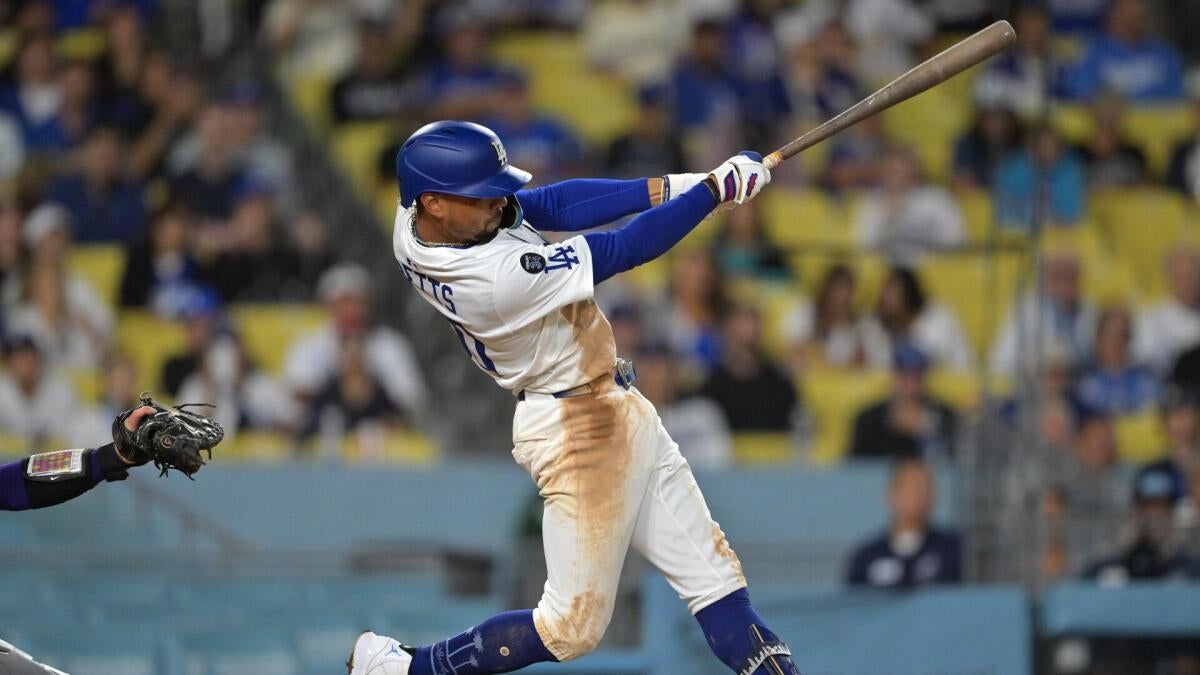
Mookie Betts emerges as the sharpest single-game home run angle, with the Dodgers hosting Boston in a contest that could resemble a World Series preview if the Red Sox's recent surge holds. Betts is batting .232 with just 13 homers on the season—career lows fueled partly by injury—but his power drought since June 28 (only two homers, both on July 20 against Philadelphia) masks a crucial edge in this specific pairing. Against Boston's starter Ranger Suarez, a lefty with five home runs allowed all season, Betts holds a career 1.357 OPS with two homers in 12 at-bats. Suarez's limiting of dingers (just one in his past eight starts) normally signals a poor home run environment, but Betts's elite-level handedness split overrides that general pattern. The mechanism isn't recency—Betts has underperformed his talent level—but rather the specific pairing advantage that shows up when he faces this exact pitcher type.
FreddieFreeman deserves consideration for the same matchup. Freeman is 6-for-18 with two doubles against Suarez, and his Over 1.5 total bases prop has cashed with regularity regardless of home run outcome. Andy Pages (2-for-4, two doubles) represents lower variance on the same leverage angle. Each of these names carries persistent edge within this single game because the advantage traces to established split data, not to a one-off hot streak or a volatility overswing.
The broader takeaway: Friday's props reward matchup digging over macro leaderboard chasing. With 72 hours until the deadline reshuffles rosters and potentially voids entire ticket classes, the market's attention splinters between in-game value and portfolio risk. That inefficiency—the gap between what the book prices and what actually happens within a defined pairing—is where Friday's real edge lives.