Mets-Phillies Derby Fallout: Harper's Redemption Angle and Soto's Nola Mismatch
By Justin Erickson ·
A single-game matchup offers two cleanly separated power angles—one fueled by embarrassment, the other by a career track record that the market has yet to fully price.
The Mets and Phillies are the only MLB action on Thursday, July 16, and that scarcity creates a prop-betting funnel: bettors with money to move have nowhere else to go. Home run props on this matchup carry outsized volume, which means sharp action has room to move the needle before first pitch. Two names emerge with distinct edges.
Bryce Harper is surfing a genuine power wave at 33. He's cleared 20 home runs through 97 games—a 33-homer pace over a full season—which isn't far off his best seasons in his late twenties. But the real needle-mover isn't the aggregate power. It's the venue split: Harper's .924 OPS at Citizens Bank Park towers 100+ points above his road mark, a chasm that suggests either ballpark bias or comfort in front of a home crowd. He's split his 20 long balls evenly between road and home (10 each), meaning his road power output is genuine; the home park simply amplifies his already-elevated approach. Mets starter Christian Scott gave up a home run to Harper on June 27, and New York's bullpen has hemorrhaged 13 home runs in July alone—a league-leading rate. That's not volatility; that's a structural weakness in late-inning relief that won't evaporate in 48 hours. Harper faces a scenario where both the starter and the back-end have shown specific vulnerability to his power profile.
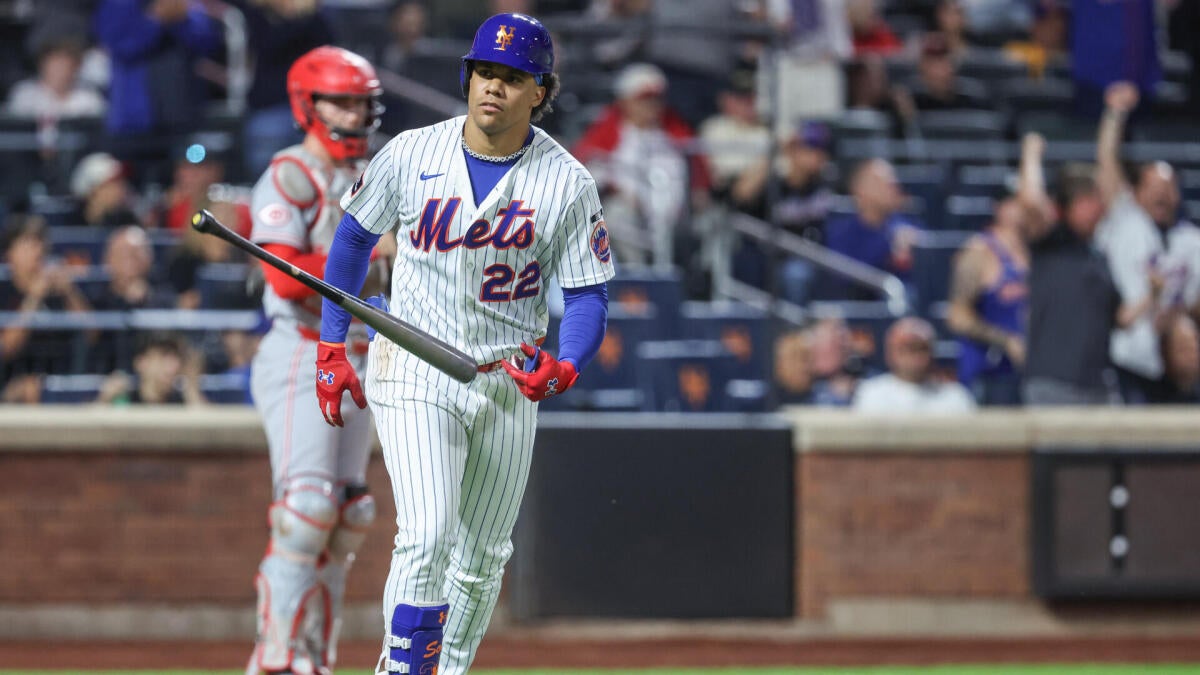
Juan Soto's edge against Aaron Nola is more durable and less dependent on a single-game emotional narrative. Nola's season is cratering: 3-6, 5.75 ERA, and a recent seven-start stretch at 6.11. More specifically, Nola has allowed two home runs in four of his last six starts before posting quieter outings in his most recent two—a classic pattern of variance masking a soft fastball problem. Against the Mets specifically, Soto owns five career home runs and a 1.142 lifetime OPS. The June 18 matchup saw both of Soto's homers come off Nola. That's not a sample anomaly; that's a demonstrable tactical mismatch where Soto's bat speed and zone recognition align with Nola's fastball placement tendencies. The Phillies' bullpen this month carries an 8.05 ERA with eight home runs allowed in July—if Scott falters and the Mets get late-inning opportunities, Soto faces additional runway.
Market pricing on Harper (+300) reflects his recent power surge but may not fully weight the venue-specific component and the Mets' July bullpen collapse. Single-game spikes in home run props can evaporate within 24 hours as sharp books adjust, so early action here moves fast. Soto (+235) carries longer-term reliability because the Nola mismatch is a multi-year pattern, not a one-month aberration. Books may have priced Soto's directional edge without digging into the specific pitcher matchup, a common shortcut when handling low-volume game states.
Both plays benefit from the Thursday isolation: with no competing markets, bettors forced into this single game to deploy capital, and both hitters displaying measurable technical advantages against their opponents. The edge isn't "they hit home runs." It's that Harper faces a specific venue and bullpen weakness that his home-park OPS split exposes, and Soto's career authority over Nola—five dingers, 1.142 OPS—persists in a matchup where the pitcher is in genuine decline.