MLB · callup
Soriano's Controlled Debut Reshapes Toronto's Rotation Math
The Blue Jays' trade-deadline starter delivered exactly what they needed in his first home appearance, but the team's power deficit remains the real ceiling on their contention window.
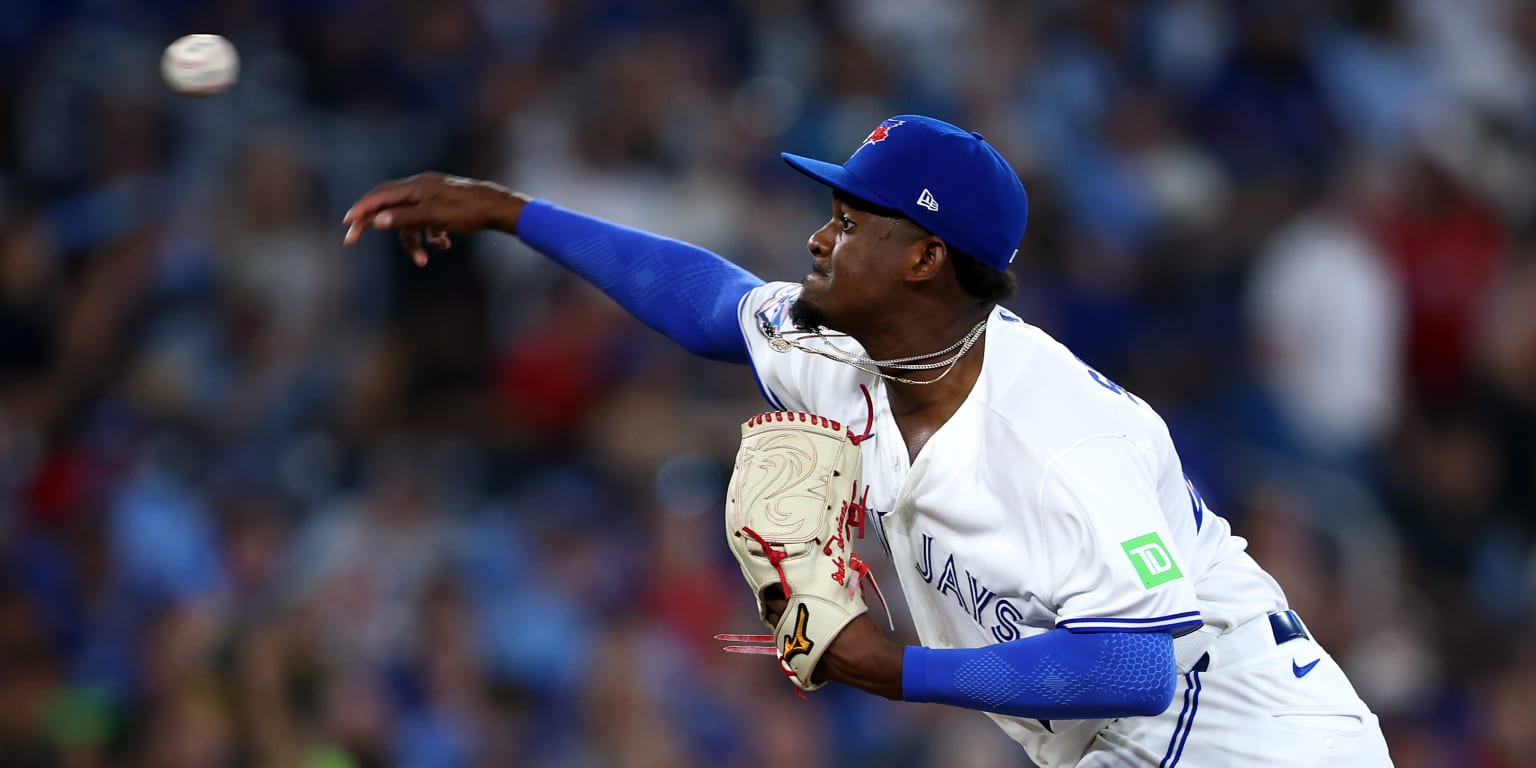
José Soriano threw six innings of one-run ball in his Toronto home debut Wednesday, anchoring a 6-4 win over Boston that extended the Blue Jays' series dominance to three straight. The performance wasn't flashy—it was efficient. Soriano worked ahead in counts, trusted his sinker more than his four-seamer, and benefited from upgraded pitch-framing from catcher Alejandro Kirk, a measurable upgrade from the Angels' receiver rotation. Manager John Schneider's comment that Soriano has "a really slow heartbeat" captures what mattered: a pitcher already adjusting to a new system on the fly, comfortable enough to execute the game plan in front of a hostile crowd.
Toronto sent prospect Arjun Nimmala (their No. 2 prospect) and complementary pieces to Los Angeles for Soriano at the deadline, betting he could function as the legitimate No. 2 starter alongside Dylan Cease. Wednesday's six-inning, one-run line represents the high-water mark the trade was supposed to produce: controlled, durable innings from someone capable of winning without relying on the ninth-inning collapse. The Blue Jays' catchers—Kirk and Brandon Valenzuela—grade significantly stronger at pitch framing and game-calling than Soriano's previous framing partners in Anaheim. That's not a small variable; better framing lowers the zone and induces more chase rates on pitches below the strike. Soriano will get fine-tuning in the offseason, but he's already absorbed the urgency: this team is chasing a Wild Card spot and cannot afford the margin-eroding outings that characterized his Angels tenure.
What nearly cost the Blue Jays Wednesday tells a deeper story about their ceiling. An eighth-inning error by Red Sox catcher Willson Contreras—a dropped foul pop behind home plate—gave Kazuma Okamoto a second life, which he converted into a go-ahead run. Guerrero Jr. slid home on a bases-loaded walk. Straw doubled into the gap for two more. The Blue Jays scored five runs in one inning after managing to average just over one run per game for stretches of the season. Schneider's observation—that Toronto hits a ton of singles instead of power—isn't just colorful commentary; it's a structural weakness that manifests in variance. A team that relies on error-driven rallies and base-hit accumulation plays closer to .500 than its talent suggests. The Red Sox didn't lose because Soriano was dominant; they lost because the Blue Jays got a gift and capitalized.
For bettors, Soriano's debut carries a directional implication for Toronto's innings-level props going forward. His sinker-heavy approach and improved framing should lower the walk rate relative to his Angels profile (he averaged 3.2 BB/9 in Anaheim but showed better zone command Wednesday). Fewer walks mean shorter at-bats and fewer high-leverage situations, which compounds into lower run-expectancy in his starts. The Blue Jays' offense, despite the emotional eighth-inning rally, remains dependent on sequencing luck—balls dropping in, opponents making errors, walks loading the bases. That's not a sustainable edge. If Soriano stabilizes at his Wednesday level (6 IP, ~1-2 ER per start), Toronto's team totals in his games should price tighter than their recent offensive volatility suggests. The market may overcorrect upward on the strength of a single-game offensive eruption; the mechanic is different. Soriano's efficiency with improved catchers should anchor runs lower over his next 6-8 starts, while the team's power gap—still present, still structural—keeps them vulnerable to regression whenever they don't get error assistance.
MLB Intelligence — Baseball intelligence beyond the box score. Open MLB Intelligence →