Blake Dunn's 10th-Inning Single Masks Cincinnati's Offensive Fragility Against Kansas City
By Justin Erickson ·
The Reds' walk-off victory obscures a deeper problem: they needed two solo homers and extra innings to escape a Royals team missing its starting rotation.
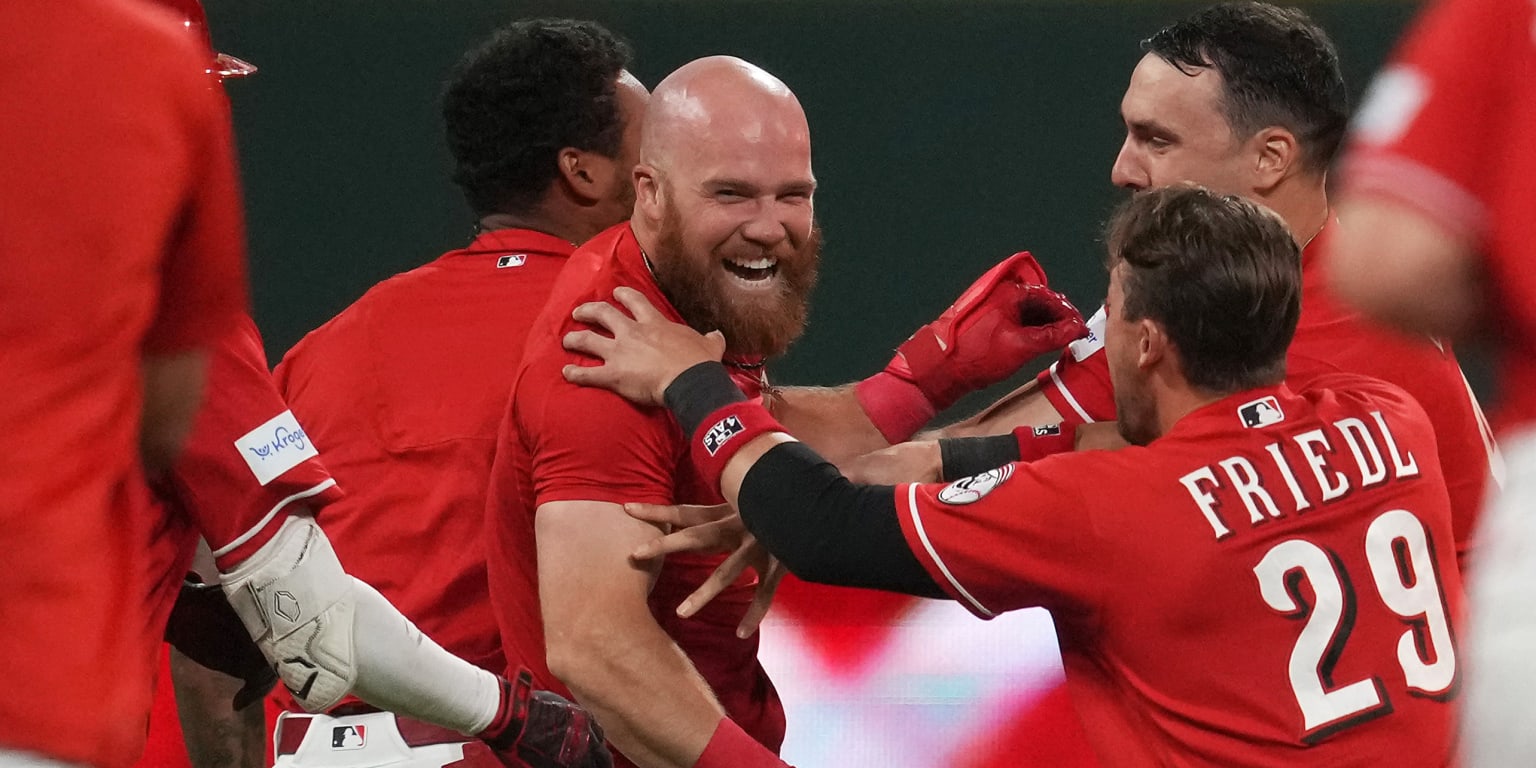
Blake Dunn's single-stroke 4-3 win over Kansas City on Tuesday felt like deliverance. A walk-off in the 10th inning, the ball threading into right field, Spencer Steer jogging home from second as the automatic runner. The narrative writes itself. But peel back the box score and Cincinnati's offensive profile looks far more constrained than a dramatic finish suggests.
The Reds managed exactly two hits through nine innings—both solo homers from Steer, who took Noah Cameron deep in the fifth and Matt Strahm in the eighth. That's a familiar pattern in Cincinnati's recent lineup construction: power concentrated in a narrow band of the order, contact and situational hitting thin elsewhere. Will Benson's pinch-hit homer in the ninth tied the game at 3-3, keeping the Reds alive, but the underlying offensive architecture remained unchanged. Two walks from Sal Stewart and Eugenio Suárez kept Cincinnati breathing long enough for extras, and Dunn's 10th-inning single sealed the outcome. But Kansas City's pitching staff—missing its top rotation starters and leaning on relievers—handed Cincinnati multiple second chances. That's not sustainable.
For bettors tracking Cincinnati's offensive volatility, Tuesday's result is cautionary rather than encouraging. The Reds' run production depends heavily on individual power events rather than baseline contact quality or plate discipline. Steer's dual homers masked a team batting average that won't recover on solo shots alone. In a series against Kansas City—a franchise not built for multi-game pitching depth right now—Cincinnati's walk-off masks the fact that the Reds should have blown this game open earlier if their offensive engine were firing across multiple layers. Instead, they scraped together 4 runs across 10 innings against a team playing without its ace rotation.
The betting implication cuts both directions depending on timeframe. Short-term, Cincinnati's walk-off fuels narrative momentum that can inflate team totals and moneyline odds in the next 24-48 hours. Public perception will anchor on "Reds pulled off a dramatic win" rather than "Reds needed two homers and extra innings to beat a rotation-depleted Royals team." Lines may overcorrect upward. Conversely, if you trust the underlying skill composition—Steer's isolated power masked by a thin run-generation profile—fading Reds team totals above 4.0 in the next 2-3 games captures value before the market recalibrates. The walk-off is noise. The offensive construction is the signal.