Machado's Fastball Feast Masks a Fragile Padres Turnaround
By Justin Erickson ·
The All-Star third baseman has found explosive form in six weeks, but his approach relies on a pitcher adjustment that's already underway.
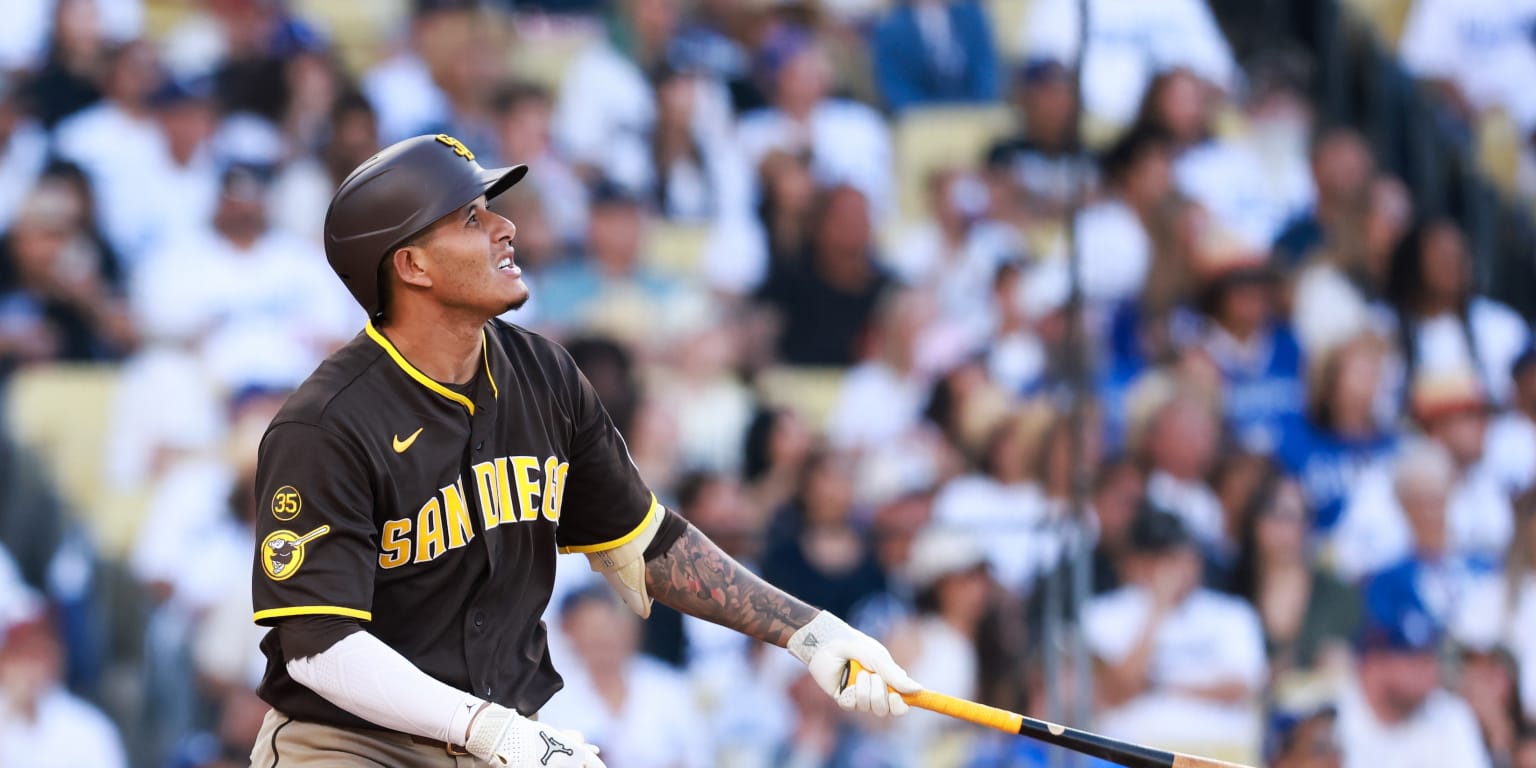
Manny Machado's June 20 inflection point arrived with a three-run home run in extra innings at Globe Life Field—a moment that fractured a season-long slump and launched him into the All-Star break with a .307/.419/1.069 slash line across 89 plate appearances. Before that date, across 301 PA, Machado had managed just a .174 average and .604 OPS, career-worst marks for on-base percentage (.290) and slugging (.418). The Padres' offense—last in baseball with 379 runs and a .672 OPS—cannot afford to lose this version of Machado as the trade deadline approaches. But the mechanics beneath his hot streak reveal a bet that depends on one thing pitchers are already unwilling to give him.
Machado's resurgence rests almost entirely on fastball domination. Since June 20, he's hitting .450 with a .925 slugging percentage against heaters (top-three in baseball over that span, minimum 20 PA), while cutting his whiff rate on fastballs from 23.5% to 16.0%. The problem: pitchers have noticed. In July alone, Machado is seeing fastballs at a 45.8% clip—the lowest monthly rate of his 15-year career. He's hunting hard stuff with ferocity, but the supply is drying up. His compensatory response—whiffing at 43.9% on non-fastballs, up from 29.5%—reveals the trade-off: he's swinging through pitches nearly 6 inches off the zone, a marked increase from 4.8 inches earlier in the season. This is not a sustainable equilibrium.
The secondary pillar of Machado's turnaround is more durable: a launch-angle correction that's generated tremendous damage on pitches in the heart of the zone. His slugging percentage on zone-center pitches jumped from .394 pre-June 20 to 1.258 since, second only to Luis García Jr. of the Nationals. His launch angle climbed from 11 degrees to 13, cutting his ground-ball rate on those pitches from 40.5% to 14.3%. That adjustment is genuine—it doesn't depend on pitcher compliance. But it's also a narrow fix. Machado's overall profile remains fragile: a 22.3% strikeout rate, a career-low walk rate, and a team-wide offensive void that places San Diego in a position where one player's hot streak cannot sustain a buyer's market outlook.
For prop bettors, the angle is clear and time-sensitive. Through the All-Star break, Machado's strikeout line has likely overshot his true talent baseline given the fastball-hunting dependency. Pitchers will continue to throttle fastball frequency—expect sub-46% rates to become the norm rather than the exception. When that happens, his whiff rate on off-speed offerings will likely normalize upward, and his HR volume will compress. His next 10-15 games represent a window before market adjustments fully bake in the pitcher-adjustment reality. After that window closes, his strikeout prop (if listed) will correct downward, and his home-run totals will deflate from the elite pace he's maintained since mid-June.
The Padres' organizational decision point at the deadline will hinge partly on whether Machado can sustain All-Star-caliber form without the fastball diet he's been force-feeding himself. If he can't adjust again—if he can't prove he has an edge against breaking balls—then the team's window for a meaningful trade return shrinks considerably. Machado is the team's most tradeable asset, but only if he's producing. For now, that production is real. But its foundation is cracking.