Dodgers reload the middle for September push with Smith, Rushing, Wrobleski
By Justin Erickson ·
Los Angeles gets its starting catcher back after 88 days and two complementary bats just as the pennant race enters win-or-go-home mode.
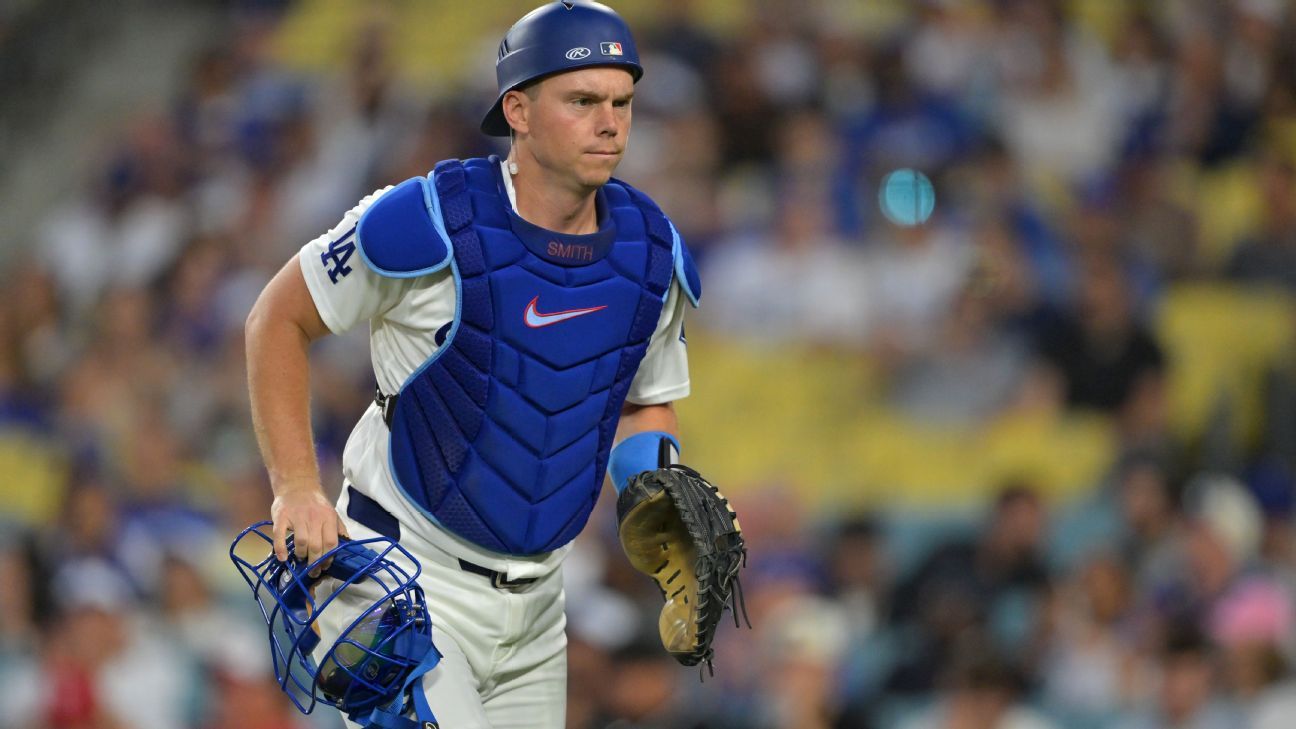
The Dodgers activated Will Smith, Dalton Rushing, and Justin Wrobleski from the injured list Tuesday, marking the first meaningful reinforcement to their roster since early August. Smith, sidelined since June 6 with a neck injury, returns to his role as the team's primary hitting catcher. Rushing slots back into reserve outfield duties after a right arm injury cost him the better part of a month. Wrobleski provides additional depth to a bullpen that's been stressed by closures and injury shuffles. The trio's availability gives manager Dave Roberts flexibility heading into a compressed September schedule, though the manager's own comment—"the guys that essentially play every day need to just perform"—signals that health upgrades alone won't solve underlying offensive inconsistency.
Smith's absence left a measurable void. Before the injury, he was batting .249 with six home runs and 23 RBIs across 52 games, a solid enough baseline for a catcher but below his career trajectory. His neck issue forced an unexpectedly long recovery; five rehab starts at Triple-A Oklahoma City (.250 average, two doubles, one homer) suggest his swing mechanics have returned to baseline, though the extended timeline hints at a soft-tissue issue that required genuine tissue remodeling rather than a simple bruise. He contributed immediately Tuesday (1-for-5, two RBIs, one run) and will receive at least one more start in the series, indicating Roberts plans to rotate him into the lineup rather than ease him in as a backup.
Rushing's situation carries different weight. The 25-year-old had posted career-high activity before injury—74 games, .253 average, 12 home runs, 36 RBIs—which made him a viable emergency starter and bench weapon. Roberts has now slotted him as a pinch-hitter role model, an understated demotion that reflects both his incomplete recovery status and the team's preference for continuity in the everyday lineup. His ability to "hit the ball out of the ballpark," in Roberts' phrasing, matters only if the team needs his power in specific leverage spots; he won't accumulate plate appearances at his previous pace.
For prop bettors, the Dodgers' offensive aggregate matters more than individual returning players. Los Angeles has been underperforming its run-expectancy fundamentals—multiple starting position players (including Shohei Ohtani, who hasn't pitched since early July and has seen his offensive output decline in tandem) are running below their seasonal trends. The addition of Smith provides a net positive to team runs and RBIs, primarily through increased catcher at-bats and the likelihood that he continues producing at his pre-injury clip (.249 BA, 23 RBIs in 52 games = roughly 0.44 RBIs per game). Over a typical September stretch of 20-25 games, if Smith appears in 15-18 of them, the team's total batting output should tick higher by 6-8 runs and 3-4 RBIs attributable to his presence alone. However, the team's current run-rate struggles—they're being outscored over the last two weeks and Ohtani remains non-functional on the mound—mean that Smith's return is an incremental boost in a lineup that has structural issues. Rushing's limited role and Wrobleski's bullpen depth are secondary considerations.
The betting implication hinges on whether the Dodgers' over/under on team totals already reflects their recent offensive malaise or has failed to adjust downward enough. If the market priced them as a robust offensive team at season-open (they were), recent line movements may not have fully captured their mid-season decline. Smith's return will push the expectation upward, but not enough to reverse the broader downtrend. Bettors should be cautious about buying team totals on the Dodgers simply because of Smith; the health upgrade is real but modest, and it doesn't address the Ohtani dysfunction or the performance gap among other corner infielders. The Dodgers' September team total line (typically 4.5–5.0 runs) should stay in that band unless multiple other regulars return to form simultaneously.