Red Sox Trade for Curtis Mead: A Deadline Gamble on Reclamation
By Justin Erickson ·
Boston surrenders a promising young starter to acquire a 25-year-old slugger whose power surge may be real—or may evaporate once he faces AL pitching.
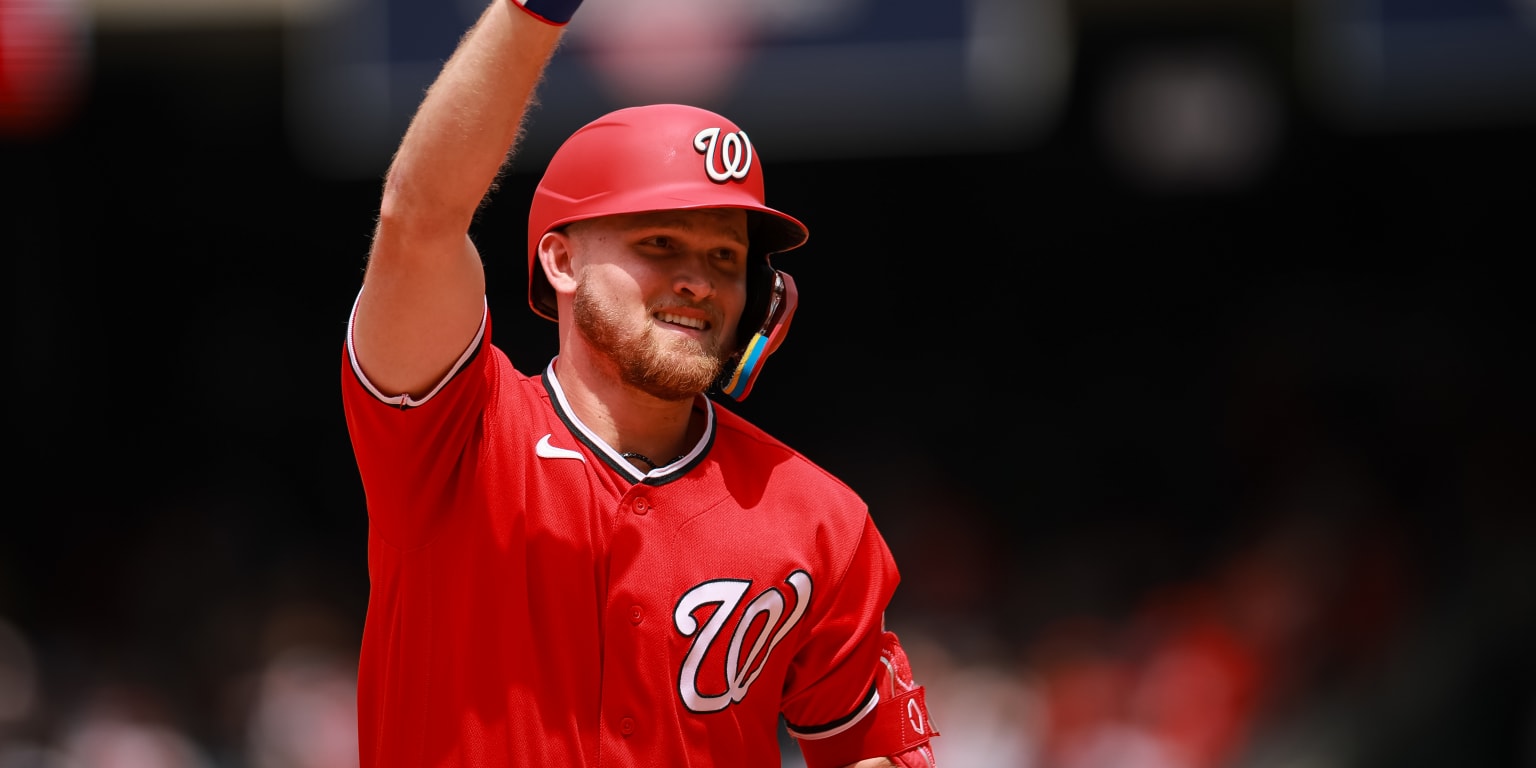
Craig Breslow made his first deadline splash late Saturday, shipping rookie left-hander Connelly Early to Washington for infielder Curtis Mead in a one-for-one swap that exposes the Red Sox's core weakness: they cannot hit. Boston has only 98 home runs through July 27, tied for fewest in baseball, while pitching depth is no longer a bottleneck—the rotation carries a 3.56 ERA, second in the American League. Mead arrives with 17 homers in 87 games for the Nationals, a marked improvement over his earlier stint with Tampa Bay and his brief window in Chicago.
The math on this trade is straightforward and blunt. Breslow is betting that a two-month sample in Washington—a .852 OPS over 87 games—represents Mead's true baseline rather than a statistical mirage. The executive cited meaningful adjustments to Mead's mechanics: hand position, bat path, stride consistency. Those are testable claims, and Breslow appears to have done the homework. Mead's bat-to-ball skills are genuine. He doesn't chase. He doesn't miss often. But here is the risk: he has ricocheted through five organizations in seven years. The Phillies dealt him as a prospect throwaway. Tampa was unimpressed across parts of three seasons. Chicago didn't believe. Only Washington gave him a real runway, and he capitalized. Now Fenway's dimensions—shorter right field, Green Monster depth—should theoretically boost his home run rate. But "theoretically" is doing heavy lifting in a trade that costs the Sox an emerging rotation arm.
What Breslow is gambling on is sticky skill, not variance noise. Mead's improvements to setup and stride are mechanical, not fluky. If those changes hold, he becomes a 25-homer-per-season contributor in a Red Sox lineup that desperately needs thump with Willson Contreras (22 home runs) as the only clear offensive threat. The Nationals, meanwhile, got a young pitcher with a 3.41 ERA in 2025 and room to develop—a sensible return for a team 27th in pitching ERA and out of contention. For Boston, which has won 22 of its last 25 games since June 25, the bet is that offensive balance matters more than rotation depth in October.
For prop bettors, the Red Sox's offensive profile shifts materially once Mead takes regular at-bats. Team totals have been suppressed by the dearth of power; a lineup with both Contreras and Mead presents a clearer path to runs. Boston's next seven games run through July 31 before the August 3 deadline, giving Mead approximately 4-5 games to acclimate before the trade closes the market. Early projections should lean toward caution—Mead's AL debut is uncharted—but his mechanical adjustments, if they prove durable in a higher-velocity environment, could unlock value on overs at team totals below 4.5. Watch his first three games closely. If he extends his Washington stroke against AL fastballs, the corrected projections will likely overshoot upward by half a run or more.
The harder bet is Mead's home run production. Fenway should provide a 3-5% boost in fly-ball conversion, but the AL is also elite defensively in most parks. His 17 homers in 87 games (one every 5.1 PA) is sustainable only if the mechanical improvements are permanent—a multi-week observation, not a single-series conclusion. Early-deadline books may overshoot his prop totals as bettors buy the Breslow narrative. Patience is worth more than conviction here.