Santana's Arizona Exit Opens Lineup Questions for Contending Diamondbacks
By Justin Erickson ·
Carlos Santana's designation for assignment signals the Diamondbacks are reshaping their offensive core mid-season despite playoff positioning.
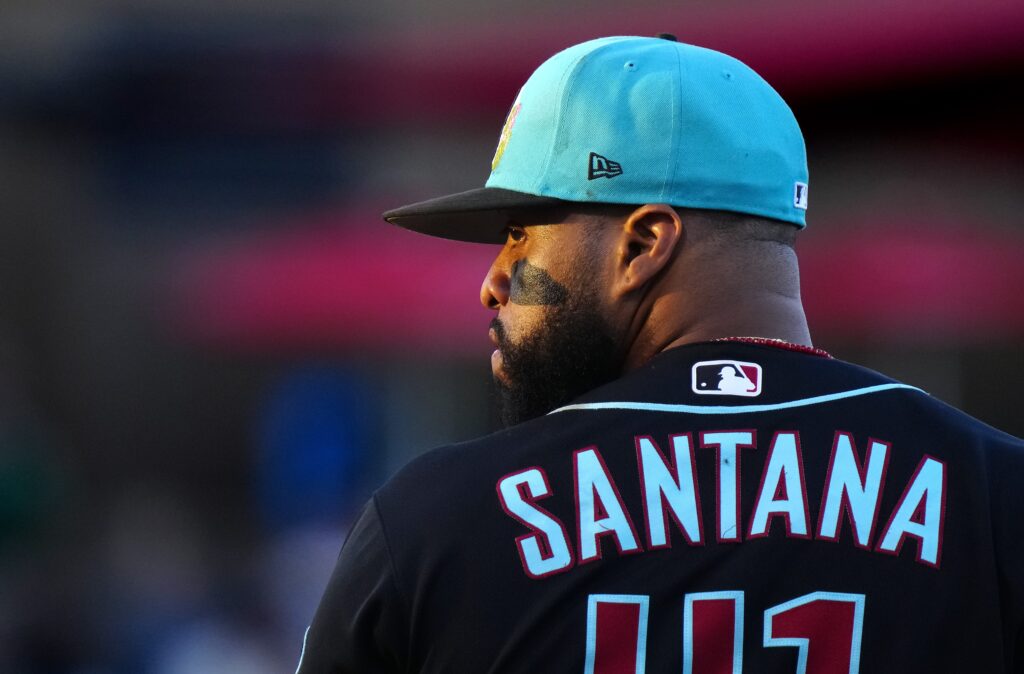
The Diamondbacks reinstated first baseman Carlos Santana from the 60-day injured list and immediately designated him for assignment on Wednesday, completing a swift organizational reset at the position. The move pairs with the recall of left-hander Mitch Bratt from Triple-A Reno and the optioning of fellow lefty Kohl Drake, suggesting Arizona's front office is willing to absorb short-term roster disruption in pursuit of a cleaner offensive profile down the stretch.
Santana's exit from Arizona reflects the collision between the team's window and his current utility. The 39-year-old has functioned as a complementary bat for years—a right-handed slugger against lefties with genuine power credentials, but increasingly limited against the rest of the league. His 60-day assignment came during the season, which means the club had already benchmarked his production as insufficient for their playoff push. The timing of his reinstatement followed by immediate DFA suggests the Diamondbacks never intended to reintegrate him into the everyday lineup; the move was procedural, clearing the path to shop him or cut him loose entirely.
Arizona's willingness to burn a roster spot on this transaction reveals confidence in internal alternatives. Whether that's a call-up from Reno or a move to acquire a first-base option via trade, the organization is gambling that the marginal production loss from removing Santana's occasional power bat is smaller than the flexibility gained. In a competitive NL West race, that calculation assumes their supporting cast—without Santana's occasional lefty-killing home run—can generate enough offensive value to stay in contention.
For bettors, the practical impact lands on Arizona's team total and run-line pricing. Santana's removal is a small negative to the Diamondbacks' offensive ceiling, but it's not seismic—he was already a rotational piece, not an everyday force. Where the edge emerges is in early-line overreaction: if the market swiftly downgrades Arizona's run production without accounting for the quality of his replacement at-bats, team totals that had priced in his occasional contribution may now be soft. However, that edge exists only if Arizona's front office is acquiring a higher-leverage hitter in return, which remains unclear. If Santana's plate appearances simply vanish into a committee approach, the downward adjustment to team totals is warranted and already baked into subsequent pricing. Monitor Arizona's next acquisition announcement—if it comes within 24-48 hours, early numbers on upcoming Diamondbacks totals may have failed to reflect the upgrade.
The broader signal is organizational urgency. Mid-season roster churn of this flavor, especially at a position like first base where offensive output is expected, suggests Arizona sees a closing window and is reshaping on the fly. That aggressive posture can translate to positive expected value on Diamondbacks moneylines in coming weeks if the replacement acquisition meaningfully improves their lineup construction.