MLB
De La Cruz's Defensive Wizardry Is Starting to Reshape How the Reds Build Around Him
A 24-year-old shortstop turning highlight plays into genuine defensive value is rare enough; one who does it consistently against a top-tier opponent suggests the Reds' entire roster construction has shifted.
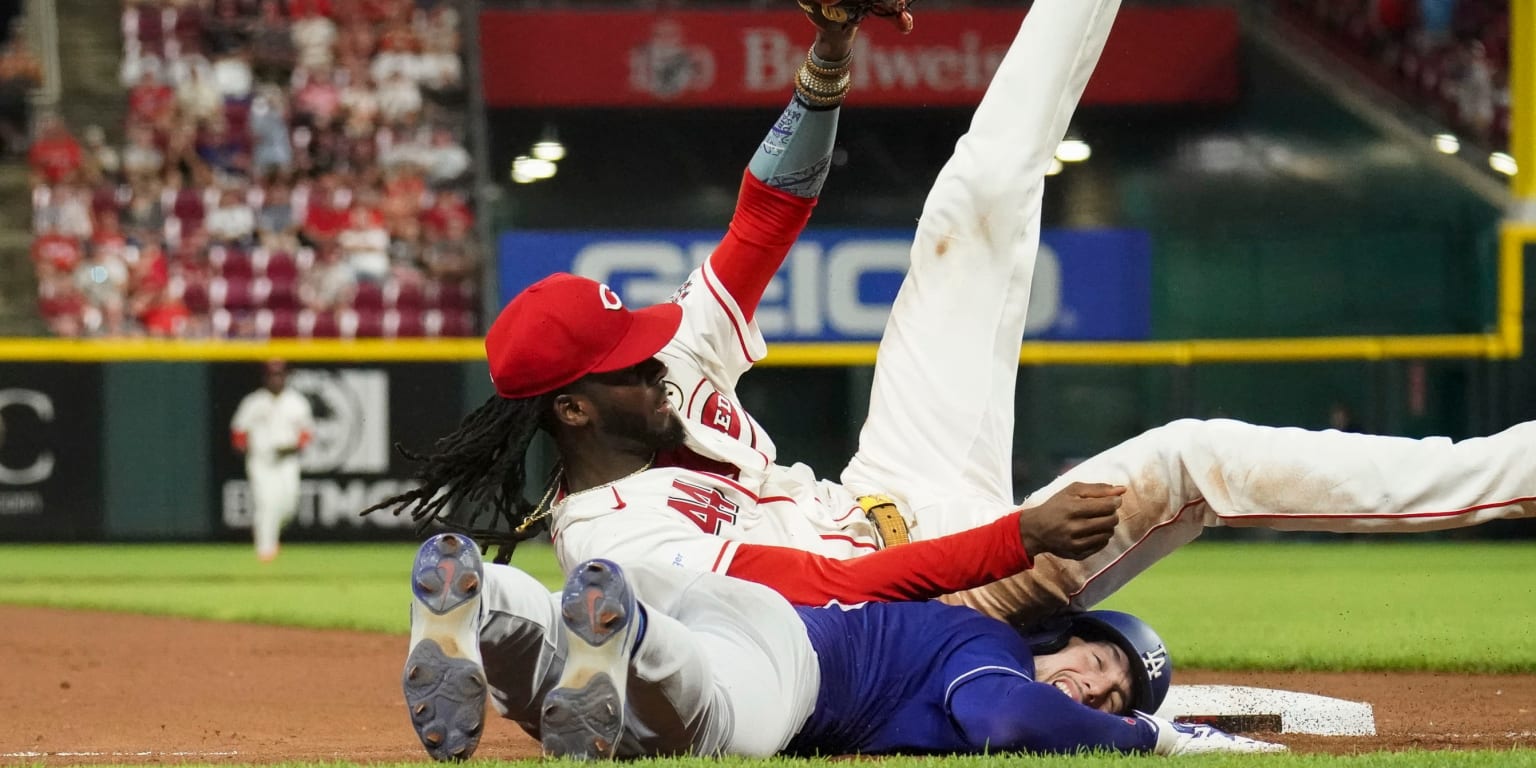
Elly De La Cruz made a 5-3-6 double play against the Dodgers on Tuesday night that should not have been mechanically possible. With one out and a runner on first, Max Muncy hit a slow roller to third. After the initial out at first, Kyle Tucker rounded second and broke for third, exploiting what looked like an open bag. De La Cruz, positioned at short, read the play in real time, sprinted toward the line—like a receiver breaking on a hot route—caught an off-target throw from first baseman Sal Stewart while in full stride, dove for third base, and tagged Tucker mid-slide. It was a 5-3-6 double play: the kind of defensive geometry that appears maybe twice per season across all of baseball.
What matters beyond the acrobatics is the instinct. De La Cruz didn't just make a good play; he diagnosed the situation while running, anticipated where both his teammate and the runner would be, and executed a tag that required him to change direction mid-air. This wasn't a routine groundball turned into a double—it was a thinking play disguised as an athletic play. The Reds' manager Terry Francona acknowledged the rarity of it, noting that neither the pitcher nor catcher witnessed the full sequence. Only De La Cruz saw the window.
The timing here is worth noting. Tuesday's play came just one day after De La Cruz hit a 457-foot homer in the same series, and a week after he uncorked a 102 mph relay throw from the outfield that erased his own record for the hardest assist by an infielder. Against the Dodgers specifically—a team the Reds have played multiple times this season—De La Cruz has turned himself into an offensive and defensive catalyst on both ends. The Dodgers, by design, are one of baseball's best-coached defensive teams; that De La Cruz stands out in comparison speaks to elite-tier positioning and reading.
For betting purposes, this pattern matters more than any single play. De La Cruz's shortstop position traditionally correlates with negative team-level defensive metrics if he's not elite; most young shortstops make the plays but leave value on the field. De La Cruz is making the plays and the impossible ones. This changes how the Reds' pitching staff should perform in leverage situations. Pitchers with De La Cruz behind them—especially in games where the Dodgers or other speed-oriented offenses put runners in motion—have one fewer base to worry about covering on the left side of the infield. Ashcraft, the Reds' starter, didn't need to bail out the defense on Tuesday; De La Cruz handled it. Over a full season, that compounds into fewer inherited runners scoring and cleaner double-play depth.