Jansen's UCL Threshold: Rangers Face Catcher Reckoning Mid-Season
By Justin Erickson ·
Eight weeks on the shelf with a significant UCL injury has Danny Jansen at a crossroads—and Texas must decide whether to shut down its starter or hunt for reinforcement.
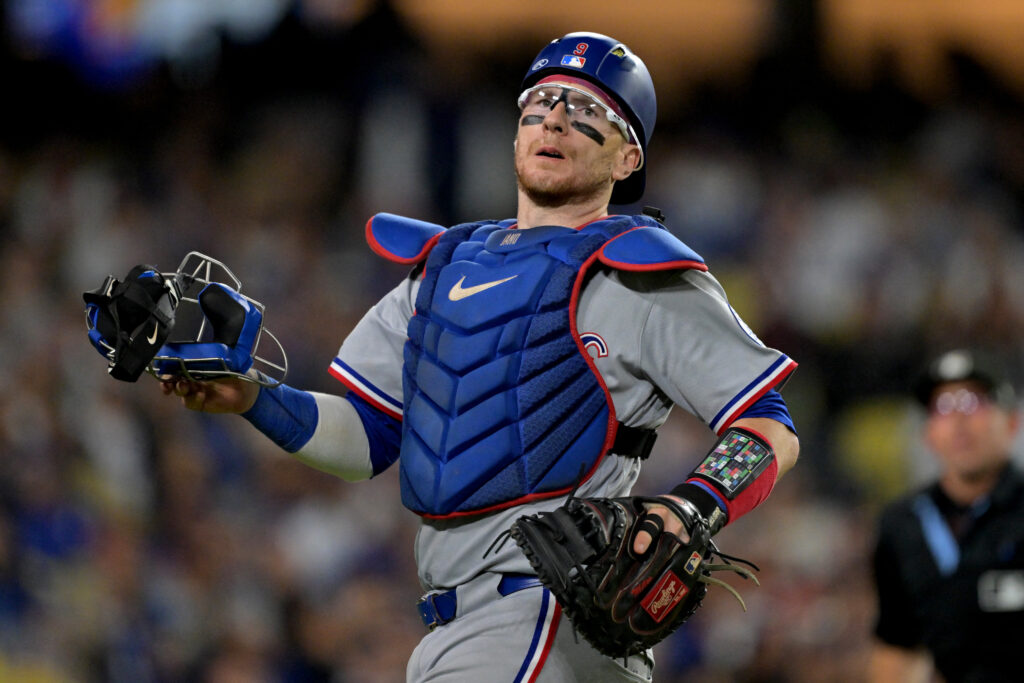
Danny Jansen has been sidelined since early June with a forearm/elbow injury that's evolved into a legitimate UCL concern. After nearly eight weeks of attempts to manage the problem conservatively, the Rangers catcher has recently resumed throwing, but the calculus is now surgical: continue rehabbing with uncertain recovery timelines, or opt for season-ending surgery that closes the book on 2026. Per the Dallas Morning News, Jansen is actively weighing that decision—a choice that carries immediate roster and payroll implications for a Texas team still in contention.
The injury's timeline is instructive. An early-June shelf date means Jansen has already sacrificed roughly two months of the season; a UCL injury significant enough to warrant surgery consideration typically signals partial or full tear, not mild inflammation. That Jansen tried to play through it initially speaks to his durability profile, but UCL damage doesn't resolve through willpower. The Rangers acquired Jansen in an offseason trade partly for his veteran stability behind the plate; losing him now—whether to surgery or prolonged ineffectiveness upon return—represents a material loss in depth and game-calling continuity.
For Texas's catching rotation, the calculus tilts hard toward replacement. If Jansen opts for surgery, the Rangers move to a backup committee or make a trade-deadline play for another starter-caliber catcher. Either path disrupts offensive production from a position already modest in run generation. Jansen carried a .263 average and subpar power into his injury; his absence hasn't created a hole at the plate so much as confirmed Rangers' pre-existing weakness at catcher. If he returns without surgery, expect cautious workload management and performance volatility—a UCL in partial failure rarely produces clean at-bats.
From a wagering lens, Texas's team total and run-line prices should face downward pressure if Jansen goes under the knife. A full-time backup catcher in a long-season platoon typically costs the Rangers 8-12 runs per 81 games compared to a healthy starter. That's not a massive swing, but it's real—and it compounds if the team also trades internal talent to acquire another backstop. Watch for Rangers team overs to contract 0.3–0.5 runs if Jansen elects surgery; that repricing is durable because it reflects a permanent roster change, not a one-game variance. Conversely, if Jansen stays healthy enough to return to light duty within the next 2-3 weeks, the market may have already baked in caution, creating modest over value for Texas in series where Jansen takes a few games.