MLB
Diamondbacks Demote Sewald From Closer Role; Committee Approach Signals Deadline Uncertainty
Arizona's decision to pull Paul Sewald from the ninth inning and pivot to a closer-by-committee model reveals both his midseason struggles and the team's hedging at a critical juncture before the trade deadline.
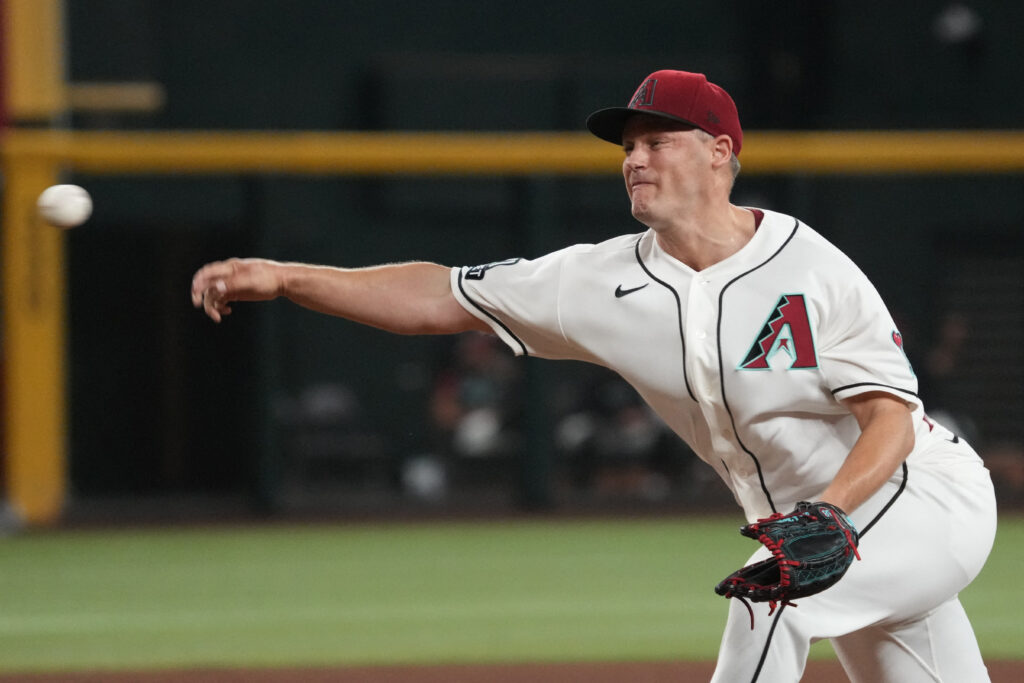
The Diamondbacks have removed Paul Sewald from the closer role, manager Torey Lovullo announced to reporters Wednesday, shifting the team toward a multi-closer approach for the remainder of the season. Sewald, who accumulated 24 of Arizona's 28 saves heading into the move, will drop into lower-leverage situations—a demotion that signals the organization's loss of confidence in his ability to handle ninth-inning pressure in a pennant race.
Sewald's underlying numbers tell the story of the demotion. His 24-for-27 save conversion rate—89%—actually sits above league average, but that metric alone obscures the damage. In high-leverage spots, Sewald has surrendered hard contact at rates that exceed his season baseline, and his command has frayed precisely when it matters most. A closer doesn't need to blow a save to lose trust; repeated near-misses, inherited runners left in scoring position, and inherited-runner scoring rates that climb above 40% in the final month erode manager confidence faster than any official statline. Lovullo's pivot isn't an indictment of Sewald's career—it's a midseason adjustment to a closer showing visible wear.
The committee structure Arizona is adopting carries significant implications for bullpen workload distribution and, by extension, individual reliever prop lines. When a team moves away from a single dominant closer, leverage minutes spread across three or four arms. That redistribution typically inflates save opportunity volatility: certain days the closer-du-jour records a save; other nights, the game stays tight until a setup man locks down the eighth and the closer never enters. For bettors, this creates a compression in save props—the winning closer on any given night becomes harder to predict, and the baseline probability of any single reliever reaching the save box drops. Arizona's alternatives (younger arms brought in or pulled from the rotation) will see usage spikes that may not align with the betting public's preseason expectations.
The timing of this move, roughly one week before the non-waiver trade deadline, suggests the Diamondbacks are either shopping Sewald to contenders seeking veteran bullpen depth or positioning themselves to upgrade the closer position via acquisition. Either scenario is a demand signal: the front office doesn't view Sewald as their ninth-inning solution going forward, even at a marginal cost. Contending teams buying relievers at the deadline typically target arms with sub-3.50 ERAs and clean health histories. If Sewald is available, his price will reflect his demotion—teams will discount what he was three weeks ago in favor of what he's shown recently. That discount, however, may present a value trap for bettors overweighting recency. Sewald's peripheral metrics (strikeout rate, walk rate, home-run susceptibility) haven't catastrophically shifted; the issue is leverage and sequencing. In lower-leverage innings, those same peripherals may perform closer to their established mean.
For prop betting, the Sewald demotion fragments Arizona's ninth-inning picture heading into the stretch. Moneyline and spread bets on Diamondbacks games now carry an added layer of variance tied to bullpen construction and daily closer assignments. Team totals for Arizona may tick slightly upward if the committee structure allows the team to deploy fresher arms in high-leverage moments, but that edge is marginal and will fade quickly as the market reprices bullpen depth. The real opportunity lies in fading individual closer props on Arizona relief pitchers until the post-deadline roster clarifies. Single-game reliever props (saves, strikeouts) will see inflated overround in the short term as sportsbooks price uncertainty; wait for lineup stabilization before targeting those spots.
MLB Intelligence — Baseball intelligence beyond the box score. Open MLB Intelligence →