Lawlar Returns to D-Backs Outfield With Upside Risk—and a Strikeout Overhang
By Justin Erickson ·
After 70 days on the shelf from a broken wrist, Arizona's former prospect prospect gets activated into a struggling outfield corp, but his track record of durability and plate discipline remains a significant question mark.
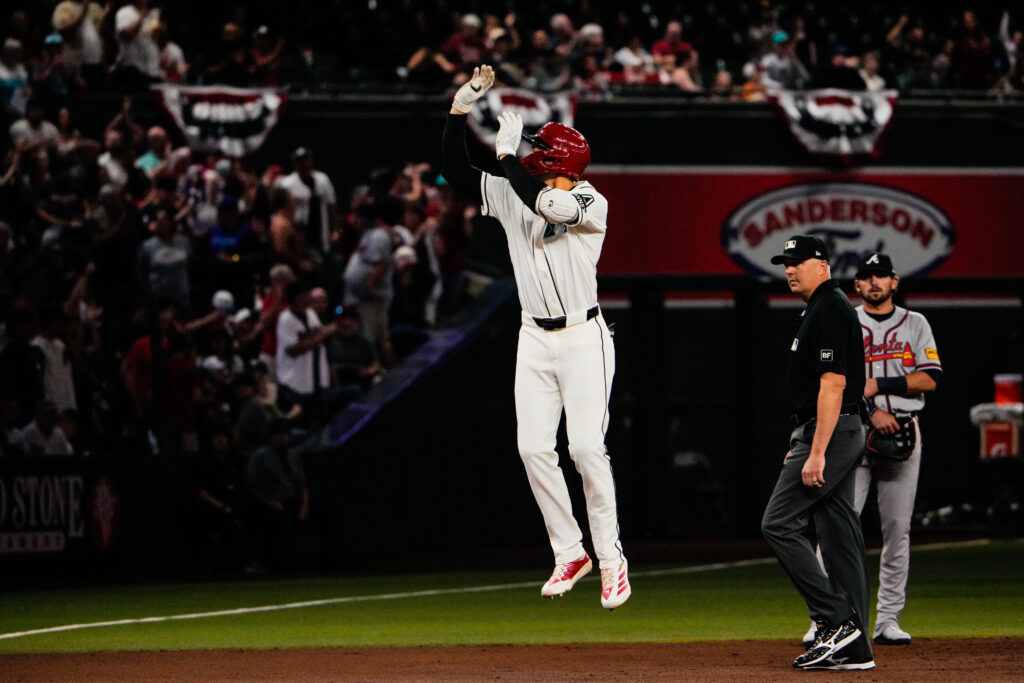
Jordan Lawlar is back. The Diamondbacks activated the 24-year-old from the 60-day injured list on Friday for Cincinnati's series opener, ending a two-plus-month absence dating to April 3, when a pitch from Braves righty Osvaldo Bido fractured his right wrist. The timing of the original injury was nightmarish—it came on the same night Lawlar ripped his first career home run and while the D-Backs were already bleeding out 12-1 at home. The wrist forced Arizona to shelve him immediately and also interrupted his conversion from shortstop to the outfield, a positional shift that had only just begun when he went down.
The context matters more than the headline. Arizona's outfield has been a liability all season outside of Corbin Carroll's MVP-caliber production. Ryan Waldschmidt, the rookie tasked with center field after Arizona moved on from Alek Thomas, is hitting .214/.250/.286 over his last two weeks with a team-high 17 strikeouts in that span alone. Tommy Troy in left field has shown decent plate discipline (.345 OBP) but zero power (.340 slugging). The D-Backs are essentially rolling with two question marks flanking Carroll, and Lawlar's return—even with his own durability red flags—is meant to upgrade the group. Lourdes Gurriel Jr. may return within weeks from hamstring strain, and Max Kepler's PED suspension lifts within a couple weeks, but neither addresses the immediate gap.
Here's where the cautious part enters: Lawlar has appeared in only 128 career big-league plate appearances. He spent most of 2024 recovering from thumb surgery, then lost nearly two months in the minors last season to a hamstring strain (June through August). His injury history isn't random misfortune—it suggests a structural durability issue. Minor league assignments and rehab stints don't guarantee fast integration, especially for a young player trying to establish himself at a new position. The D-Backs confirmed he'll stay in the outfield going forward based on his triple-A work, but five games in left field and one in center before the wrist injury is a vanishingly small sample.
For prop bettors, the strikeout risk is the lever. Waldschmidt struck out 38 times in 114 plate appearances (33.3% K rate) before his recent slide. Troy has been more disciplined but similarly strikeout-prone relative to his lack of contact power. Lawlar enters without a clear usage pattern—he could absorb 450+ plate appearances this season or settle into a platoon role depending on how Waldschmidt and Troy perform. His minor league profile before call-up doesn't suggest he's an outlier at the plate; he's a prospect with upside defined more by positional adjustment than hit-tool dominance. If Arizona pencils him in as an everyday outfielder, the aggregated strikeout total for the team's "supporting cast" around Carroll likely ticks higher in the short term. His return doesn't solve the on-base problem; it redistributes it.
The betting angle is subordinate—lean unders on strikeout props for Arizona's non-Carroll outfielders until Lawlar establishes a baseline and settles into a role. His presence may fragment plate appearances and lower individual volume, but the risk remains that Arizona's outfield corps stays a weak link masking Carroll's singular excellence. That's where sharps should look: team-level strikeout rate for the next 2-3 weeks, not Lawlar's personal lines, which will be overexposed due to activation buzz.