Seager's Back Injury Arrives With His Worst Season, Raising Questions About Texas' Lineup Depth
By Justin Erickson ·
The Rangers' star shortstop is in an 0-for-27 slump with a career-low .179 average and now heads for imaging on a back issue that's kept him out since Wednesday.
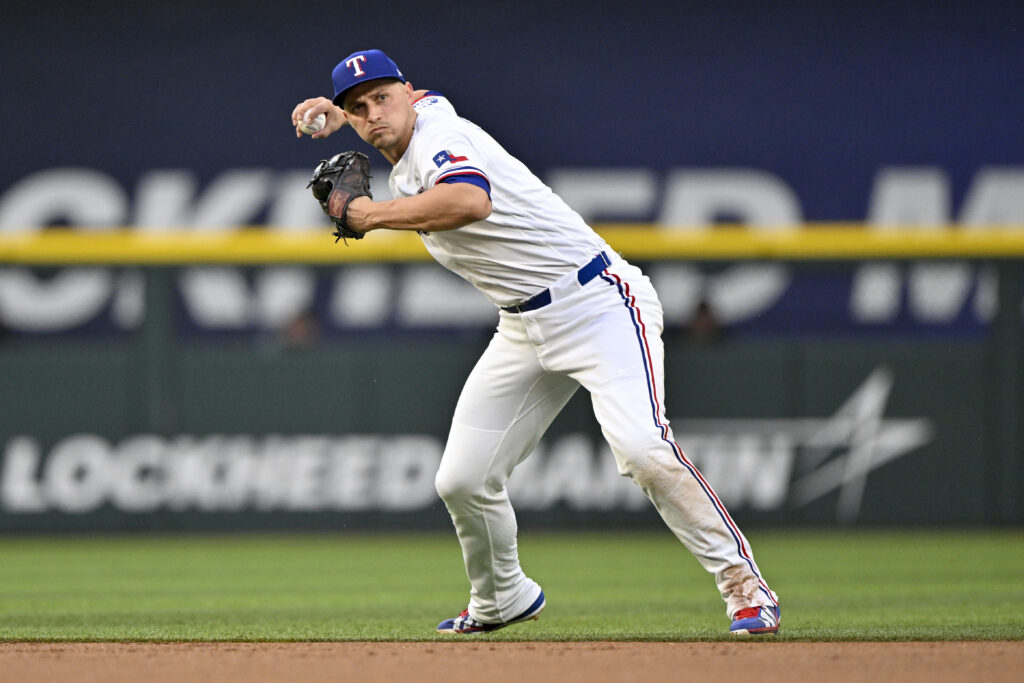
Corey Seager is heading to the Rangers' back specialist for an MRI after missing all three games of Texas's weekend series against Houston. The 32-year-old hasn't appeared since Wednesday—a timing that raises the question of whether the injury explains months of offensive decline or simply compounds an already disastrous campaign.
Seager is in his worst season as a professional. His .179 average across 182 plate appearances represents a free fall from the 138+ wRC+ he's posted in each of the past three seasons. His strikeout rate has spiked to a career-worst 27.5%, and his swinging-strike rate of 16.2% is also a career high. Hard-hit rate has dipped to 45.4%—still above league average, but a sharp drop from the 50%+ marks he's maintained since joining Texas. Average exit velo is down nearly 2 mph compared to 2025. The mechanics have unraveled, and now the body may have been signaling the damage all along.
The injury history is real: thumb, sports hernia, hamstring issues, and an appendectomy have dotted his time in Arlington since the club signed him to a 10-year, $300 million deal ahead of 2022. But those were discrete, time-bound events. What Seager is displaying now—persistent contact loss, elevated whiff rate, diminished barrel quality—doesn't necessarily map to acute back pain. It reads more like a hitter spiraling into his own head, chasing, pressing. Whether the back was silently limiting his lower-body engagement from the start of the season or whether it's a late-arriving complication, the MRI will clarify. Until results arrive, Texas faces operational uncertainty: is Seager weeks away from a return or months? And when he does return, will he be the elite performer who justified a $30 million annual investment, or a compromised version trending toward decline?
Ezequiel Duran has taken over at shortstop and is hitting .270/.339/.441 with a respectable plus-5 OAA across his career at the position. That's a competent stopgap, not a star replacement. For Texas' implied team totals and run-production projections, Seager's absence—especially while he's so thoroughly overmatched at the plate—should be priced as a lineup upgrade in the short term. Remove a hitter posting an 80 wRC+, and you're removing dead weight. Duran's 113 wRC+ is a plus-swap. But the deeper threat is uncertainty: if Seager lands on the injured list for 6+ weeks, Texas' prorated run output drops accordingly. The Rangers were already sitting at a pedestrian run environment despite their record. Seager healthy and clicking would have mattered. Seager broken or missing time pushes the range down further.
For bettors, the play is conditional. If the MRI shows a structural issue requiring weeks of recovery, Texas' team totals should compress 0.3–0.5 runs against light competition over the next two weeks. That compression happens fast; books don't wait for official IL designation to adjust. Early lineups built on Seager in the lineup will already be overcooked by market open tomorrow. The smarter angle is monitoring rehab trajectory: if Seager's timeline stretches past mid-June, the Rangers become a lighter-run team for the remainder of their next 15-game stretch. Fade team overs in that window. If imaging comes back clean and he's back in 7–10 days, the injury was a blip, and the real problem remains his swing. In that scenario, his absence is actually a gift to under-backers right now.