Contreras' Early Power Ignites Brewers Past Dodgers; Form Shift Shapes Offensive Edges
By Justin Erickson ·
Milwaukee's third-inning onslaught, powered by William Contreras' three-run blast, exposes a vulnerability in the Dodgers' early-game command that suggests sustained offensive advantage for the Brewers moving forward.
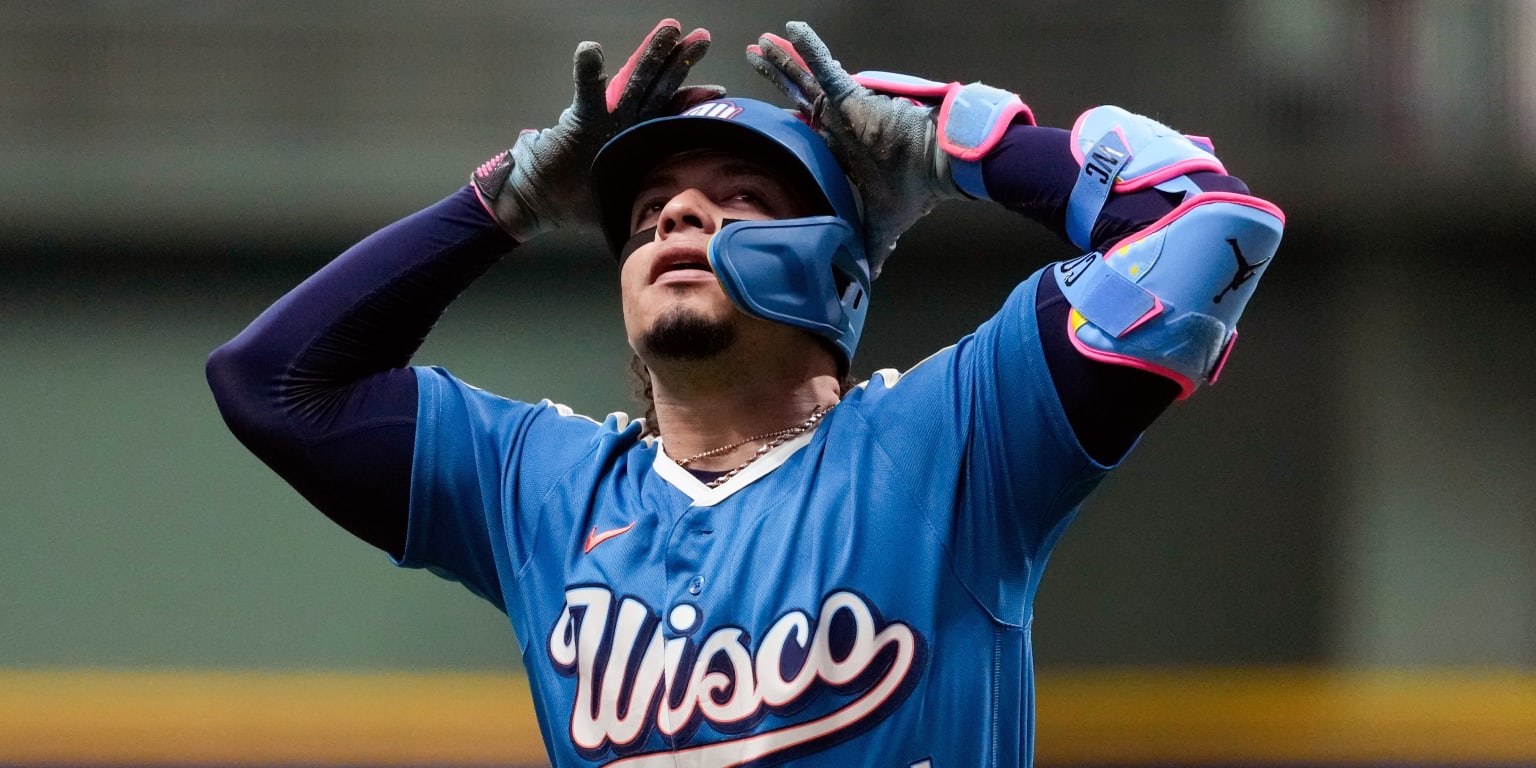
William Contreras launched a 410-foot home run in the first inning Friday night, part of a 10-batter Milwaukee assault that staked the Brewers to a 4-0 lead before the Dodgers recorded an out. The Brewers rolled to a 5-1 victory at American Family Field, extending their winning streak to four games and improving to 12-2 in their last 14 contests. Logan Henderson, the Brewers' starter, delivered five scoreless innings on just 85 pitches, surrendering only two hits while striking out seven. The performance marked the kind of early dominance—both at the plate and on the mound—that compounds throughout a series, especially against a division opponent.
The structural advantage here isn't random. Jackson Chourio and Brice Turang led off with consecutive singles, a sequencing that placed Contreras in a high-leverage, low-pressure spot: runners already in motion, one out to work with, and a righty-on-righty matchup against Dodgers starter Justin Wrobleski. Wrobleski entered with a 2.49 ERA, respectable on paper, but the Brewers exploited a critical vulnerability in his first-inning command. A 10-batter inning with a sacrifice fly and a run-scoring double in the second inning indicates Milwaukee wasn't manufacturing cheap runs—they were hitting the ball hard and in the right places. Contreras' four home runs on the season already tie him for a pace that suggests he's moved into a more aggressive, pull-happy swing plane, a mechanical shift that often precedes elevated power output in small samples.
The Brewers' 6-0 record against Los Angeles this regular season, coupled with last season's dominant NLCS sweep of the Dodgers, points to a structural mismatch when these teams collide. But Friday's win carried specific offensive markers worth tracking: early-inning aggressiveness from Milwaukee, command slippage from Los Angeles, and a catcher (Contreras) operating in the heart of the order who has demonstrated pull-side power that exploits left-field dimensions at American Family Field. Henderson's economical five innings—facing the minimum through three—removed the need for late bullpen relief and kept the game controlled throughout.
For prop purposes, Contreras' elevated power output over his last 14 games demands scrutiny. His four home runs represent a 0.29 HR/G rate; extrapolated over a full season, that's a 47-home-run pace, well above his recent career trajectory. More immediately, when the Brewers face a Dodgers starter with suboptimal first-inning command—a pattern Wrobleski may not repeat, given the scouting attention—Contreras' home run props compress in odds but widen in true probability. The real edge isn't betting his home run total higher in isolation; it's recognizing that early-inning volatility (10 batters to the plate in frame one) suggests the Brewers will continue hunting fastballs early, which favors elevated run-scoring opportunities in the first three innings. Milwaukee's team total for Game 2 of this series should reflect their demonstrated offensive aggression against this opponent and their current 12-2 trending form.
Henderson's command-and-contact profile—seven strikeouts, three walks, 57 strikes in 85 pitches—also signals sustainability. His control is tight enough to suppress damage (just two hits allowed) without relying on strikeout volume, which means the Dodgers' adjusted approach in Game 2 won't necessarily punish him harder if they make mechanical adjustments. The Brewers' pitching has stabilized; their hitting has clarified. That combination shapes the series calculus.