Abrams Stays Put: How Washington's Deadline Clarity Reshapes the Wild-Card Math
By Justin Erickson ·
The Nationals' refusal to trade their breakout shortstop eliminates roster uncertainty five days before Monday's deadline and locks in their offensive centerpiece for a legitimate playoff push.
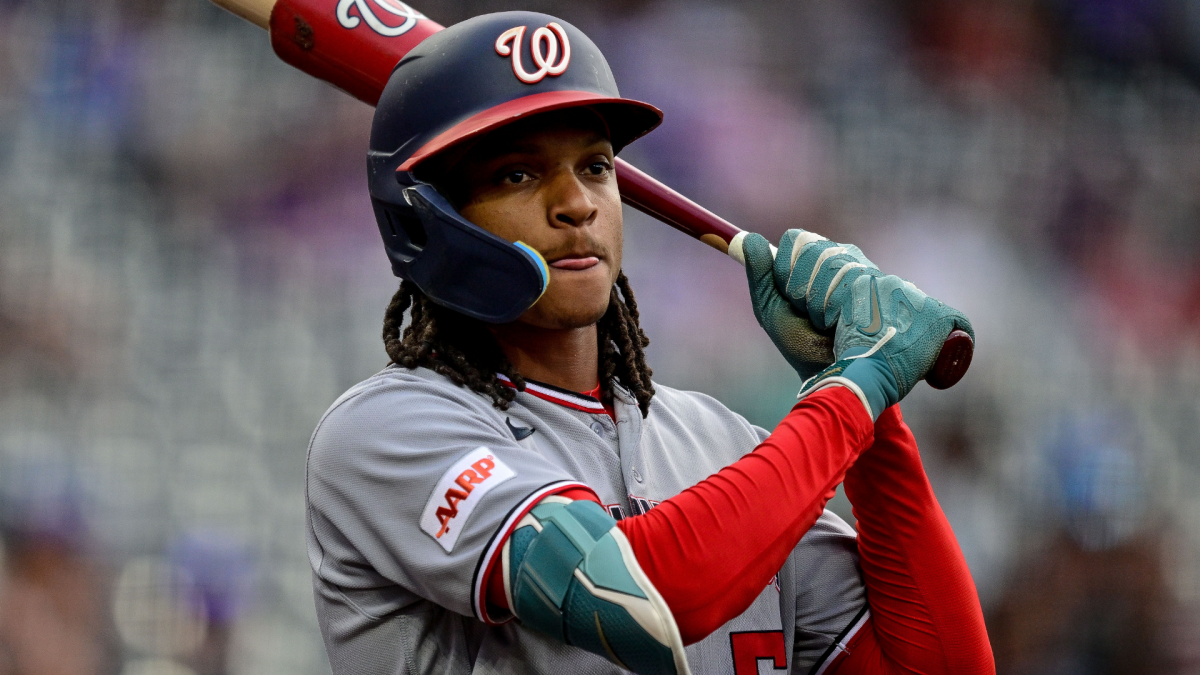
CJ Abrams will not be dealt before Monday's 6 p.m. ET trade deadline barring a shock offer, according to internal Nationals discussions. The 25-year-old shortstop has constructed a career year—.294/.366/.565, 27 home runs, 82 RBIs—that ranks him among baseball's most productive offensive players at the position. His 82 RBIs lead the majors. Washington's front office under Paul Toboni has drawn a clear line: Abrams stays unless a club blows past any reasonable ask. That clarity matters enormously to the Nationals' calculus over the next five days.
The timing is critical. Washington enters play Wednesday at 55-53, one game out of the NL's final playoff spot and tied with Pittsburgh in the wild-card hunt. For a franchise in its first full season of this rebuild—one that already moved Juan Soto at the 2022 deadline—the institutional knowledge of trading a homegrown star cuts deeper than pure asset value. Abrams arrived as part of the Soto package and has evolved into a foundational piece alongside James Wood. The Nationals recognize that continuity on a young, affordable roster matters as much to the fanbase as it does to their lineup construction. Toboni's decision to anchor the offense around Abrams removes the distraction that typically clouds a franchise during deadline week and allows the organization to move with precision if it wants to add around him.
From a betting perspective, Abrams' immobility has direct implications for Washington's run-prevention and offensive consistency. With their most productive hitter locked in place and the team hovering near .500 in a winnable division, the Nationals' playoff probability—already buoyed by Abrams' individual production—solidifies. His presence in the lineup for the remainder of July and all of August/September now carries near-certainty. For bettors tracking team totals, moneylines, and spread exposure on Washington games, the removal of trade-deadline noise is itself an edge: the roster composition you see today is the roster you'll see through October. No mid-season overhaul, no sudden lineup reshuffling, no loss of a bat that has driven 82 runs. That stability compresses variance. It also means the market's baseline pricing on Nationals games should reflect a more durable core than it would for a team in flux.
The broader implication for the wild-card picture: one fewer variable. Teams chasing Washington now know they're chasing a lineup that includes Abrams' elite run production and RBI rate. Competitors cannot bet on Washington's offense thinning due to a July deal. Over the final 63 games, Abrams' presence—assuming health—becomes a structural anchor to Washington's scoring ceiling. For those tracking team totals on the Nationals, the downside risk of a late-season roster gutting has been formally retired. Toboni's public position makes it clear: rebuild or compete, but not both simultaneously.