Dollander's UCL Surgery Ends Rockies' Rotation Hope for 2026
By Justin Erickson ·
Colorado's best pitcher heads for elbow surgery with no timeline, gutting a rotation already stretched thin and shifting pitching workload risk to bullpen arms carrying inflated usage.
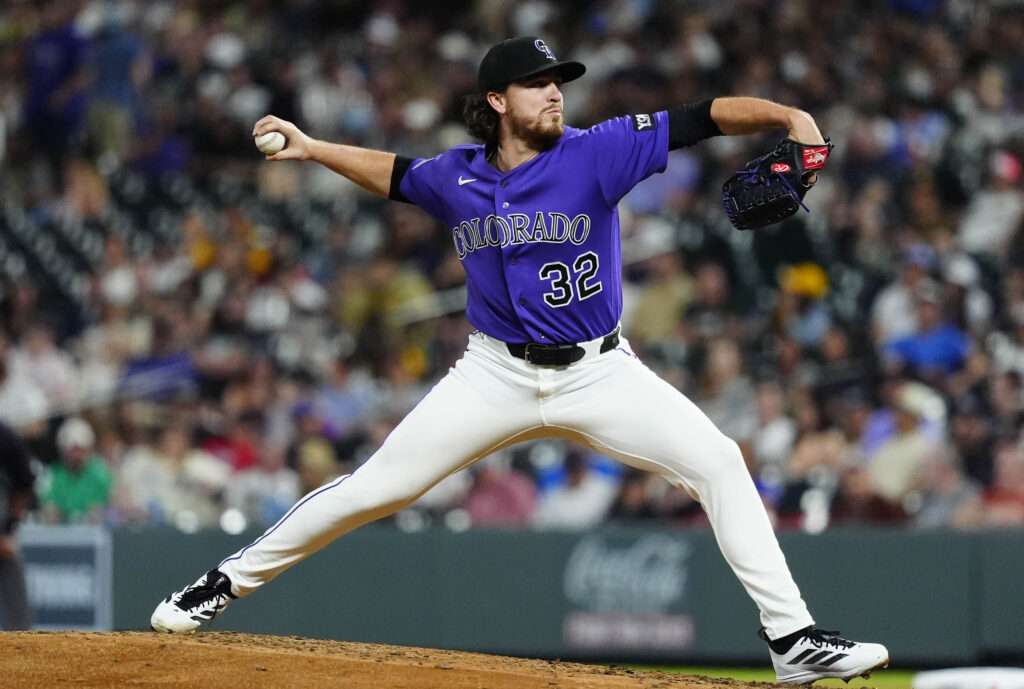
The Rockies confirmed Friday night what the injury timeline had been suggesting: Chase Dollander will undergo UCL surgery to repair elbow damage, per manager Warren Schaeffer. The team has not yet scheduled the procedure, though one more pre-operative appointment remains before the date is finalized. For Colorado, this is the loss of its most reliable arm in a season where rotation depth was already a structural weakness.
Dollander, 24, had emerged as the Rockies' ace prospect—a legitimate front-line starter in the making with a fastball-slider combination that plays at the top of a rotation. His absence for the remainder of 2026 and potential overlap into 2027 creates a two-tier problem: immediate holes in the rotation and long-term capital allocation questions. The Rockies will need to piece together starts from depth options, emergency starters, or trade acquisitions over the next four months. That scramble invariably falls back on the bullpen, which absorbs extra innings and elevated leverage situations that weren't baked into preseason usage models.
From a betting lens, this injury reshapes Colorado's pitching environment in two concrete ways. First, the rotation ERA and team bullpen K-rate now face a stress test; relievers pulled into more high-leverage spots tend to generate higher strikeout rates but also higher walk rates as adrenaline and fatigue compress command. Second, Rockies team totals and run-line prices should reflect softer starting-pitcher performance going forward. When a team loses its best starter, the market adjusts moneyline odds quickly—but prop markets on team run-scoring and opponent strikeout volume sometimes lag, especially in mid-June when books are still calibrating seasonal baselines.
The mechanics of this edge: Colorado's pitching staff was already bottom-quartile in team ERA this season. Dollander's removal accelerates that decline. Opposing hitters will face more fastball-heavy approaches from relievers and spot starters, and fastball-happy approaches tend to correlate with higher home-run rates. Any prop targeting opposing team slugging or home-run totals against the Rockies over the next 4–6 weeks—before the market fully reprices the rotation's capacity—carries value. Similarly, Rockies team unders (particularly at home, where Coors Field inflates raw run-scoring) may overcorrect initially; books may assume that losing Dollander requires a full offensive reset, when in reality the team's hitting core remains unchanged. That overreaction fades as opponents pile on runs via pitching vulnerability.
The surgery timeline is the real variable. If Dollander's procedure is scheduled within the next 7–10 days, the market has already begun pricing in the extended absence. If it slips to late June or early July, there's a brief window where rotation depth pitches continue to attract casual action before sharp adjustments complete. Watch the surgery announcement timing; that's when the true repricing happens.