MLB
Giants' Seven-Homer Explosion at Wrigley Signals Real Offensive Shift, Not Statistical Noise
Matt Chapman's eight RBIs and a three-player home run outburst suggest San Francisco has finally unlocked sustained power production after months of futility.
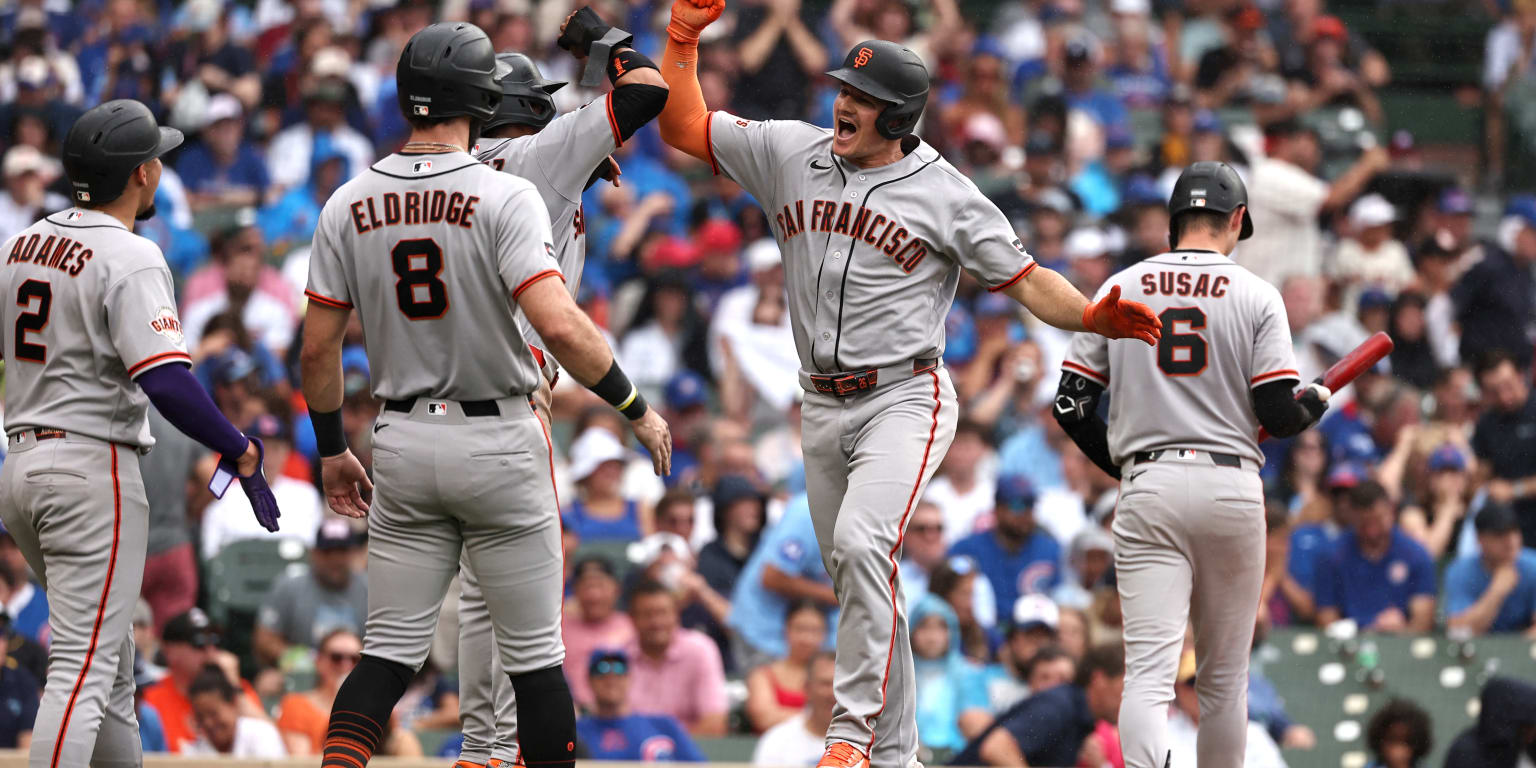
The Giants put on a power clinic at Wrigley Field on Friday, demolishing the Cubs 18-3 behind seven home runs — a performance that looked like cathartic release after watching this offense starve for runs since April. Chapman's 8 RBI night, including a grand slam and a three-run shot, ties the third-highest single-game total by a Giant since 1920. Willy Adames and Casey Schmitt each launched two homers as well, marking only the third time in franchise history that three players went deep twice in the same game. The 18-run output and 19-hit barrage arrived on the heels of a 30-run, two-game scoring surge — the team's most prolific span since a doubleheader on April 30, 1944. At 26-38, San Francisco has now strung together three consecutive wins, matching its longest win streak of the season.
What matters most here is not the single-game tonnage but the structural mechanics underlying it. Chapman's grand slam came off fastballs in the zone; Adames connected on a 99.5 mph heater from starter Edward Cabrera — the fastest pitch the 30-year-old shortstop has homered on in his nine-year MLB career. These were not mistakes elevated by relievers working in mop-up duty; they were mistakes from the starting rotation on pitches meant to be competitive. The Cubs cycled through three arms (Cabrera, Hoby Milner, and position player Carson Kelly), but the damage was systemic: the Giants consistently elevated their exit velocities and stayed in the zone against live pitching. Schmitt's team-leading 15 homers on the season now sit within range of position-player relevance; Adames' 10th blast suggests his early-season regression may be stabilizing.
The critical question for betting is whether this represents mean reversion or noise. The Giants have underperformed their run-creation metrics for weeks — a team with decent underlying plate discipline and power potential that simply hasn't connected. Three straight wins, with two of them producing 15+ runs, hint at a cohort finally executing what the underlying Statcast and contact quality data suggested was always there. The Cubs' pitching meltdown (7 HRs allowed, 19 hits) certainly inflated the numbers, but the Giants' ability to punish elevated fastballs and stay competitive in counts against quality starters is the signal worth isolating.
For prop bettors, this performance reframes team-total and hitting lines over the next 10 days. The Giants' moneyline odds across their remaining games this week likely compressed tighter than the talent distribution justifies, because sharp books will be slow to recalibrate a single 18-run game as a season inflection. However, the mechanical improvements in at-bat quality — fewer chase pitches, better zone discipline, more aggressive hunting on fastballs — carry forward regardless of tonight's final score. If Chapman, Adames, and the Giants' order maintain that approach against middle-tier starting pitching, team totals in the 4.5–5.5 range represent value for overs, at least until the market prices in three consecutive wins.
The risk is equally clear: one game, even an 18-run game, does not erase a 26-38 record or the underlying instability that got the Giants there. Schmitt is a rookie thriving on fastballs; Adames has a history of late-season volatility; Chapman's grand slam came in the fourth inning of a blowout. Fade the illusion of consistency. But for the next 48–72 hours, before the books fully digest this offensive eruption and bake in the run-rate correction, early overs and Giants moneyline piles have limited downside if you're sizing conservatively and exiting on line movement.
MLB Intelligence — Baseball intelligence beyond the box score. Open MLB Intelligence →